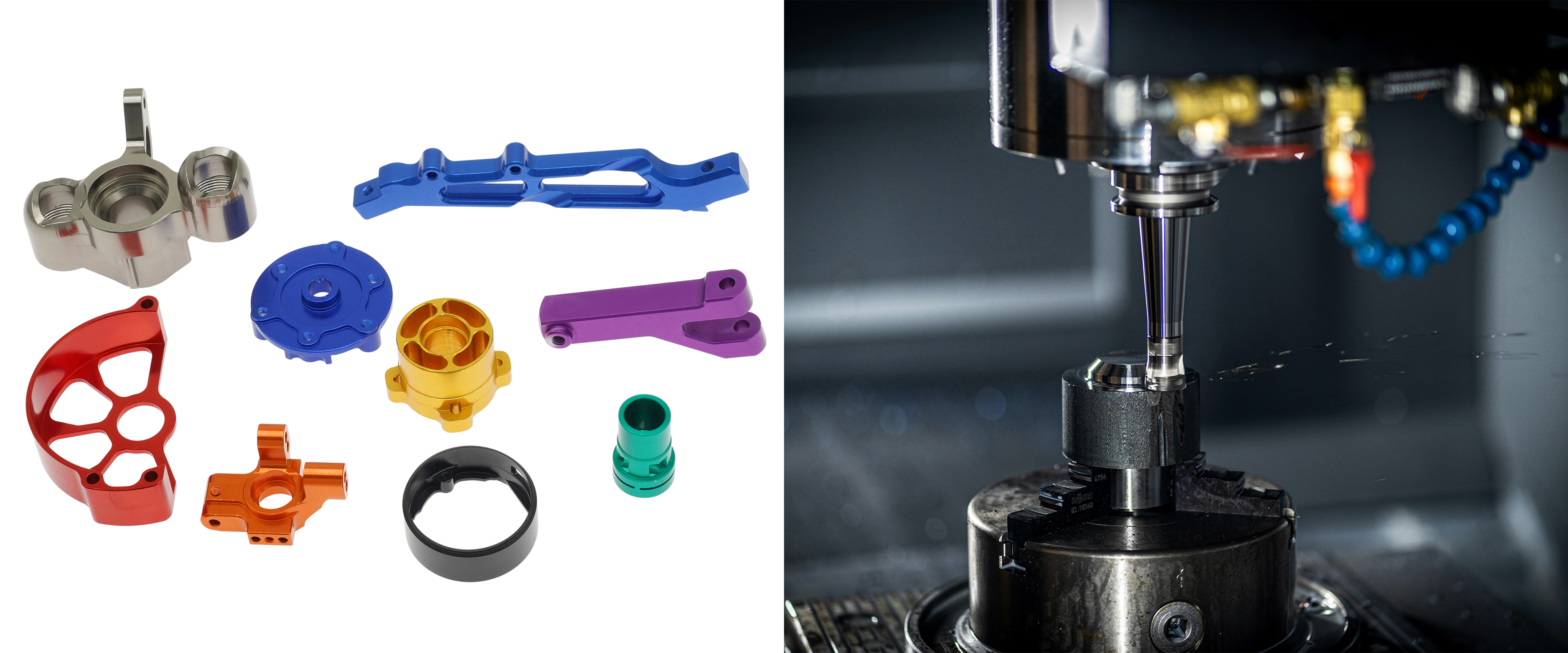
Machining lets you control the final shape and size. You can count on machined parts to be strong and last long.
Benefit | Description |
|---|---|
Enhanced accuracy and precision | CNC machines give very exact results, removing mistakes people might make and reaching tiny tolerances under 0.01 mm. |
Superior repeatability | Automated steps make sure every sample has the same features, which is important for good testing. |
Excellent material compatibility | CNC machining works with many materials, so you have choices when making samples. |
Reduced costs | Making small batches lowers costs from mistakes that happen in big production runs. |
Elevated efficiency | Machining materials directly saves time because you do not need molds. |
Frictionless software integration | CNC machines work with CAD software, making jobs easier and saving time. |
Improved structural integrity | Parts made have very exact sizes and are strong, so they look and work like the final products. |
Machining changes materials like metal and plastic. It cuts away extra parts. This makes sure parts are exact and good quality.
CNC machining helps make things more accurate and fast. It lets people make hard shapes quickly. These shapes have very small errors.
CAD and CAM software help design and make things easier. They lower mistakes and save time.
Machined parts are needed in many fields. These include cars, planes, and medicine. They are strong and work well.
Picking the best materials and tolerances is very important. It helps parts work well and last longer.
Machining helps you turn raw materials into useful parts. You remove extra material from a block or rod. This lets you get the shape you want. You control the size, shape, and finish of each part. Machining can make simple or complex items.
Machining is important in factories today. It helps you make parts with very exact measurements. You need this accuracy for things like medical tools and electronics. Machining lets you create detailed designs and save money. You waste less material and finish jobs faster.
There are many types of machining. Here are some common ones:
Milling: Spinning tools cut complex shapes.
Turning: The workpiece spins to make round parts.
Drilling: Drill bits make round holes.
Grinding: Abrasive wheels smooth surfaces.
Boring: You make holes bigger and more accurate.
Broaching: You cut shapes in one straight pass.
Sawing: You cut material into smaller pieces.
Honing: You improve the roundness and finish of cylinders.
EDM (Electrical Discharge Machining): Sparks cut hard materials.
Laser Cutting: A focused beam cuts metals.
Machining is different from other ways of making things. You can compare them in this table:
Manufacturing Method | Precision Level | Versatility |
|---|---|---|
High | High | |
Manual Machining | Moderate | Moderate |
Traditional Methods | Low | Low |
CNC machining works with many materials, like metals and plastics. You get parts that match your designs every time. Computers help you make shapes that are hard to do by hand.
CNC machining makes work faster and easier to scale. You can make one part or hundreds without changing the setup. Machines run without stopping, so you get more parts in less time. This keeps quality high and costs low.
Tip: If you need parts with tight tolerances or special shapes, machining is often the best choice.
Machined parts are made by removing material from a solid block, rod, or sheet. You use tools like mills, lathes, or drills to shape these parts. Each machined part matches the design you start with. You can make parts for cars, planes, or small gadgets.
You can trust machined parts to fit exactly where you need them. They have smooth surfaces and sharp edges. You use them when accuracy and strength matter most. Machined parts often work better and last longer than parts made with other methods.
Machined parts are used in many industries. For example, you find them in medical tools, electronics, and heavy machines. Machined parts help you solve tough problems because you can make them in almost any shape or size.
Here are some reasons why you might choose machined parts:
You need high precision and repeatability.
You want to use strong materials like steel or titanium.
You need a custom shape that other methods cannot make.
You want to test a design before making many copies.
Machined parts give you the flexibility to meet strict requirements. You can rely on them for quality and performance in your projects.
You begin making machined parts with a design. You use CAD software to make a 2D or 3D model. This model shows the size and shape of your part. CAD lets you see your part before you make it.
Next, you get your design ready for manufacturing. You follow rules to make sure your part is easy to machine. For example, you do not use undercuts because they are hard to machine. You keep metal walls at least 0.8 mm thick. Protrusions should not be longer than four times their width. These steps help you avoid problems later.
Tip: When you design holes, use standard drill bit sizes. Keep the hole depth no more than four times the diameter. This makes machining easier and helps tools last longer.
You add fillets or chamfers to outside edges for a smooth finish. You round inside corners so cutting tools can fit. You pick engraving instead of raised features to save time and material. These choices make your part better and easier to produce.
After you finish your design, you use CAM software. CAM turns your model into instructions for CNC machines. The software makes toolpaths and G-code for the machine. CAD and CAM together help you avoid mistakes and work faster. You get better accuracy and lower costs.
Role of CAD Software | Role of CAM Software |
|---|---|
Used for 2D and 3D design of parts and products | Generates toolpaths and G-code for CNC machines |
Replaces manual drafting, enhancing precision | Automates the machining process, improving efficiency |
You send your design to the CNC machine. The machine reads the instructions and starts cutting the material. You can use aluminum, steel, titanium, or plastics. The machine removes extra material and shapes your part just like your design.
Online CNC services make this process even faster. You upload your design and get feedback right away. The service checks for hard-to-machine features. You get quotes quickly and know how long production will take. These services help you make prototypes fast and avoid mistakes.
You can use online CNC services for small or large orders. They work with many materials and complex shapes. You get design feedback to help you improve your part before making it. This makes manufacturing easier and more reliable.
You follow steps to turn your design into finished cnc machined parts. Each step helps you get good quality and accuracy.
Material Selection and Inspection
You choose the right material for your part. You check the raw material to make sure it is good.
Programming and Setup
You use CAM software to program the CNC machine. You set up the machine with the right tools and fixtures.
First Article Inspection (FAI)
You make the first part and check it closely. This step makes sure the part matches your design.
Machining Operations
The CNC machine cuts, drills, mills, or grinds the material. You remove extra material to make the final shape.
In-Process Inspection
You check the part while it is being made. This helps you find problems early and save time and material.
Dimensional and Surface Finish Inspection
You measure the part with special tools. You check the surface to make sure it is smooth and meets your needs.
Functional and Visual Testing
You test the part to see if it works right. You look for scratches or defects that could cause problems.
Post-Machining Treatments
You may add heat treatment or plating. You check the results to make sure the part is strong and looks good.
Assembly and Fit-Up Inspection
You check if the part fits with other machining components. This step makes sure everything works together.
Final Inspection and Documentation
You do a last check to confirm quality. You keep records for tracking and future improvements.
Packaging and Shipping
You pack the finished parts carefully. You check them to make sure they are not damaged.
Note: You can use rapid prototyping to test your design before making many parts. Prototyping lets you make changes fast and see how your part works in real life.
You can repeat these steps for each batch of machined parts. CNC machining gives you control over every step. You can make prototypes, test them, and then make more with confidence.
Online CNC services help you make prototypes and finished parts faster. You get quick quotes, fast turnaround, and support for many materials. Automation saves time and money. You can make custom machined parts for any project, from simple samples to complex assemblies.
You use this process to make strong, high-quality machining components. You can trust cnc machining to give you the parts you need, whether you want one prototype or many finished products.
Turning helps you make round or cylinder-shaped machined parts. The workpiece spins very fast. A cutting tool moves along its surface. This lets you take off thin layers of material. You get smooth finishes this way. Turning is good for making parts with exact diameters and shapes. You can reach tight tolerances with turning. This is important for parts that must fit perfectly.
Type of Part | Description |
|---|---|
Medical Microneedles | Small diameter parts (0.5 mm) used in medical applications. |
Industrial Sleeves | Larger diameter parts (up to 500 mm) used in various industrial applications. |
Precision Shaft Parts | Typically involve multiple turning operations to achieve specific shapes. |
Symmetrical Rotating Parts | General category for parts produced through turning operations. |
Milling helps you make complex shapes and flat surfaces. A cutting tool spins and moves across the workpiece. You can remove material in many directions. Milling lets you create slots, pockets, and curves. This method gives you flexibility for different machined parts. You can reach tight tolerances and detailed designs with milling.
Milling uses a spinning tool to cut many shapes.
You can make aerospace parts, car components, medical devices, and electronics.
Milling helps you get high precision and smooth finishes.
Tip: Milling works best when you need complex shapes and strict tolerances.
Drilling makes round holes in solid materials. You need drilling to put parts together, let fluids pass, or add fasteners. Drilling gives you clean and accurate holes. This helps you meet tight tolerances in your designs. Drilling is used in oil and gas, construction, and manufacturing.
Oil and Gas
Construction
Manufacturing
Marine
Fabrication
Drilling is useful for building things and making machine parts.
Grinding helps you get very smooth surfaces and tight tolerances. Abrasive wheels remove small bits of material. You can get finishes as fine as 2 Ra. Tolerances can be as close as +/-0.0001” to -0.000005”. Grinding makes machined parts more accurate and better than standard machining.
Grinding gets surface finishes of 8 to 32 microinches (0.2 to 0.8 micrometers).
You can work with hard metals, soft materials, brittle ceramics, heat-treated parts, and long thin pieces.
Material Type | Common Grinding Techniques |
|---|---|
Hard metals (e.g., tool steel) | Cylindrical, creep-feed, or surface grinding |
Soft or ductile materials (e.g., aluminum) | Surface or centerless grinding with appropriate wheel grades |
Brittle materials (e.g., ceramics) | Creep-feed or internal grinding with fine abrasives |
Heat-treated components | Gear, thread, and form grinding |
Long slender parts (e.g., rods) | Centerless grinding |
Note: Grinding is the best way to get the highest tolerances and smoothest surfaces in machining.
You pick the right machining method based on the shape, material, and tolerances you need for your machined parts.
You have many materials to pick from for machined parts. The right choice makes your part work better and last longer. Most people use metals or plastics for machining. Each one has its own good points.
Common metals for machining include:
Aluminum and its alloys (lightweight, strong)
Stainless steel (resists rust, very strong)
Titanium (very strong, light, used in aerospace)
Copper and bronze (good for electrical parts)
Brass (easy to machine, used in fittings)
Tungsten (very hard, used in special tools)
Alloy steels like AISI 4140, 4150, 4340, 6150, 8620, 52100
Popular plastics for machined parts:
Acrylonitrile Butadiene Styrene (ABS)
Polycarbonate (PC)
Nylon
Polyoxymethylene (POM, also called Delrin®)
PVC
PEEK
UHMW
Teflon®
You can also use composites if you need something special. When you design your part, think about how the material will change the machining steps and the final part.
You must control the size and shape of every machined part. This is why tolerances are important. Tolerances show how much a part’s size can be different from the plan. Good tolerances help your parts fit and work well.
Tolerance Type | Description |
|---|---|
Standard Tolerances | Allow small changes without extra cost. |
Limit Tolerances | Set the smallest and largest sizes allowed. |
Unilateral Tolerances | Allow change in only one direction (plus or minus). |
Bilateral Tolerances | Allow change in both directions (plus and minus). |
Most machining uses standard tolerances of ±0.005" (0.127 mm). Precision machining can reach ±0.001" or even tighter for special jobs. You should always pick tolerances that match your needs and your design plan.
Tight tolerances help your parts fit, lower wear, and keep machines working well. If tolerances are too loose or too tight, you might see mistakes, more wear, or safety problems.
When you use the right tolerances, you get:
Less wear and longer part life
Better fit and alignment
Fewer failures and breakdowns
Consistent performance in every batch
High-precision machined parts are needed in aerospace, defense, and medical devices. You can trust these parts to work safely and last a long time.
Machined parts are used in almost every big industry. These parts help machines work better and last longer. Many industries need machined parts for safety, strength, and accuracy.
Automotive Industry
Aerospace and Defense
Medical and Healthcare
Oil & Gas
Electronics and Semiconductor
Robotics and Automation
Renewable Energy
Marine Industry
Car makers use machined parts for engines, brakes, and steering. These parts must fit just right to keep cars safe. In aerospace, parts must handle high pressure and heat. Medical devices use machined parts for tools and implants. These must be very exact to protect people. Oil and gas companies use strong machined parts for drilling and pumping. Electronics need tiny, detailed parts for computers and phones. Robotics and renewable energy also use machined parts for smooth and steady movement.
Machined parts give you the accuracy and strength needed for hard jobs in many fields.
You find machined parts in big machines and special tools. These parts help machines work well, even in tough places. Here are some examples from different industries:
Application Area | Specific Components |
|---|---|
Military | Watercraft Components, Surge Tee Valves, Piping, Collars, Breech Ring Mechanisms, Runway Bombs, Naval Shaft Sleeves, Gun Barrel Components |
Mining | Drill Bits, Cutting Heads, Hydraulic Fittings, Support Brackets |
Construction | Gearboxes, Shafts, Pins, Bushings, Hydraulic Cylinders |
In garbage collection, machined parts help trucks and compactors run smoothly. You get better results because these parts can replace many small pieces with one strong casting. This saves money and keeps the machines working longer. Good machined parts also mean fewer breakdowns and repairs.
When you pick machined parts, your machines become safer, stronger, and more reliable. You see these benefits every day in vehicles, tools, and equipment that keep your world moving.
You notice machining in your life all the time. Machining helps make parts with exact shapes and smooth surfaces. This way, you use less material and keep things high quality.
Products work well and last a long time.
You can make new designs fast and change them when needed.
Machines help make things quicker and cost less.
Aspect | Benefit |
|---|---|
Tight Tolerances | Fewer problems and safer items |
Customization | Easier to fit special needs |
Quality Control | Better quality and less waste |
Machined parts are used in cars, electronics, and medical tools. Machining helps everything work smoothly in your world.
Machining helps you shape materials into exact parts. This makes sure parts meet tough rules in factories. You get strong and accurate pieces that do their job well. Machining is used in many fields to make special parts for different projects.
CNC machining lets you control machines with computers. This gives you the same results every time and fewer errors. CNC machining is faster and can make shapes that people cannot do by hand.
Machining is used in car, plane, medical, and electronics factories. These fields need parts that are high quality. Machining helps make products you can trust. You also see machining in mining, building, and energy work, where strong parts matter.
Yes, you can use machining to make prototypes fast. You turn your ideas into real parts quickly. This lets you test designs before making lots of them. Machining helps you change your part and see how it works in real life.
You can use metals like aluminum, steel, and titanium. Plastics such as ABS and nylon are good too. The best material depends on what your project needs. Machining works with many materials, so you can pick what is best for your job.