You can solve everyday problems in practical ways with 3D printing custom parts. Many people think 3D printers are expensive, but prices have dropped a lot.
Year | Price of Entry-Level 3D Printers |
|---|---|
2014 | Over $2,000 |
2020 | Under $200 |
You do not need special skills to start. You can use simple guides and examples to learn quickly. Curiosity and creativity will help you find new solutions for your daily life.
3D printing is cheap now. Some printers cost less than $200. This means almost anyone can buy one.
You can fix things at home with custom parts. You can also make cool gadgets that fit your needs.
Use PLA for your first projects. It is easy to use. Most home printers work well with it.
Look online for designs you can print. You can also use simple tools to make your own parts.
3D printing lets you test ideas fast. You can change and improve them quickly. It does not cost much.
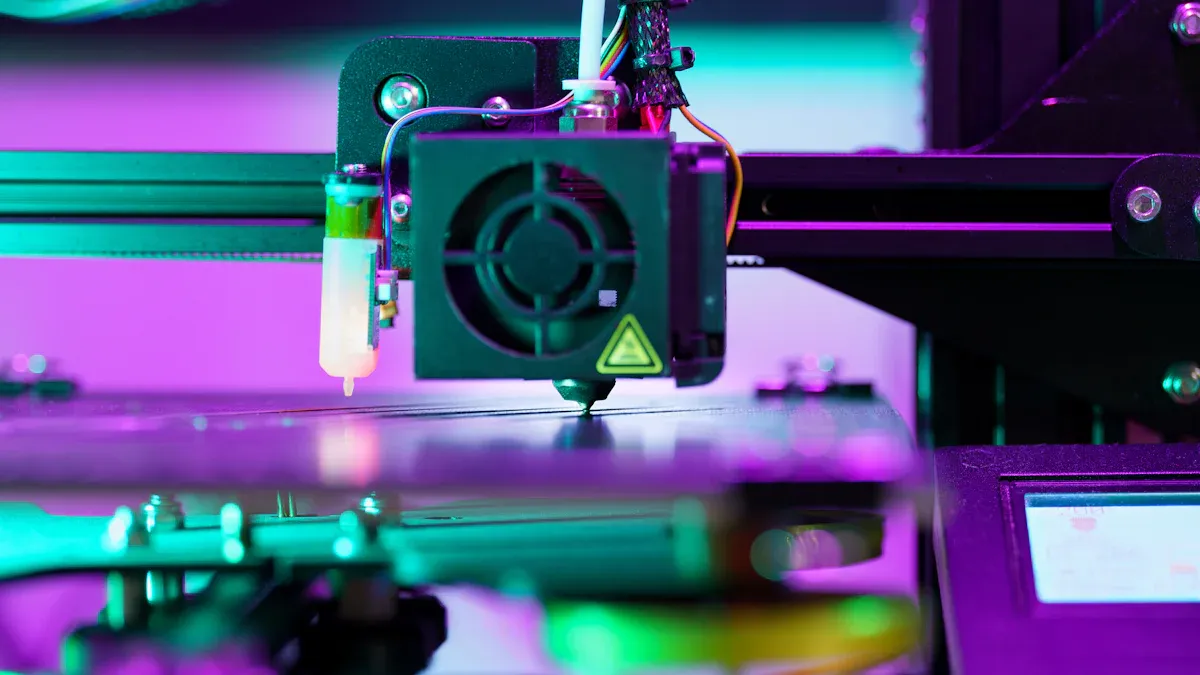
You might ask how 3D printing custom parts works. A special machine builds things layer by layer from a digital plan. You begin with a 3D model made in CAD software. The printer reads this model and adds plastic in thin layers. This way of making things is called additive manufacturing.
Here are the steps for 3D printing custom parts:
Design and Modeling: Make or get a digital model.
Slicing: Use software to cut the model into layers.
Printing: The printer makes the object one layer at a time.
Post-Processing: Finish the part by sanding or painting if you want.
You can pick different materials for your projects. Each one has its own good points:
Material | Description | Properties | Common Uses |
|---|---|---|---|
ABS | Tough plastic | Durable, keeps color | Gears, models, tools |
PLA | Biodegradable plastic | Easy to print, not heat resistant | Toys, miniatures |
Nylon | Strong plastic | Tough, flexible | Parts needing strength |
Tip: Try PLA first if you are new to 3D printing custom projects. It is simple to use and works well with most home printers.
3D printing custom solutions help you fix problems in daily life. You can repair broken things, organize your room, or make cool gadgets. Many people use this to make things that fit their needs. For example, you can print a new tool handle, a phone stand, or a special eyeglass frame.
Industries use 3D printing custom parts for bigger problems too. Car makers print spare parts when needed. Jewelry makers create special pieces. In medicine, people use 3D printing to make cheap prosthetics that fit well.
Industry | Problem Solved |
|---|---|
Automotive | Custom parts for repairs and upgrades |
Jewelry | Personalized jewelry designs |
Eyewear | Custom-fit frames |
Assistive Tech | Custom prosthetics for better comfort |
You can see how 3D printing custom parts make life easier and more fun. This technology lets you design and make things for your daily needs.
3D printing custom parts can help with home repairs. If something breaks, you do not always need to buy a new one. You can print a part that fits just right. For example, you can fix a broken handle on your blender or hair dryer. You can print a new clasp for a water bottle lid that will not close. If your music stand or bike part breaks, you can make and print a new piece.
Here are some more home repairs you can do:
Print a new door latch for your microwave if you cannot find the part.
Make new clips for your dishwasher rack or vacuum cleaner.
Print a fridge drawer rail if yours breaks, so you do not need a new drawer.
Note: Pick strong materials like polycarbonate or reinforced Nylon for tough parts. You can also make your printed parts last longer by adding curves or making the walls thicker.
You can use 3D printing custom tools to organize your home or office. Many people print drawer organizers to keep small things neat. You can make cable organizers to stop cords from getting tangled. You might print holders for headphones or kitchen tools. You can design silverware organizers that fit your drawer just right.
Here are some popular organization tools you can print:
Drawer organizers that fit together
Cable organizers
Storage boxes for electronics
Holders for headphones
Drawers that go under tables
Key hangers
Door stoppers
Cloth hangers
Trays for nuts and bolts
Tip: You can design organizers to fit your space and what you need. You do not have to use store-bought ones that do not fit well.
You can make cool gadgets and accessories with 3D printing custom designs. Many people print phone stands that fit their phones and let them change the angle. You can make cable holders to keep your desk neat. These things cost less than buying them at a store. You can also change them to fit your needs. For example, you can print a phone stand for about a dollar, but stores charge more.
Some popular gadgets and accessories are:
Phone cases and stands you can change
Vases and planters, some water plants by themselves
Cosplay props like masks and armor
Miniatures for games and board game pieces
Kitchen tools like cookie cutters and measuring spoons
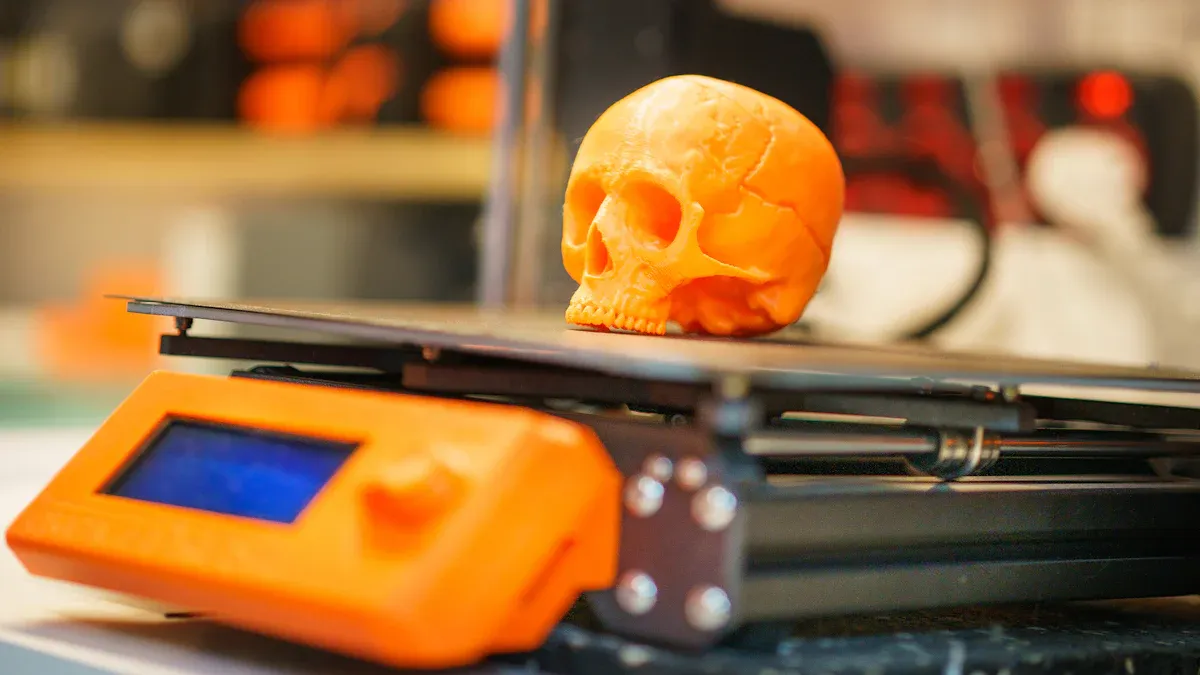
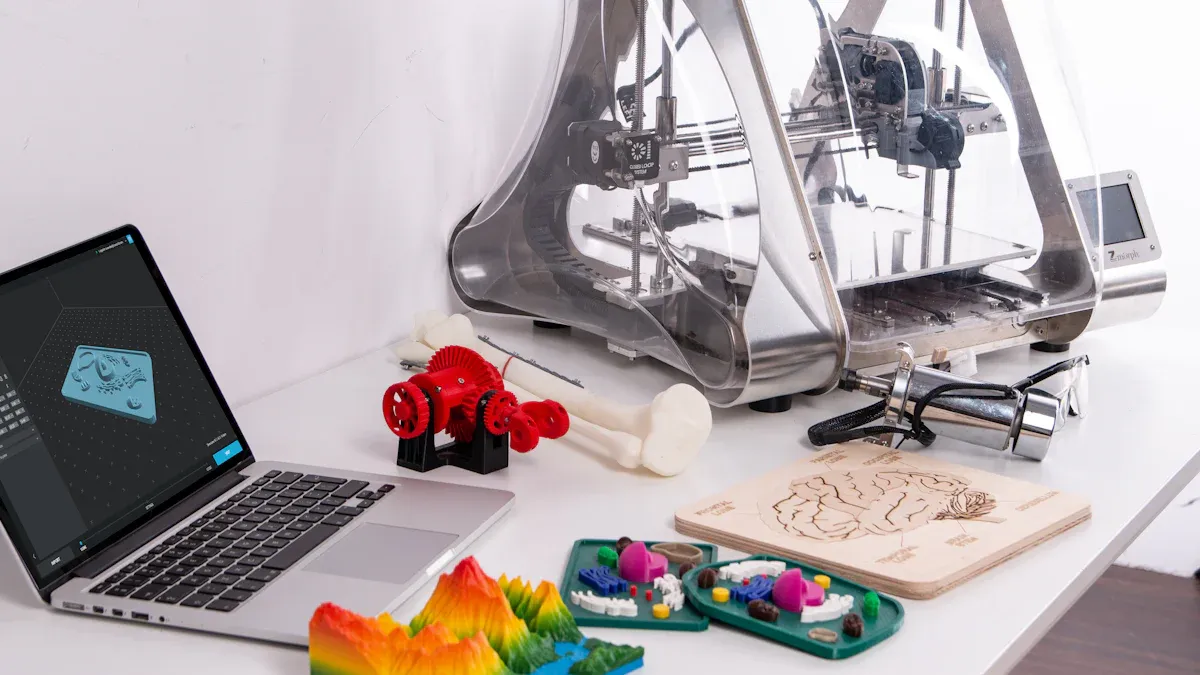
Learning tools like anatomy models
Pet accessories, like name tags and supports
Wall art and light fixtures
Gifts and travel accessories you can personalize
Tip: You can change designs to fit thick phone cases or add things like cable holders. Making changes can make things work better for you.
You can have fun with hobbies and DIY projects using 3D printing custom parts. Many hobbyists print tools and organizers for their work areas. You might print a stand for solder wire if you like electronics. You can make a handle for cans for outdoor trips. Desktop organizers help keep your supplies in order. Some people make honeycomb storage walls with LED lights for style and use.
Some common hobby projects are:
Stands for solder wire
Handles for cans
Organizers for your desk
Honeycomb storage walls with lights
Holders for phones or tablets used as cameras
Note: You can turn your ideas into real things. 3D printing custom projects let you make tools and accessories for your hobbies.
You can begin 3D printing custom parts by picking a printer or using a service. Many people new to this like printers that come ready to use. These are easy to set up. The Voron 2.4 R2 is a kit that is popular. It has a big build area and is enclosed. Some printers, like the Qidi X-Max 3, work really well. But they might seem hard for beginners. If you do not want to buy a printer, you can use online services. You upload your design and they send your part to you. Here are some well-known services:
JLC3DP
Xometry
Shapeways
Craftcloud
Ponoko
Print a Thing
Service | Pricing | Material Selection | Key Features |
|---|---|---|---|
JLC3DP | Starts at $0.3 | Limited | Competitive pricing, rapid prototyping |
Xometry | Higher for small orders | Extensive | Wide range of services, instant quotes |
Shapeways | Higher for custom orders | Wide selection | Focus on customization, high-quality printing |
Tip: If you want things to be easy, pick a printer that is already put together or use a printing service.
You can find lots of files online that are ready to print. Many websites have free and paid models for many projects. Some popular sites are Thingiverse, Printables, Makerworld, MyMiniFactory, and Cults. These sites have files for home repairs, gadgets, and hobbies.
If you want to make your own part, there are simple 3D modeling tools. These programs are easy to use and have guides to help you. You can get free versions that work for most things. Tutorials and help from others make learning fast, even if you are new.
Note: YouTube has many videos that show each step. Watching these can help you learn how to do it.
When you print your first part, you might have some problems. Sometimes the surface looks messy, layers split, or the print does not stick. Here are some tips to help you:
Use supports in your software for parts that hang over.
Make sure the print bed is flat so prints stick.
Check for clogs if no filament comes out.
Change the temperature if layers come apart or melt.
Challenge | Solution |
|---|---|
Messy surfaces or spider nets | Add supports in slicing software |
Layers splitting | Raise the print head temperature |
Print not sticking | Level the print bed and increase bed temp |
No filament coming out | Clear clogs in the print head |
You can pick from different 3D printing technologies. FDM is the most common and is good for home use. SLA makes smoother parts. SLS is best for strong and tricky shapes.
Tip: Try FDM printers first for easy projects. Use SLA or SLS if you want more detail or stronger parts.
Now you can start your 3D printing custom adventure with confidence.
You can enjoy many advantages when you use 3D printing for custom parts. This technology gives you more freedom to design shapes that traditional methods cannot make. You can create complex objects without extra cost or effort. You also waste less material because the printer only uses what you need for your part.
You can design parts with unique shapes and features.
You save money by skipping expensive molds or tools.
You get your parts faster, especially if you need only a few.
You help the environment by reducing waste.
3D printing offers several advantages over traditional manufacturing, including more design freedom, the ability to print complex designs at no additional cost, and less waste material.
You can see these benefits in real life. Doctors use 3D printing to make custom prosthetics and implants. Athletes get sporting gear made just for them. Fashion designers create unique sunglasses and accessories. If you want to make only a small batch, 3D printing saves you time and money. You do not need to wait for weeks or pay for special tools.
You may face some challenges with 3D printing custom parts. The printer builds objects layer by layer, which can cause weak spots if the layers do not bond well. Sometimes, the print head cannot make very fine details, so your part may not look perfect. The material you choose can also affect how strong or light your part is.
Design precision can be hard to achieve, especially for tiny parts.
Layer bonding may fail, making the part weak or easy to break.
Material choices may not always give you the strength or flexibility you want.
Print times can be slow, especially for big or detailed parts.
Some materials cost a lot or do not work well for every project.
Not all printers and materials follow the same quality standards.
You should think about these limits before starting a project. If you need a part that must be very strong or exact, you may need to test different materials or settings. Sometimes, 3D printing works best for prototypes or small batches, not for every job.
You can use 3D printing custom solutions to make things that fit you. This technology lets you design items for your style, size, or comfort. Many companies use 3D printing to make special products. For example, doctors can order dental implants that fit your mouth well. Shoe brands can print shoes that match your foot shape. Artists can make sculptures with tiny details that are hard to do by hand.
Here are some good examples of personalized products made with 3D printing:
Product Type | Description |
|---|---|
Customized dental implants | 3D printed implants fit well using CAD models and CT scans, making them more comfortable. |
Prosthetic limbs | Prosthetics made for each person’s size, so they work better and look nicer. |
Drug delivery devices | Devices made for exact doses, which helps with personalized medicine. |
Custom-fitted products | Things like insoles and tools made to fit you, so they feel better and work well. |
Personalized designs | Special jewelry and decorations made from your ideas, showing your style. |
Fashion and footwear | Shoes made by brands like New Balance, shaped for your feet. |
Art and sculptures | Detailed art made by artists using 3D printing, with designs that are hard to make by hand. |
Jewelry Replicator by American Pearl lets you design jewelry or copy lost pieces with 3D printing.
You can see how 3D printing helps you get products that fit you well. This kind of customization often costs less than old ways of making things.
You can make new products faster with 3D printing. Old methods can take weeks or months to make a prototype. With 3D printing, you can get a prototype in hours or days. This fast process helps you test ideas and change them quickly.
Benefit | Description |
|---|---|
Immediate feedback | You can check how things work and look right away. |
Rapid iteration | You can fix things and print again in just hours. |
Early risk mitigation | You find problems or chances to improve early in the process. |
Material Variety | You can try many plastics, nylons, and resins. |
Cost Efficiency | You spend much less money making prototypes. |
An automotive startup can print a test part at night and try it the next day. This helps you find problems early and make your design better fast.
3D printing custom solutions let you test different materials and shapes without spending a lot.
You can use rapid prototyping to make your ideas real faster. This way helps you create new things and reach your goals sooner.
You can use 3D printing to solve daily problems and express your creativity. Many beginners have made useful items, like custom outdoor gear, replacement parts, and personalized gifts. You might design a survival whistle or fix a broken handle at home.
People create custom parts for broken items.
They design solutions for their needs.
They become more independent and creative.
You do not need special skills to start. Try 3D printing for your own solutions and see what you can make!
You can buy a basic 3D printer for under $200. Filament costs about $20 per spool. Many free designs are online. You do not need expensive tools to begin.
Yes! You can download ready-to-print files from sites like Thingiverse or Printables. You do not need to design anything to start printing useful parts.
Most home printers use PLA or ABS plastic. PLA is easy to print and safe for beginners. Some printers also work with PETG or flexible filaments.
3D printing is safe if you follow basic rules. Keep the printer in a well-ventilated area. Do not touch hot parts. Always watch the printer while it works.