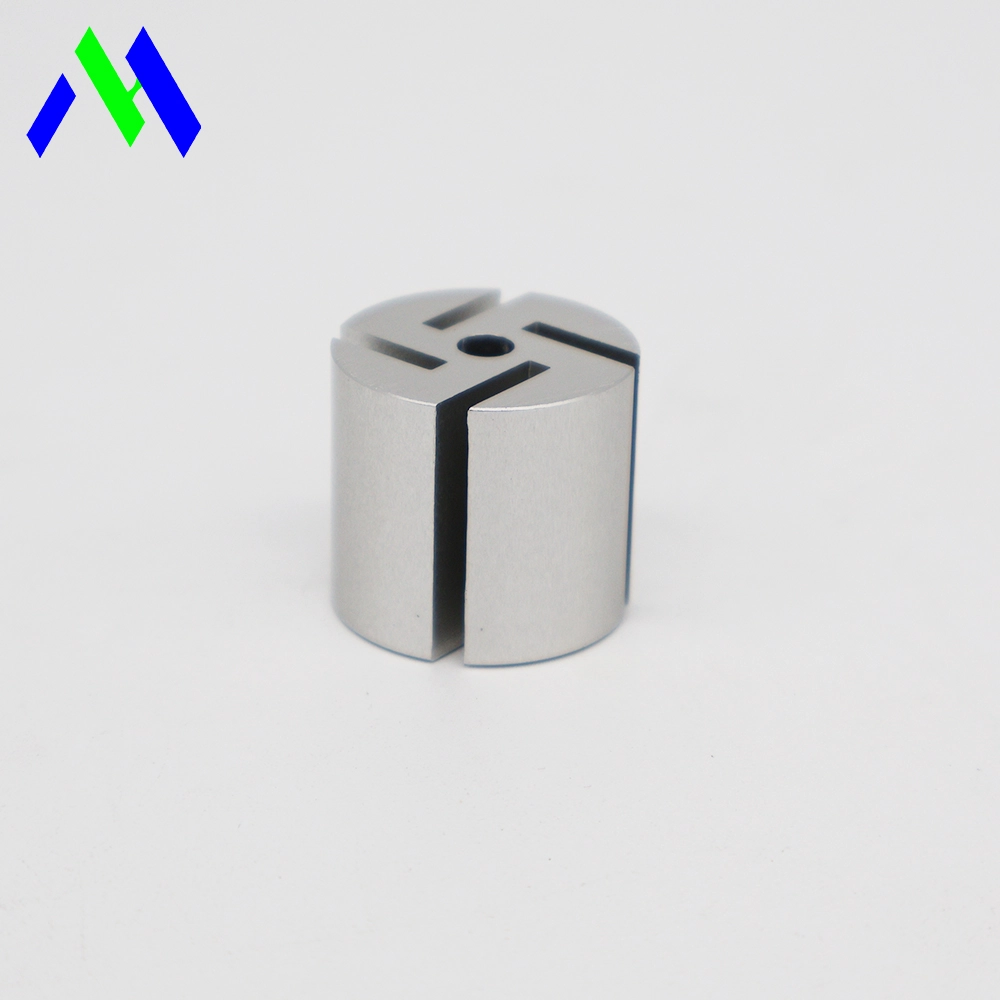
Traditional milling and turning hit hard physical limits when dealing with material hardness exceeding 45 HRC. Pushing conventional cutting tools into hardened tool steels or superalloys to create intricate internal geometries usually ends in snapped end mills, excessive chatter, and ruined components. Procurement and engineering teams run into a strict manufacturing wall. They need absolute micron-level tolerances on complex geometries but cannot afford the bloated cycle times, high scrap rates, and tooling failures associated with conventional machining. You have to approach the problem differently. Evaluating wire EDM machining services provides the exact workaround required. By examining specific technical capabilities, cost-efficiency drivers, design for manufacturability (DFM), and vendor risk mitigation, you secure structural integrity for high-value tooling. This method bypasses physical mechanical stress limits entirely, ensuring exact precision without sabotaging the production schedule or inducing geometric distortion.
Material Agnosticism: Wire EDM cuts conductive materials regardless of hardness, making it the default for carbide, titanium, and hardened tool steels without inducing mechanical stress or heat warping.
Cost-to-Complexity Ratio: Unlike traditional CNC, EDM costs are driven by cutting area and height, not geometric complexity, making it highly cost-efficient for intricate wire EDM machining parts.
Workflow Integration: True precision tooling requires vendors who seamlessly integrate EDM with preliminary CNC milling and Fast Hole EDM (hole popping) for optimal wire entry.
Risk Mitigation: Quality outcomes depend on managing the recast (white) layer; evaluating a vendor requires strict scrutiny of their power generation technology, certifications (AS9100/ISO 13485), and post-process metallurgical capabilities.
Scalability via Stacking: Strategic stacking of conductive plates allows for high-volume, uniform production runs that significantly lower the per-part cost.
Solid carbide end mills degrade rapidly when engaging pre-hardened alloys like D2, A2, Tungsten Carbide, Inconel, and Titanium. When you force a rotating cutter into these dense materials, several predictable failure modes occur on the shop floor:
Rapid edge degradation leads to immediate loss of dimensional accuracy across the tool path.
Unpredictable tool deflection pushes the cutter away from the surface, tapering deep vertical walls and ruining tight tolerances.
Sudden tool breakage leaves shattered carbide embedded deep within blind pockets, requiring massive downtime and expensive salvage operations.
Severe harmonic vibration damages the spindle bearings and leaves severe chatter marks on the final part surface.
Electrical discharge machining operates entirely contact-free. It generates absolutely zero mechanical cutting forces against the workpiece. This completely eliminates deflection, harmonic vibration, and severe distortion in thin-walled sections. Delicate features remain geometrically perfect regardless of the tool steel's Rockwell hardness. Traditional laser cutting frequently creates severe Heat-Affected Zones (HAZ) that alter local metallurgy and induce microscopic cracking. EDM preserves the core metallurgical integrity of the tooling by localizing thermal energy strictly to the microscopic plasma spark gap, protecting the internal temper of pre-hardened blocks and extending the working life of the die.
Round cutting tools cannot physically create sharp inside corners. The tool radius always leaves residual material that requires costly secondary broaching or manual filing operations. If an engineer specifies a 0.002-inch internal corner for a complex stamping component, a 0.004-inch end mill would snap the instant it touched the steel. Precision EDM cutting stands as the absolute technical standard for extrusion dies and blanking punches. These applications demand complex spline structures requiring near-zero internal radii. The highly tensioned, microscopic wire effortlessly navigates extreme contours and sharp internal pivot points. You can design innovative components without worrying about end mill access constraints, spindle collision risks, or flute length limitations. The vertical orientation of the wire allows for the flawless generation of deep, narrow slots that no conventional blade or cutter could ever reach.
Wire EDM rarely operates as a standalone process in high-efficiency machine shops. Attempting to cut an entire raw block of steel using only electrical discharge is inefficient. Manufacturers utilize conventional rough milling to remove bulk material quickly before heat treatment. Once the block is hardened to 60 HRC, it moves to the EDM cell for finishing passes. This hybrid manufacturing approach optimizes overall machine time and maximizes volumetric material removal rates. Fast Hole EDM, commonly known as hole popping, creates essential starting holes for the brass wire. This preparation ensures the cut begins internally rather than entering from the vulnerable outer edge of the workpiece. Internal starting holes preserve the continuous outer perimeter of the stock material, allowing the internal slug to drop out cleanly without damaging or compromising the surrounding tool structure.
Industry-standard expectations demand exceptional precision for custom tooling and medical instruments. Premier services routinely hold tight tolerances down to ±0.0001 inches (±2.5 microns) on critical dimensions throughout a massive production run. High-frequency generator technology allows surface finishes to achieve a remarkably smooth 4 Ra microinches directly off the machine. Advanced fine wire EDM tooling utilizes specialized high-tensile wire diameters down to 0.001 inches. These microscopic cutting tools handle intricate micro-manufacturing applications effortlessly. Minimally invasive medical device tooling relies entirely on these extreme tolerances for safe clinical operation. The predictability of the spark gap ensures that these extreme tolerances remain highly repeatable across continuous production cycles without requiring manual operator offsets.
Integrating sophisticated 4-axis and 5-axis systems unlocks unparalleled geometric freedom for complex tool making. A professional CNC wire cutting service easily produces complex variable tapers across thick steel plates. Independent top and bottom profile programming allows the machine's upper guide to move entirely separately from the lower guide. You can program a perfect circle on the top surface and a sharp square on the bottom surface, and the machine will transition the geometry flawlessly through the thickness of the block. Automated wire threading reduces machine downtime drastically by instantly recovering from unexpected wire breaks inside deep cavities. Adaptive power control systems monitor flush pressure and spark intensity constantly in real-time. These intelligent controls navigate varying part thicknesses smoothly to maintain continuous path accuracy without human operator intervention.
Micro EDM machining defines the absolute pinnacle of precision manufacturing. It specifically applies to injection mold inserts, micro-fluidic tooling, and miniature electronic connectors demanding flawless execution. Achieving micro-level fidelity without dangerous thermal drift requires rigorous environmental facility controls. The dielectric fluid temperature must remain perfectly stable to prevent geometric expansion of the workpiece during a 40-hour cutting cycle. High-mass synthetic granite machine bases provide essential vibration isolation from surrounding shop floor activities like forklift traffic or heavy stamping presses. These strict environmental controls ensure the invisible spark gap remains absolutely constant, preventing microscopic deviations on the final component surface.
Actionable CAD guidelines actively reduce initial quoting costs and prevent manufacturing delays. Engineering teams must optimize their part files before submitting them to the shop floor. Follow these specific DFM practices to reduce overall cycle times dramatically for intricate wire EDM machining parts:
Place starting holes optimally near the geometric center of the waste slug to minimize total non-cutting feed length.
Keep parts structurally uniform to prevent violent warping upon internal material release.
Design flat, parallel top and bottom surfaces so the upper and lower flush nozzles can sit perfectly flush against the part, guaranteeing excellent fluid dynamics.
Minimize trapped internal volumes to prevent stagnant dielectric fluid from causing secondary arcing and dimensional overburn.
Ensure continuous electrical conductivity throughout the cut path to prevent premature wire breakage and stalled machines.
Clamping multiple thin metal sheets together allows manufacturers to cut dozens of identical components simultaneously. Strategic stack cutting drastically reduces the per-unit machining time compared to single-sheet processing. Upfront setup fees and programming times diminish mathematically across larger production batches. Total wire consumption drops significantly for flat, low-profile parts because the machine utilizes a longer continuous section of the wire. Engineers must ensure the stacked plates maintain perfect electrical contact with zero microscopic gaps to prevent dielectric fluid intrusion between the layers. If fluid enters the gaps, the wire will arc wildly and break. This specific setup equation makes the process highly competitive for volume production of thin aerospace shims, copper motor laminations, and electrical contacts.
Evaluating machining costs requires analyzing the fundamental mechanics of material removal. Specialized carbide cutting tools carry massive upfront procurement costs. Hidden manufacturing expenses arise constantly from unpredictable tool deflection, rapid dulling, and catastrophic breakage inside deep cavities. EDM relies entirely on a predictable, continuous feed of brass, zinc-coated, or stratified wire.
Operational Feature | Wire EDM Machining | Traditional 5-Axis Milling |
|---|---|---|
Tool Wear Degradation | Zero (Wire is constantly renewed from the spool) | High (Requires frequent tool changes and constant monitoring) |
Material Hardness Limits | Unlimited (Only requires electrical conductivity) | Strictly limited by cutter hardness (Typically fails > 60 HRC) |
Internal Corner Radii | Extremely sharp (Down to 0.0015 inches) | Strictly limited by the physical end mill diameter |
Cutting Force Distortion | Zero (Contact-free plasma erosion) | High (Induces severe mechanical stress on thin walls) |
Unattended Operation | High (Lights-out automation is the standard baseline) | Moderate (Requires human monitoring for tool breakage) |
The wire constantly renews itself during the aggressive cutting process. This "always sharp" nature guarantees perfect dimensional consistency across massive batches. Operators never perform mid-run tool offset adjustments to compensate for dulling flutes. Tooling components cut on day one match the final components cut on day ten perfectly. This eliminates the dimensional drift that plagues conventional high-volume CNC milling.
Modern manufacturing cells utilize highly reliable automatic wire threading (AWT) systems. Massive external wire spools, often weighing over 30 pounds, allow machines to run continuously over weekends and off-shifts without human supervision. Robust lights-out capabilities directly translate to dramatically shorter project lead times. Unmanned operation accelerates critical prototyping phases for urgent defense contracts and rapidly tracks medical device launches. It significantly reduces direct labor costs per part by maximizing total spindle utilization. Skilled human intervention is strictly reserved for complex initial fixturing, programming verification, and final CMM metrology inspection, allowing the shop floor to scale output without linearly scaling payroll.
Thermal melting and rapid quenching physically create the "white layer" or recast layer on the cut surface. This brittle, heavily alloyed surface layer presents severe structural risks for fatigue-critical aerospace parts and high-impact stamping dies. The rapid cooling traps residual tensile stresses that propagate into micro-cracks under load. Buyers must require vendors to explicitly detail their anti-electrolysis generator technology. High-frequency skim and trim passes physically remove the initial rough cut damage and minimize the final recast zone down to negligible sub-micron levels. Sophisticated secondary polishing capabilities remove latent micro-cracking risks entirely. Surface integrity strictly dictates the ultimate cyclic lifespan of high-stress precision tooling components, making recast management a mandatory evaluation metric.
Highly regulated engineering industries demand rigorous quality management checklists. Ensure the prospective vendor actively holds specific aerospace quality systems like AS9100. Medical device tooling strictly requires verifiable ISO 13485 certification for strict regulatory compliance. Evaluate their raw material lot traceability systems thoroughly to prevent counterfeit or sub-standard alloys from entering your supply chain. First Article Inspection (FAI) reporting proves actual manufacturing competency before volume production begins. Strict document control procedures must track every engineering variable from raw material intake to final component shipment. A shop failing to provide immediate material certifications presents an unacceptable supply chain risk.
High-precision metal machining becomes entirely obsolete without equally precise metrology measurement systems. Look for active ISO 9001 certifications as a foundational business baseline. Dedicated temperature-controlled inspection rooms prevent false readings caused by simple thermal expansion during measurement. Capabilities for automated Coordinate Measuring Machine (CMM) reporting utilizing touch-probe systems are absolutely non-negotiable for tooling validation. Optical comparators and vision systems verify microscopic edge profiles and corner radii accurately. Always verify the vendor actually possesses the advanced metrology equipment matching their marketed sub-micron cutting tolerances. If they claim a 0.0001-inch tolerance, they must own the inspection equipment capable of verifying a 0.00001-inch resolution.
Thermal expansion ruins tight geometric tolerances instantly. A premier manufacturing vendor must maintain strict shop floor ambient temperature controls, typically within a rigid ±1°F window. Evaluate their comprehensive dielectric fluid management systems. Physical filtration micron levels determine microscopic cutting stability by clearing eroded particles from the cut zone. Proper chemical deionization and high resin quality prevent severe galvanic part pitting on sensitive aluminum and titanium components. Immaculate fluid management maintains continuous electrical cutting speeds and prevents highly unpredictable spark gap fluctuations during massive thick-plate cutting operations. Poor water quality directly results in poor surface finish and dimensional inconsistency.
Require all prospective vendors to provide verifiable CMM inspection data and document their exact recast layer mitigation strategies prior to contract award.
Prioritize manufacturing partners holding active AS9100 or ISO 13485 certifications to guarantee full material and procedural traceability.
Audit the facility's physical capacity for high-efficiency plate stack cutting and robust automated lights-out production to ensure they can meet your scalable growth demands.
Submit technical drawings or native 3D CAD models directly to shortlisted partners to acquire comprehensive DFM feedback and exact cycle-time cost analysis before finalizing the design.
A: Maximum thickness depends entirely on the machine's z-axis height. Standard industrial equipment handles blocks ranging from 16 to 24 inches thick. Cutting extremely thick materials heavily reduces flush pressure efficiency, increasing the immediate risk of wire bow and significantly slowing cutting speeds. Specialized tall-mast EDM machines exist to accommodate thicker blocks for massive forging dies.
A: EDM is generally more expensive for high-volume, simple external geometries due to slower material removal rates. However, it is significantly cheaper for complex internal features or extremely hardened materials. It eliminates expensive specialized tooling wear, bypasses complex fixture fabrication, and runs continuously unattended.
A: Materials must possess electrical conductivity to sustain the required spark. Standard plastics, fiberglass, glass, wood, and most ceramics are entirely incompatible unless specially doped with conductive elements. Aluminum cuts rapidly but requires specific dielectric resin filtration systems to prevent harmful galvanic corrosion during long cycles.
A: Internal enclosed features require a pre-drilled vertical hole, often created rapidly via Fast Hole EDM. The machine threads the wire entirely through this hole before cutting begins. This prevents the wire from having to slice completely through the solid outer perimeter of the stock material.
A: Yes, modern advanced generator systems achieve near-mirror finishes directly off the machine. Running multiple successive low-power skim passes refines the cut surface down to approximately 4 Ra microinches. This precision frequently eliminates the need for any secondary polishing or risky manual hand-lapping operations.
A: The minimum radius is strictly defined by the wire diameter plus the microscopic spark gap. Using ultra-fine wire, corner radii can bottom out around 0.0015 inches. Standard 0.010-inch wire typically leaves a 0.0055-inch to 0.006-inch internal radius depending on the material and flush pressure.
A: Vendors prevent breakage by utilizing intelligent adaptive power settings that automatically adjust spark intensity based on resistance. Maintaining optimal high-pressure flushing conditions removes microscopic steel debris quickly. Additionally, utilizing zinc-coated high-tensile strength wires prevents thermal snapping inside deep, restrictive cutting cavities.
A: Yes. For tool inserts, dies, micro slots, sharp internal corners, and conductive hard materials, MHAO can evaluate whether Wire EDM should be used together with CNC milling or other machining steps to achieve the required geometry.
A: Wire EDM is often useful for conductive materials, narrow slots, fine internal profiles, hard tool steel, carbide, small-radius corners, and thin-wall sections where mechanical cutting force may cause deformation.