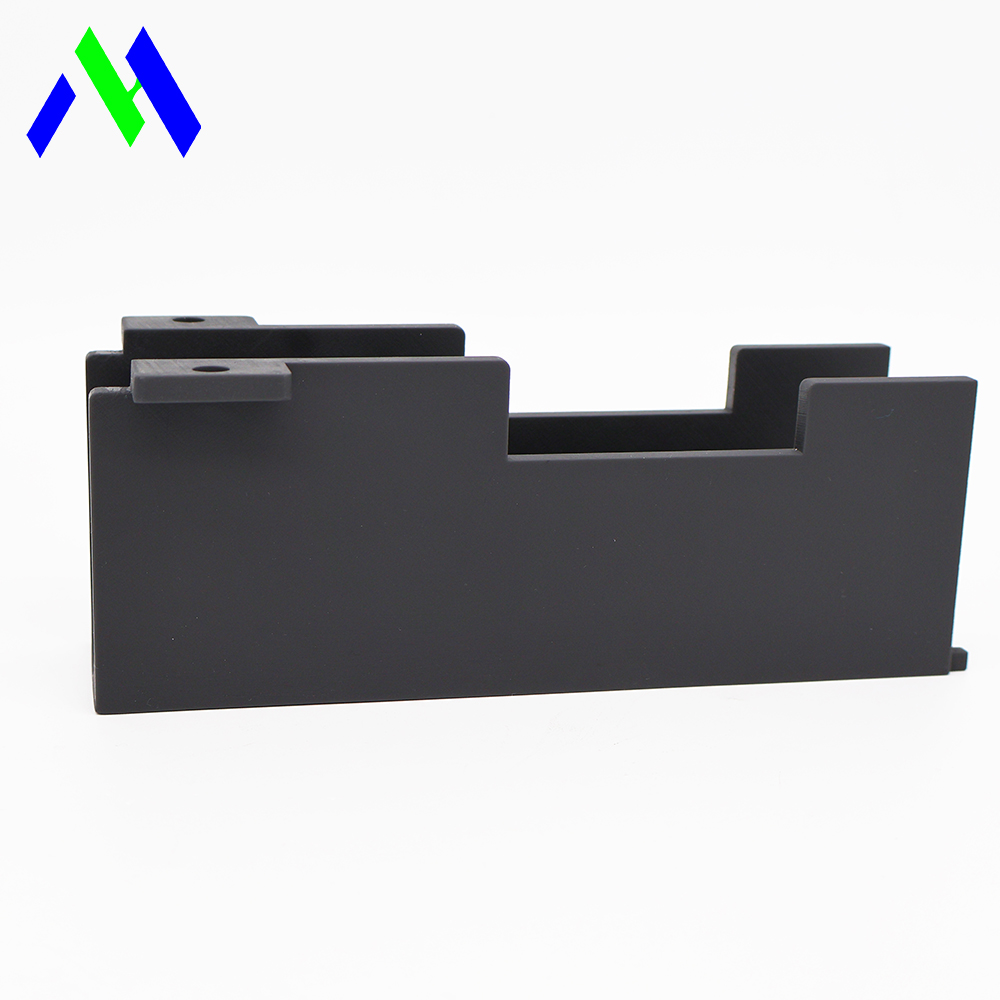
Moving from a digital concept to physical validation represents a critical engineering milestone. Hardware teams often hit frustrating roadblocks during this phase. They frequently rely entirely on in-house desktop printers. These consumer-grade machines struggle constantly. They rarely meet industrial standards for dimensional accuracy. They also lack access to advanced engineering materials.
A commercial 3D printing service easily bridges this vital gap. It connects your digital design to rigorous physical testing. Outsourcing this phase guarantees highly reliable results. You instantly gain access to industrial hardware. You avoid managing complex machinery internally. Your team can focus entirely on design iteration.
This guide provides a highly structured evaluation framework. You will learn how to vet potential manufacturing partners. We help you select the most appropriate additive technologies. You will discover proven methods to mitigate common design risks. You can confidently order your custom parts. Read on to optimize your entire prototype development cycle.
Outsourcing rapid prototyping shifts capital expenditure to operational flexibility, granting access to industrial-grade materials and machinery.
Technology selection (SLA, SLS, FDM, DMLS) must align strictly with the part's mechanical, thermal, and cosmetic requirements.
Evaluating a 3D printing service requires scrutinizing their quality management systems, IP protection protocols, and post-processing capabilities.
Designing for Additive Manufacturing (DfAM) is distinct from designing for injection molding; understanding this variance prevents costly downstream failures.
Scaling your hardware development demands immense flexibility. Managing in-house equipment often creates severe bottlenecks. Internal printers experience frequent machine downtime. They restrict your engineers to very limited material silos. An outsourced partner provides massive on-demand scale. You can bypass internal capacity limits entirely. Your team accesses dozens of machines simultaneously. This agility accelerates your entire product development cycle.
Operating industrial machines internally carries massive hidden burdens. You must account for rapid machine depreciation. Routine maintenance consumes hundreds of engineering hours annually. Leveraging a service bureau eliminates these burdensome capital expenditures. You pay only for the parts produced. This arrangement guarantees your access to current-generation hardware. You never worry about your expensive machines becoming obsolete. You maintain complete financial agility.
You must establish strict baseline metrics before engaging any provider. Defining success criteria early prevents misaligned expectations. Successful rapid prototyping 3D printing requires clear targets. Evaluate your specific dimensional accuracy requirements first. Define your maximum acceptable turnaround time. Document the exact mechanical properties required for your prototype. Sharing these metrics ensures your vendor delivers usable results.
Selecting the correct additive process determines your prototype's ultimate success. Every technology presents unique strengths and specific limitations. You must align the process directly to your application requirements.
Stereolithography excels at producing incredibly fine details. You should utilize an SLA 3D printing service for visual models. It delivers high-fidelity surface finishes flawlessly. SLA achieves extremely tight tolerances consistently. Engineers use it extensively for complex fluidics and presentation models. However, SLA resins suffer from long-term UV instability. The parts degrade slowly under direct sunlight. They also lack high mechanical toughness compared to specialized plastics.
Selective Laser Sintering remains the gold standard for robust engineering applications. It creates highly functional 3D printed parts efficiently. SLS powder acts as its own support structure during printing. You can design incredibly complex internal geometries. SLS parts possess excellent isotropic strength. They withstand significant physical stress equally in all directions. Ideal applications include living hinges and durable snap fits. You should use SLS for rigorous environmental testing units.
Fused Deposition Modeling offers the most cost-effective solution for structural bulk. You use FDM primarily for heavy jigs and manufacturing fixtures. It extrudes industrial thermoplastics reliably. FDM handles large volumes at a fraction of SLA costs. It does carry notable structural trade-offs. FDM parts display visible layer lines routinely. They suffer from inherent Z-axis weakness. You must orient your print carefully to avoid shear stress failures.
Direct Metal Laser Sintering creates true high-performance components. It addresses strict requirements for end-use custom parts. DMLS handles critical load-bearing prototypes effortlessly. You can print complex titanium or aluminum geometries directly. It consolidates multi-part assemblies into single integrated components. DMLS requires significant engineering expertise. Thermal stresses during printing can warp metal parts severely. You must design specifically for the DMLS process.
Technology | Primary Advantage | Common Limitation | Ideal Application |
|---|---|---|---|
SLA | High-fidelity surface finish | UV degradation over time | Visual models, fluidics |
SLS | Isotropic mechanical strength | Slightly porous surface texture | Snap fits, functional testing |
FDM | Cost-effective structural bulk | Z-axis weakness, layer lines | Jigs, fixtures, large parts |
DMLS | High-performance metal properties | Thermal warping, high cost | Load-bearing metal parts |
Not all manufacturing bureaus operate at the same tier. You must evaluate potential partners using strict quality dimensions. A poor vendor choice delays product launches significantly.
You need absolute certainty regarding your prototype materials. Verify your provider uses certified engineering-grade resins and powders. Disreputable vendors often substitute cheap proprietary blends. These hidden blends completely lack formal technical data sheets (TDS). You cannot validate your design using unpredictable materials. Demand full material traceability before placing any order. Review the TDS thoroughly to match your exact thermal requirements.
A reliable vendor operates under rigorous quality frameworks. You should immediately check for formal ISO certifications. Look for ISO 9001 for general manufacturing reliability. Medical device engineers must require ISO 13485 certification specifically. You should also demand detailed First Article Inspection (FAI) reports. FAI reports prove the vendor measured your critical tolerances accurately. Consistent dimensional validation separates premium bureaus from standard hobbyist shops.
Your unreleased CAD files represent your most valuable intellectual property. You cannot upload these files to unsecured quoting portals. Assess the provider's data compliance frameworks carefully. Leading bureaus maintain strict ITAR or SOC 2 compliance. They enforce comprehensive Non-Disclosure Agreements (NDAs) universally. These protocols ensure your proprietary designs remain entirely secure. Never sacrifice IP protection for a slightly cheaper part.
Modern service platforms offer incredible software tools. Evaluate the platform's ability to provide instant quoting. The best portals highlight manufacturability issues automatically. They identify thin wall thickness risks before checkout. They flag trapped volumes inside your complex models. This automated Design for Manufacturability (DFM) feedback saves weeks of iteration. It prevents you from ordering unprintable geometries entirely.
Best Practice: Always request a sample material chip before committing to a massive production run.
Common Mistake: Ignoring automated DFM warnings regarding trapped resin volumes in SLA models.
Security Check: Verify the vendor hosts their quoting portal on encrypted, private servers.
Quality Check: Ask the provider how frequently they calibrate their industrial printing machines.
Designing for additive manufacturing differs heavily from traditional methods. You must anticipate specific implementation realities. Failing to understand these nuances causes expensive downstream failures.
You must recognize the inherent prototype-to-production gap. Do not validate a part's design solely on a 3D print. A successful print does not guarantee a successful final product. Your final product might be injection molded eventually. It might undergo CNC machining later. Injection molded plastics behave very differently than sintered powders. Molded parts experience sink marks and warp uniquely. You must interpret your 3D printed results carefully. Use the print to validate form and fit primarily. Do not assume the exact mechanical properties will translate flawlessly to mass production.
Additive manufacturing processes carry standard dimensional variations inherently. Plastics shrink as they cool and solidify. Sintered metals experience significant thermal contraction. You should expect typical dimensional variations routinely. These usually range from ±0.1mm to ±0.3mm depending upon the technology. You must design your parts acknowledging these absolute realities. Do not apply impossibly tight CNC tolerances to FDM prints. You will only frustrate your vendor and inflate your costs. Incorporate appropriate clearances into your CAD assemblies initially. Allow adequate room for minor thermal shrinkage.
Secondary operations transform the raw printed part completely. Raw prints often require extensive finishing work. You might request aggressive bead blasting for a matte finish. You could specify chemical vapor smoothing to seal the surface entirely. These operations definitely impact final part dimensions. Vapor smoothing melts the outer microscopic layer slightly. It can alter tight tolerance holes unexpectedly. Post-processing also extends your lead times noticeably. Secondary operations like custom threading or automotive-grade painting increase unit economics. Always account for finishing steps when planning your validation timeline.
Your prototyping partner should ideally support your product's future growth. Transitioning between different vendors disrupts your supply chain constantly. You should establish a logical shortlisting strategy early.
Determine if the service provider can handle bridge production confidently. Bridge production typically encompasses batches of 100 to 1,000 parts. Your vendor needs sufficient machine capacity for these volumes. They must deliver these batches without exponential lead time increases. A good partner scales their output rapidly. They transition your project from a single prototype to low-volume manufacturing seamlessly. Ask about their fleet size during the evaluation phase.
Evaluate the massive benefit of using a single consolidated service. Many top-tier providers offer both 3D printing and traditional manufacturing. They handle your CNC machining and rapid injection molding simultaneously. This vendor consolidation ensures a completely seamless transition. As your product maturity increases, you simply shift the manufacturing method. You keep the same account manager. You utilize the same trusted quality control system. This strategy drastically reduces your procurement friction.
You are now ready to engage a potential manufacturing partner. Follow a deliberate validation sequence to ensure success. Do not commit your entire budget immediately.
Upload a File: Prepare a secure, representative CAD file of a challenging component.
Review DFM: Submit it to the portal and review the automated Design for Manufacturability (DFM) feedback thoroughly.
Consult Engineers: Discuss any flagged wall thickness or tolerance issues directly with their application engineers.
Order a Test: Order a very small batch of test geometries using your desired material.
Validate Quality: Inspect the delivered parts closely to validate the provider's dimensional consistency and surface finish.
Choosing a reliable commercial provider requires serious technical consideration. It represents a fundamental engineering decision. It is never just a simple procurement exercise based on price. The lowest bidder often compromises on material quality and dimensional accuracy. A premium partner directly impacts your product's time to market.
The right manufacturing partner actively reduces your inherent design risks. They leverage robust DFM software to catch errors early. They implement stringent quality control to guarantee consistency. They protect your intellectual property at every single step.
You must take decisive action today. Audit your internal design requirements carefully. Prepare a secure, fully finalized CAD file. Initiate a small test quote to benchmark the vendor's true capabilities. Executing this strategy ensures your next physical prototype performs exactly as intended.
A: Costs vary based on volume, material, and technology. Simple FDM prototypes may cost under $50. High-performance metal parts can exceed several hundred dollars. You should upload your CAD file to a provider's platform for an exact dynamic quote.
A: Most service bureaus ship standard plastic prototypes within three to five business days. Metal additive manufacturing or extensive post-processing can extend this timeline to two weeks. Always verify lead times during the initial quoting phase.
A: SLS (Selective Laser Sintering) generally offers the best performance for functional testing. It produces parts with excellent isotropic strength. SLS materials resist impact well, making them ideal for durable assemblies and snap-fit validations.
A: Yes, many are. Technologies like SLS, DMLS, and high-performance FDM produce robust end-use components. Industries routinely use them for lightweight aerospace brackets, custom medical devices, and manufacturing jigs. You must select engineering-grade materials to guarantee long-term durability.
A: Reputable providers enforce strict Non-Disclosure Agreements (NDAs). They also comply with data security frameworks like SOC 2 or ITAR. Their quoting portals encrypt your uploads to ensure your unreleased intellectual property remains entirely secure during transmission.