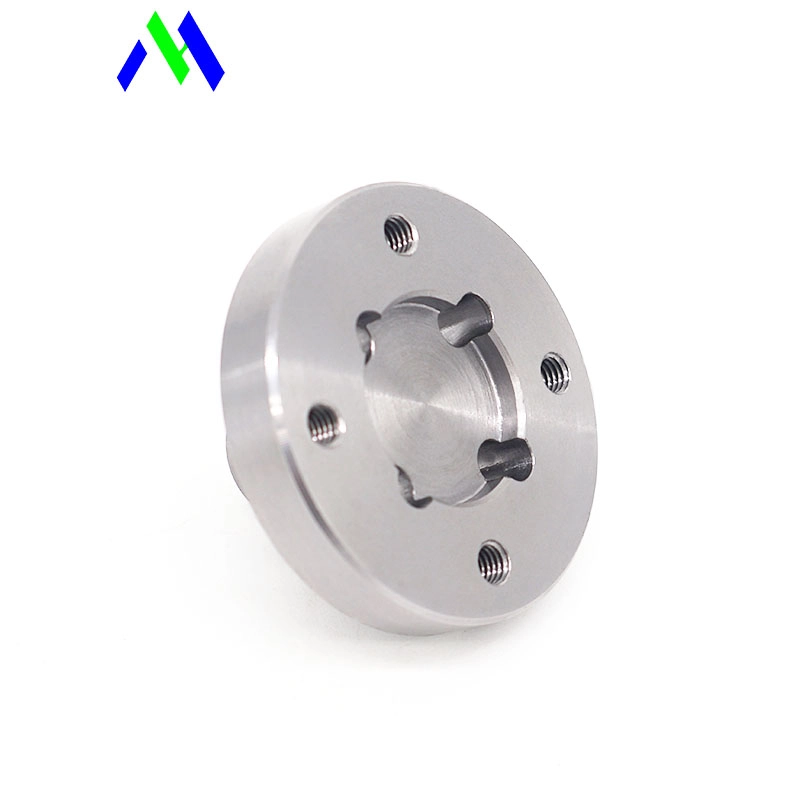
The automotive manufacturing landscape faces a period of rapid and intense transformation. Automakers must prioritize strict lightweighting goals to remain competitive. The fast transition to electric vehicles demands highly efficient architectures. Strict fuel economy regulations further push the need for advanced structural materials. Aluminum offers an exceptional strength-to-weight ratio for these engineering challenges. You cannot rely on raw casting or extrusion processes alone. High-stress vehicle assemblies require extreme precision for safe operation. Many components need secondary or primary CNC operations to achieve final dimensions. Relying strictly on rough parts leads to assembly failures and poor mating surfaces. This article builds a robust evaluation framework for modern manufacturing projects. You will discover how to evaluate material grades and define optimal production processes. We outline how to qualify manufacturing partners effectively. By leveraging cnc machining aluminum parts, you can achieve rigorous precision and performance standards while maintaining scalable production.
Material matching is critical: Choosing between 6061, 7075, or specialized automotive aluminum grades dictates both cost per unit and fatigue performance.
Process dictates scalability: Balancing CNC milling aluminum strategies with CNC turning processes minimizes setup times and operational costs for complex car parts.
DFM reduces thermal deformation: Aluminum's high thermal conductivity and internal stresses require specific tool pathing and coolant strategies to maintain strict automotive tolerances.
Compliance is non-negotiable: Viable manufacturing partners must demonstrate IATF 16949 compliance, robust PPAP capabilities, and CMM-backed traceability.
Automakers continually battle against excess vehicle weight. Heavy steel parts negatively impact suspension response and handling. Engineers replace these heavy steel components to reduce unsprung mass. This specific reduction improves overall vehicle dynamics significantly. The vehicle handles better, accelerates faster, and consumes less energy. Custom aluminum machining makes this transition seamless by providing high-strength alternatives to traditional cast iron.
Electric vehicles introduce entirely unique hardware requirements. Traditional internal combustion powertrains rely heavily on cast engine blocks. Electric vehicles require complex battery housings instead. They need highly integrated thermal management systems to keep cells cool. Inverter enclosures demand tight sealing surfaces to prevent moisture ingress. CNC machines carve these complex geometries with absolute precision. Standard molding techniques simply cannot match this dimensional accuracy.
Automotive suppliers face constant volume and precision challenges. High-volume structural parts might rely on die casting initially. However, critical precision components always require secondary machining. Rapid prototyping relies heavily on machined aluminum billets. Low-volume performance vehicles cannot justify the massive expense of permanent molds. Machining offers unparalleled design flexibility. You can update digital CAD designs and immediately run new physical parts without retooling delays.
Choosing the correct alloy dictates the ultimate success of your component. You must evaluate mechanical properties against manufacturing realities. Automotive precision components fail if the underlying material lacks the necessary fatigue resistance.
This alloy dominates the general manufacturing sector. It offers excellent machinability and predictable chip control. It provides solid corrosion resistance without extensive surface treatments. You will often see it used in standard brackets and suspension links. It handles fluid housings and cooling system manifolds perfectly. Furthermore, it welds easily, allowing for modular sub-assemblies.
Engineers specify this zinc-alloyed material for extreme load conditions. It offers exceptional strength that rivals many structural carbon steels. However, it costs significantly more than 6061. It also features lower natural corrosion resistance. You use it for high-performance transmission parts. Racing chassis components rely on its superior yield strength. Steering knuckles require this grade to survive severe impact forces.
Automakers rarely machine complete engine blocks from solid billets for production cars. Instead, they cast A356 aluminum into near-net shapes. These pre-cast engine blocks still need incredibly tight tolerances. Cylinder heads require perfectly flat mating surfaces to hold head gaskets. CNC processes finish these critical areas to ensure optimal engine compression.
You must balance raw yield strength against material expenses. Consider machine cycle times carefully. Some specialized alloys cut much slower than others. You must also evaluate required surface treatments. Hard anodizing adds dimension to the part, which requires pre-calculation during the machining phase.
Aluminum Grade | Key Properties | Yield Strength (Approx) | Common Automotive Applications |
|---|---|---|---|
6061-T6 | Highly machinable, weldable, corrosion-resistant. | 276 MPa | Brackets, fluid housings, suspension components. |
7075-T6 | Exceptional strength, poor weldability, higher cost. | 503 MPa | Transmission parts, steering knuckles, racing chassis. |
A356 (Cast) | Castable near-net shape, good strength when heat-treated. | 165 MPa | Engine blocks, cylinder heads, complex pump housings. |
Matching the geometry to the correct machine tool determines your operational efficiency. Misaligned processes lead to wasted setups and high scrap rates.
Milling utilizes rotating cutters to remove material from a stationary block. We use this for prismatic and highly complex geometries. Engine blocks and transmission cases require extensive milling. Battery tray extrusions need precise pocketing to hold cell modules safely. We constantly evaluate 3-axis versus 5-axis capabilities. 5-axis machining reduces the number of physical setups. It ensures strict geometric dimensioning and tolerancing (GD&T) alignment. You maintain perfectly aligned features across multiple component faces. CNC milling aluminum proves essential for these intricate housings.
Turning spins the raw material while a stationary cutting tool shapes it. We use this for cylindrical and rotational shapes. Drive shafts fit this category perfectly. Custom valve train components need precise concentricity. Bushings and customized fasteners also require turning. Live tooling completely transforms these operations. Mill-turn centers complete complex turned parts in a single machine operation. This advanced capability reduces human handling errors. We rely on CNC turning car parts to guarantee drivetrain reliability.
Aluminum presents unique physical challenges in the spindle. The material tends to stick to cutting tools under high heat. We call this phenomenon built-up edge (BUE). You must use specific carbide tooling to prevent this. Polished tool flutes help evacuate chips smoothly. High-pressure coolant systems remain absolutely essential. They blast chips away from the cutting zone rapidly. They also prevent thermal distortion during heavy, aggressive material removal.
Engineers must optimize CAD models before the first metal chip flies. Poor design choices inflate cycle times and ruin operational efficiency. Following standardized DFM guidelines prevents these issues.
Managing internal stress and deformation: Thin-walled aluminum parts warp easily. Heavy material removal releases inherent internal stresses. You must sequence roughing and finishing operations carefully to mitigate this. Leave a small amount of material during the roughing pass. Let the part normalize and cool. Then perform the final high-speed finishing pass.
Minimizing deep pockets and sharp internal corners: Deep pockets require dangerously long tools. Long tools vibrate, chatter, and cause poor surface finishes. Sharp internal corners require tiny, fragile end-mills. Standardize your corner radii. Match them to common end-mill diameters. This single change drastically reduces cycle time and tooling expenses.
Standardizing tolerances: Avoid blanket tight tolerances across the entire drawing. Specify tight tolerances (e.g., +/- 0.005mm) only where absolutely necessary. Apply them strictly to critical bearing surfaces or mating faces. Loose tolerances elsewhere prevent unnecessary manufacturing complications.
Surface finish optimization: Balance your surface finish requirements rationally. Raw machined finishes (Ra 1.6 - 3.2) work perfectly for internal structural components. Secondary processes add time. Bead blasting provides a uniform cosmetic look. Chemical conversion coating improves foundational corrosion resistance. Type III hard anodizing provides excellent wear resistance for sliding components.
Not every machine shop possesses the capability to handle rigorous automotive requirements. You need strict evaluation frameworks to protect your assembly lines. Poor quality control leads to catastrophic field failures.
A basic ISO 9001 certification serves as a bare minimum baseline. However, automotive supply chains demand significantly more control. IATF 16949 certification is strictly required for sustained integration. It ensures proactive defect prevention. It minimizes variation within the supply chain. It guarantees a culture of continuous improvement.
Vendors must provide comprehensive Level 3 PPAP documentation. This proves ultimate process stability before full production begins. It includes an exhaustive FMEA (Failure Mode and Effects Analysis). It requires detailed Control Plans that govern every single machining step.
Robust in-house inspection is mandatory. Suppliers need dedicated CMM (Coordinate Measuring Machines) inside temperature-controlled rooms. Optical comparators verify complex thread profiles. Raw material mill certificates ensure strict alloy authenticity. This deep traceability protects the final assembly and isolates potential recall batches.
You must assess the vendor's long-term growth potential. They might handle high-mix, low-volume prototyping exceptionally well. But can they transition to automated production seamlessly? Palletized production runs require robust robotic automation. Quality must never degrade during rapid scale-up phases. Finding reliable partners for cnc machined aluminum parts demands thorough, ongoing auditing.
Evaluation Category | Standard Commercial Requirement | Automotive Precision Requirement |
|---|---|---|
Quality Certification | ISO 9001 | IATF 16949 |
Part Validation | First Article Inspection (FAI) | Level 3 PPAP, FMEA, Control Plans |
Measurement Capability | Calipers, Micrometers, Pins | Multi-axis CMM, Optical Comparators |
Traceability | Batch level tracking | Raw material mill certificates, laser serialization |
Creating viable automotive components requires balancing strict engineering requirements against practical manufacturing capabilities. You must select the right aluminum alloy to match specific stress loads. You must also route designs to the most efficient machine tools to keep cycle times down. We know that successful automotive machining relies heavily on early design collaboration.
Stringent supplier compliance keeps assembly lines running without interruption. Manufacturers who prioritize DFM principles experience fewer delayed launches. Machining operations run smoothly when internal stresses and thermal expansions are controlled. Automotive production leaves absolutely no room for assumed tolerances.
Your next steps involve proactive evaluation. Audit your current component designs to identify immediate DFM optimization opportunities. Standardize your internal corner radii and loosen non-critical tolerances. Finally, request a documented PPAP capability statement from your prospective machining partners before issuing any purchase orders.
A: Standard commercial CNC machining typically holds ±0.125mm. However, precision automotive components routinely require ±0.010mm to ±0.050mm on critical mating surfaces. The exact achievable tolerance depends heavily on the specific part geometry and strict thermal control during the cutting process.
A: Aluminum expands significantly with heat generated by cutting tools. Machinists must utilize high-pressure flood coolant to stabilize the material. They also require strict temperature-controlled QA environments to ensure measurements taken at the machine match the final assembly room dimensions.
A: No. While 5-axis reduces setups for complex components like engine housings or battery trays, it is not always required. Standard 3-axis milling or 2-axis turning is much more cost-effective for simpler brackets, drive shafts, and flat mounting plates.
A: We recommend Type II anodizing for general corrosion resistance. You should specify Type III hardcoat anodizing for demanding wear surfaces, such as custom pistons. Use Alodine or Chem Film treatments where electrical conductivity must be maintained across the component face.
A: Yes. Automotive aluminum components may require CNC milling, CNC turning, drilling, threading, and surface finishing. MHAO can review the drawing and decide whether one process or a combined route is more suitable.
A: Buyers should provide the alloy grade, heat treatment, quantity, 2D and 3D drawings, tolerance requirements, surface treatment, threaded hole details, and any functional surfaces that affect assembly or sealing.