Squeezing toothpaste from a tube is a strikingly simple concept. Yet, applying this exact mechanical principle to heated metal forms the absolute backbone of modern structural engineering. Today's manufacturing landscape demands components that are not only lightweight but exceptionally durable. How do engineers consistently meet these rigorous standards? They turn to aluminum extrusion.
Throughout this comprehensive guide, we will dive deep into the intricate mechanics of metal forming. We will explore the geometric versatility of extruded shapes and highlight the critical importance of partnering with the right manufacturing provider. Let us break down how to bring your technical blueprints to life.
Aluminum extrusion is a highly precise industrial process. It forces heated aluminum alloy through a specially designed steel die to produce continuous, specific cross-sectional shapes.
This manufacturing workflow yields highly versatile components. Solid, hollow, and semi-hollow shapes serve as foundational elements across the construction, automotive, and consumer electronics industries.
Extruded aluminum delivers an exceptional strength-to-weight ratio alongside superior thermal conductivity. Its inherent natural corrosion resistance makes it a highly reliable alternative to heavier metals like carbon steel.
Partnering with an experienced manufacturing provider ensures strict dimensional tolerances. It guarantees access to custom tooling and high-quality secondary finishing operations, including multi-axis CNC machining and anodizing.
To fully grasp the nuances of modern manufacturing, one must first understand the fundamental mechanics of metal forming. Aluminum extrusion is a precise mechanical process used to transform raw aluminum alloy into functional objects. These objects feature a definitive, continuous cross-sectional profile.
The physics behind this operation relies heavily on the application of immense mechanical force. A solid cylindrical block of aluminum, commonly referred to as a billet, is heated until it reaches a highly malleable state. Subsequently, a powerful hydraulic ram pushes this softened metal through a specifically shaped opening in a custom-machined steel die. As the metal emerges from the other side, it takes on the exact geometry of the die opening. This creates a continuous piece that operators can cut to any desired length for further processing.
On the factory floor, fabrication facilities primarily utilize two distinct extrusion methods based on the movement of the heavy machinery.
Direct Extrusion: The die remains completely stationary while the hydraulic ram forces the billet through the opening. Because friction occurs between the billet and the container walls, this method requires massive force. However, it remains the standard for heavy-duty structural shapes and rods.
Indirect Extrusion: In contrast, the billet remains stationary while the die moves aggressively against it. The die is typically mounted on a hollow ram. This setup effectively eliminates friction between the billet and the container. It is ideal for profiles requiring highly consistent grain structures and tighter dimensional tolerances, often utilized in aerospace engineering.
The transformation from a raw block of metal to a precision-engineered component is never instantaneous. It involves a strict, temperature-controlled sequence. In practice, this operation is a highly choreographed symphony of heat, pressure, and rapid cooling.
The workflow begins with the raw aluminum billet. Operators cut the billet to a specific length and load it into a massive preheating oven. The metal is heated to a precise temperature range, typically between 750 and 900 degrees Fahrenheit, or 400 to 480 degrees Celsius. At this specific thermal threshold, the aluminum does not melt into a liquid. Instead, it becomes highly malleable, resembling the consistency of stiff dough. This careful thermal management ensures the metal flows smoothly through the die without compromising its underlying metallurgical integrity.
Once properly heated, the glowing billet is rapidly transferred to the extrusion press. A specialized lubricant prevents the metal from sticking to the machine components. The hydraulic ram then engages, applying massive pressure. This force often ranges from 1,000 to over 15,000 tons depending on the press size. Yielding to the pressure, the malleable aluminum conforms perfectly to the shape of the die opening and emerges as a fully formed continuous profile.
As the newly shaped extrusion exits the press, the surrounding air is thick with heat. To lock in the material properties and internal grain structure, the metal must be cooled immediately. This critical step is known as quenching. Facilities perform this using high-capacity water baths, aggressive water sprays, or high-velocity air fans. Rapid cooling prevents the metal from warping and ensures it meets the strict structural requirements of its specific alloy grade.
Following the quenching phase, the extruded metal is mechanically guided onto a long cooling table. At this stage, the metal may possess slight bends or twists due to the intense pressure and rapid temperature changes. To correct this, powerful grippers hold both ends of the extrusion and stretch it mechanically. This stretching action aligns the metal completely straight and actively increases its yield strength. Once trued, a high-speed saw cuts the continuous extrusion into specified lengths for easier handling.
The final metallurgical step is artificial aging. Operators place the cut extrusions into massive aging ovens and bake them at controlled temperatures, usually around 350 degrees Fahrenheit, for several hours. This controlled baking accelerates the hardening of the alloy. It brings the metal to its maximum structural strength, achieving a T6 temper. Following aging, the parts frequently undergo secondary finishing operations like anodizing or powder coating. These treatments enhance corrosion resistance and deliver a premium aesthetic appeal.
The true engineering value of the extrusion process lies in its boundless geometric versatility. The cross-sectional shapes created by the die are known as profiles. During the design phase, engineers specify different shapes based on complex load-bearing requirements, weight restrictions, and downstream assembly needs.
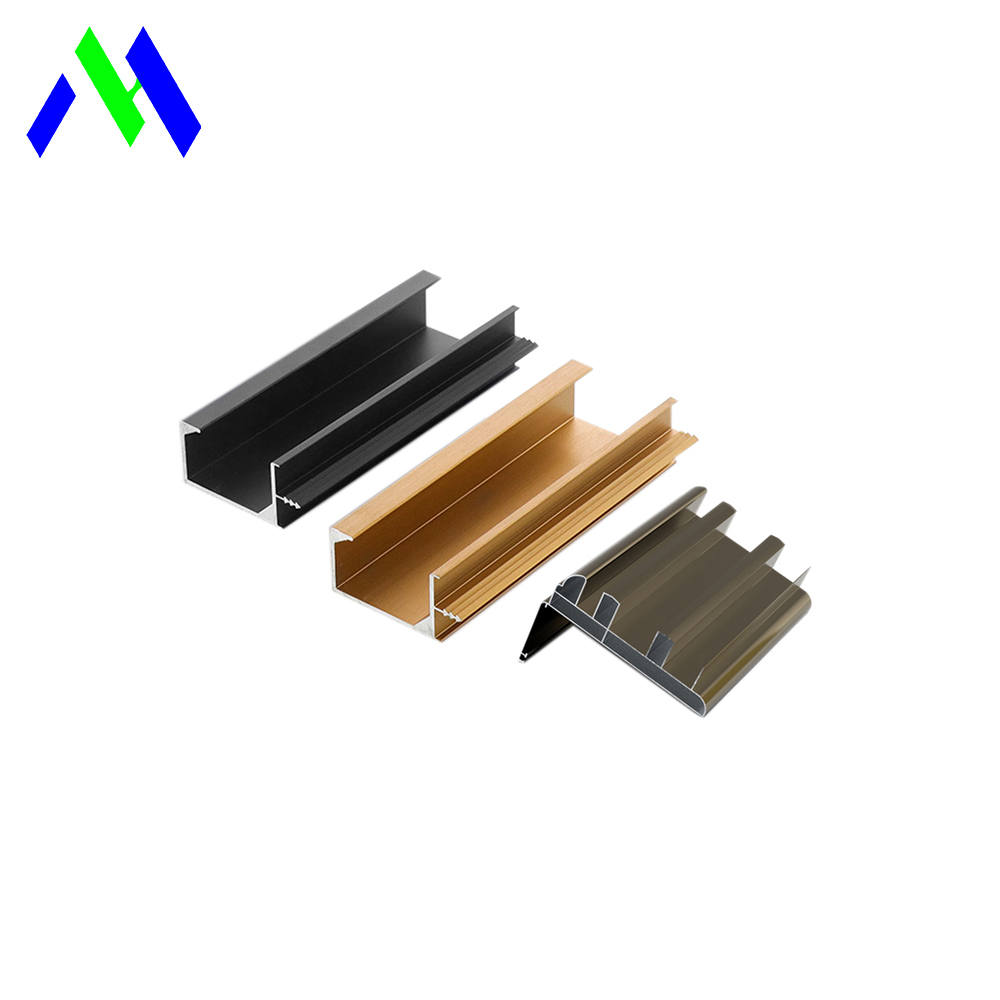
When sourcing materials for a new product, procurement teams often browse extensive catalogs of Aluminum Extrusion Profiles to find the exact geometric configuration required for their structural or thermodynamic applications. These profiles generally fall into three distinct architectural categories.
Solid profiles consist of a single, continuous cross-section with no enclosed voids or hollow spaces. Common factory examples include solid round bars, square rods, L-beams, and heavy T-beams. Because they contain significantly more mass per square inch, solid profiles are typically utilized in applications demanding heavy structural support, high load-bearing capacity, or extensive secondary CNC machining.
Hollow profiles feature one or more completely enclosed voids within the cross-section. Everyday examples include square tubes, rectangular pipes, and complex multi-chambered structural frames. These profiles offer exceptional torsional rigidity while drastically reducing the overall weight of the component. Consequently, they are the standard choice for fluid transport, lightweight architectural framing, and automotive chassis components.
Bridging the gap between the two, semi-hollow profiles contain voids that are partially enclosed but remain open to the outside environment. Think of C-channels, J-channels, and complex heat sink designs. These specific shapes prove highly valuable when engineers need parts that seamlessly integrate interlocking mechanisms, sliding linear tracks, or maximum surface area for aggressive thermal dissipation.
Looking at broader market trajectories, industry analysts note a massive surge in extrusion demand. This growth is heavily driven by the global transition to green energy and sustainable infrastructure. As electric vehicle production scales rapidly, automotive engineers are desperately seeking ways to offset the massive weight of lithium-ion battery packs. Extruded aluminum has positioned itself as a critical supply chain pillar for battery enclosures and crash management systems.
Similarly, the booming solar industry requires lightweight, weather-resistant mounting structures for panel frameworks. This shift underscores a definitive industry trend. Manufacturers are actively moving away from heavy, carbon-intensive metals in favor of agile, sustainable alternatives that do not compromise on structural performance.
When engineers and procurement managers evaluate raw materials for new product development, extruded aluminum consistently ranks at the top of the list. The process does not merely shape the metal. It fundamentally enhances the mechanical properties and application potential of the alloy itself.
Manufacturing Process | Tooling Cost | Design Flexibility | Best Application |
|---|---|---|---|
Aluminum Extrusion | Very Low | High for continuous cross-sections | Structural frames, heat sinks, linear tracks |
Die Casting | Very High | High for complex 3D geometries | Engine blocks, complex asymmetrical housings |
CNC Machining (Raw Block) | None | Maximum precision | Low-volume prototypes, highly intricate parts |
One of the most critical engineering advantages is the exceptional strength-to-weight ratio. Aluminum is approximately one-third the weight of steel. However, certain extruded alloys, such as 6061-T6, can be artificially aged and tempered to rival the tensile strength of heavy steel components. This characteristic allows manufacturers to reduce overall product weight, thereby improving fuel efficiency and payload capacity without sacrificing passenger safety.
The extrusion process offers a level of design flexibility nearly impossible to replicate with traditional metal forming methods like stamping or welding. Because the metal is forced through a custom-machined steel die, engineers can place mass exactly where it is needed for structural support. Non-load-bearing areas remain hollow. This capability allows for the seamless integration of complex features like screw bosses, interlocking hinges, and thermal fins directly into a single profile. Ultimately, this reduces the total part count in an assembly and drastically lowers manufacturing costs.
Unlike iron or carbon steel, aluminum does not rust. When raw aluminum is exposed to oxygen, it instantly forms a microscopic, naturally occurring aluminum oxide layer on its surface. This invisible barrier protects the underlying metal from environmental degradation. For applications in harsh outdoor environments, engineers exponentially improve this natural resistance through secondary surface finishing processes. Anodizing artificially thickens this oxide layer, providing extreme resistance to salt spray and harsh chemicals.
When planning a new project, procurement teams must decide whether to utilize off-the-shelf standard shapes or invest capital in custom tooling. Abstract concepts often confuse this decision. Let us look at the practical selection standards.
Standard profiles refer to universally common shapes that have pre-existing dies. Think of solid bars, square tubes, and L-angles. Because the manufacturer already owns the die, production begins immediately. This results in exceptionally fast lead times and zero tooling costs. These profiles are ideal for rapid prototyping and basic structural framing where proprietary geometry is unnecessary.
Conversely, custom extrusions require the design and fabrication of a unique steel die tailored specifically to your CAD drawing. While this involves an upfront financial investment, the long-term manufacturing benefits heavily outweigh the initial costs. Custom dies allow you to design precise interlocking joints and integrated fastener channels. By combining multiple parts into a single extruded profile, you eliminate the need for downstream welding.
From an engineering standpoint, custom profiles designed for precision applications demand strict dimensional tolerances. High-end facilities can push wall thicknesses down to 0.8 millimeters for lightweight enclosures. Partnering with a top-tier Aluminum Extrusion service ensures your custom dies are optimized for both smooth metal flow and ultimate structural integrity.
Selecting a manufacturing partner is arguably the most critical decision in your entire supply chain. Extruding the raw aluminum is only the first step. The true value lies in a supplier's ability to deliver a finished, precision-engineered component ready for final assembly. You must look beyond their basic press capacity and rigorously assess their comprehensive manufacturing ecosystem.
A premium fabrication partner provides end-to-end manufacturing solutions. Once an extrusion is cooled and cut, it almost always requires secondary modifications. You need a partner fully equipped with advanced multi-axis CNC milling and turning centers. Look for facilities capable of handling extrusions up to 6 meters in length. Surface finishes should consistently hit Ra 0.8 micrometers for precision mating surfaces. This ensures that precise holes, complex cutouts, and tight-tolerance threading are applied directly to the extruded part without moving to a different vendor.
In highly regulated industries, dimensional accuracy is absolutely critical. An objective indicator of a reliable manufacturer is their strict adherence to Quality Management Systems. Do they utilize Coordinate Measuring Machines to rigorously verify the geometric tolerances of the finished parts? Do they conduct in-house metallurgical testing to ensure the alloy tensile strength meets the required temper specifications? A trustworthy manufacturer always provides transparent inspection reports prior to shipment.
The most efficient supply chains operate on a one-stop-shop model. Managing separate vendors for extrusion, machining, and surface finishing introduces massive logistical risks and inflated costs. Look for a manufacturer that offers a full suite of secondary operations in-house. This includes precision cutting, deburring, drilling, and high-quality surface treatments. Anodizing layers must be strictly controlled, typically between 10 and 25 microns, for optimal corrosion resistance. When your vendor controls the entire process, you benefit from drastically reduced lead times and a unified point of accountability.
Aluminum extrusion stands as a highly efficient and indispensable manufacturing process. It seamlessly turns raw metal alloys into versatile, high-performance structural components. However, the ultimate success of your engineering project depends heavily on the technical expertise of your chosen manufacturer. By selecting a fabrication partner equipped with robust quality control, precision CNC machining, and comprehensive finishing options, you safeguard your supply chain and elevate your final product.
Are you ready to transition from a conceptual CAD model to a high-performance physical part? Explore our extensive range of custom Aluminum Extrusion Profiles tailored for doors, cabinets, and industrial framing. Contact our engineering team today to secure a professional Aluminum Extrusion service quote and discuss your specific tolerance and alloy requirements.
The 6000 series alloys, specifically 6061 and 6063, are by far the most widely used in the industry. Alloy 6063 is highly favored for architectural applications because it provides an exceptionally smooth surface finish ideal for anodizing. Meanwhile, alloy 6061 is typically chosen for structural applications due to its superior yield strength and robust load-bearing capabilities.
Extrusion tooling is remarkably cost-effective, especially when compared to other manufacturing methods like die casting. Depending on the complexity, size, and whether the profile is solid or hollow, a custom steel die typically ranges from $500 to $3,000. This low barrier to entry makes custom extrusion financially viable even for mid-volume production runs.
The minimum wall thickness depends heavily on the specific alloy and the overall size of the profile. For highly formable alloys like 6063, premium extrusion facilities can achieve wall thicknesses as thin as 0.8 to 1.0 millimeters. However, engineers must balance thin walls with the required structural integrity of the final component.
The temper designation indicates the specific heat treatment process the aluminum has undergone. For example, a T6 temper means the metal was solution heat-treated and then artificially aged. This process significantly increases the ultimate tensile strength and yield strength of the extrusion, making it suitable for demanding load-bearing applications.
Aluminum extrusion involves forcing heated, highly malleable solid aluminum through a die to create long, continuous lengths of a specific two-dimensional cross-section. Aluminum casting involves melting the metal completely into a liquid state and pouring it into a three-dimensional mold. Casting is better suited for creating complex, non-continuous, asymmetrical parts like automotive engine blocks.
Yes, most extruded aluminum alloys are highly weldable. The 6000 series alloys are routinely welded in structural framing and automotive applications using standard TIG or MIG welding processes. However, engineers must account for the fact that welding can locally reduce the temper and strength of the metal at the heat-affected zone.
Technically, the length of an extrusion is only limited by the total volume of the raw aluminum billet loaded into the press. Practically, the maximum length is constrained by the physical size of the manufacturer aging ovens, anodizing tanks, and standard shipping logistics. Consequently, most commercial extrusions are supplied in lengths ranging from 12 to 40 feet.