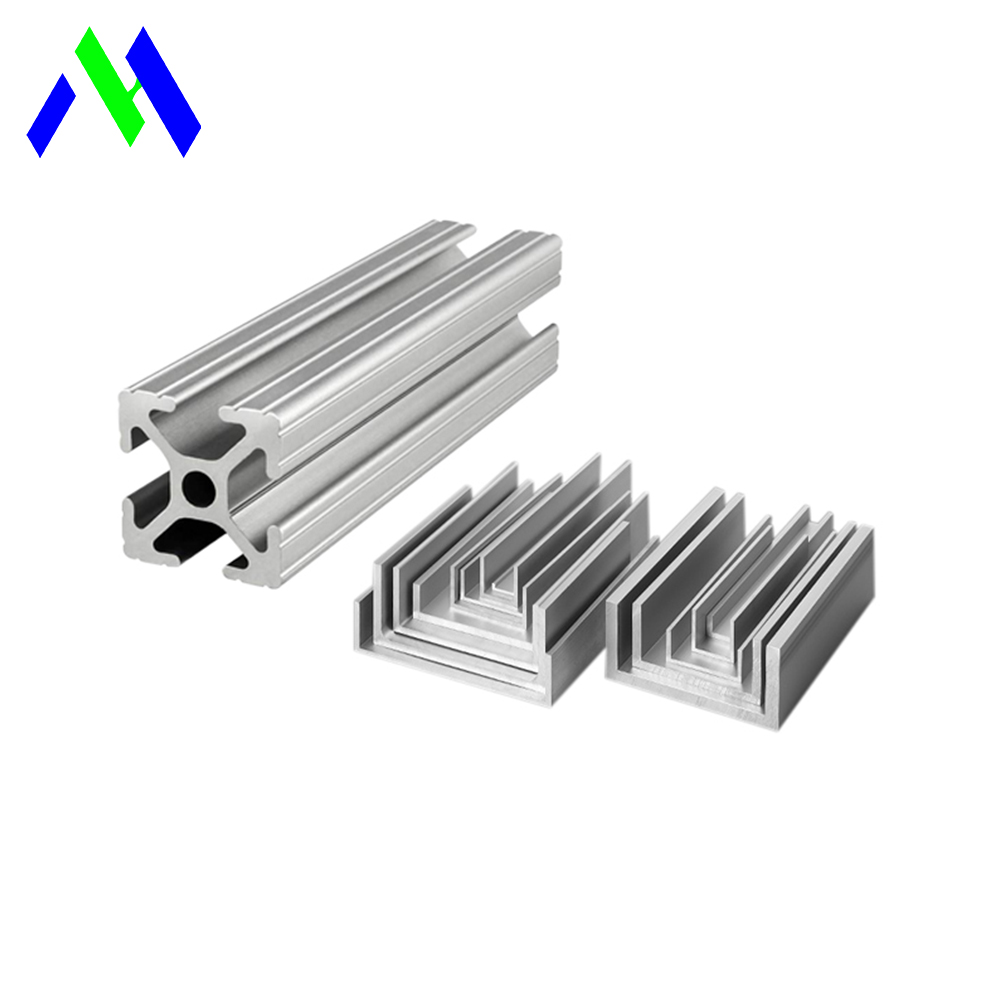
In the manufacturing and construction sectors, 6063 aluminum reigns supreme as the premier architectural alloy. Its blend of structural integrity, natural corrosion resistance, and a flawless aesthetic finish makes it a staple material for everything from commercial window frames to complex industrial heat sinks. Specifying the base alloy is just the beginning of the engineering process.
Choosing the 6000-series baseline gives you a solid foundation. Selecting the correct temper dictates exactly how the metal will behave under the CNC spindle and out in the field. Engineers and procurement managers frequently find themselves weighing the standard T5 temper against the highly specialized T52 variant. A wrong guess here leads to frustrating machining delays, warped parts, and blown project budgets.
This guide breaks down the metallurgical realities of these two thermal treatments. You will learn how to configure your next custom manufacturing run for maximum precision and cost efficiency.
Key Takeaways
6063 T5 cools directly from an elevated temperature shaping process before undergoing artificial aging. It stands as the reliable industry standard for general structural applications.
6063 T52 follows a similar initial cooling path but introduces a mandatory mechanical compression step to relieve internal stress before the final aging process.
The primary divergence lies in machinability and distortion control. T52 resists warping during heavy material removal, while standard T5 often twists when internal stresses are unleashed by the cutting tool.
Both tempers deliver excellent corrosion resistance and identical suitability for post-process surface treatments like anodizing.
Your final material choice depends entirely on strict geometric tolerance requirements and the volume of post-extrusion CNC milling required.
The global push toward electric vehicles and miniaturized advanced electronics is fundamentally changing how engineering teams procure aluminum. Modern product designs demand tighter geometric tolerances than ever before. We are witnessing a massive shift across the manufacturing sector. Precision machine shops are moving away from standard commercial tempers for complex components. Lightweight battery enclosures, intricate heat spreaders, and precision optical mounts cannot tolerate even a millimeter of distortion during assembly.
This relentless demand for extreme dimensional stability is pushing stress-relieved variants from a niche aerospace requirement into mainstream commercial manufacturing. Consequently, understanding how to control internal material stress is no longer optional for competitive product developers.
To fully grasp the nuances of tempering, you must first look at the base chemistry. The 6063 aluminum alloy utilizes magnesium and silicon as its primary alloying elements to form magnesium silicide. This specific chemical makeup provides a unique set of metallurgical characteristics highly desired across various industrial sectors.
The core advantage of 6063 is its exceptional extrudability. This pliability allows the hot billet to be pushed through complex steel dies, creating intricate cross-sectional profiles with relatively thin walls and complex internal cavities. Furthermore, the raw chemical composition naturally yields a surface finish that accepts clear or color anodizing flawlessly.
Yet, the raw chemistry is only half of the equation. To achieve the mechanical properties required for load-bearing applications, the metal must undergo targeted thermal treatment. In the world of aluminum extrusion, the T designation reveals exactly how the internal microstructure has been manipulated. Tempering dictates critical mechanical properties like ultimate tensile strength and internal stress distribution without altering the fundamental chemical makeup of the alloy.
The T5 designation represents the most ubiquitous thermal treatment process in the aluminum manufacturing industry today. By definition, a T5 temper means the aluminum alloy is cooled directly from an elevated temperature shaping process as it exits the extrusion press. It is subsequently artificially aged in a specialized industrial oven.
When the hot 6063 aluminum billet is forced through the die, it emerges at temperatures exceeding 500 degrees Celsius. In the standard T5 workflow, the profile is rapidly quenched using forced air or water jets as it moves down the runout table. Once the metal reaches room temperature, it is loaded into an aging oven held between 175 and 205 degrees Celsius for several hours. This artificial aging forces the magnesium and silicon to precipitate out of the solid solution. These microscopic structures pin the metal's grain boundaries together, drastically increasing overall hardness and rigidity.
From a practical shop-floor standpoint, the baseline mechanical properties for 6063 T5 are highly consistent. For instance, high-quality Dural 6063 T5 aluminum extrusion folding frame profiles typically feature precise wall thicknesses ranging from 1.2mm to 3.0mm. These specific profiles deliver a reliable ultimate tensile strength of approximately 150 MPa and a yield strength near 110 MPa. Because this continuous process is highly efficient, T5 serves as the default, cost-effective choice for framing and structural components where aggressive secondary milling is unnecessary.
Moving beyond basic thermal aging, the T52 temper is a specialized variation engineered specifically to eradicate residual internal material stresses. According to industry standards, the 52 suffix indicates a very precise sequence of events. The metal is cooled from the extrusion press, stress-relieved via mechanical compression, and only then is it artificially aged.
To understand why this extra step is critical, you must look at the physics of the quenching process. As the hot aluminum profile is rapidly cooled, the outer surface of the metal naturally contracts faster than the internal core. This severe temperature gradient traps intense thermal stresses within the crystalline structure of the aluminum. The metal constantly pulls and pushes against itself at a microscopic level, even though the extrusion appears perfectly straight to the naked eye.
In the 6063 T52 workflow, the profile is subjected to a controlled compressive force before it goes into the aging oven. Heavy machinery compresses the length of the extrusion, resulting in a slight permanent plastic deformation. This precise mechanical compression physically realigns the internal grain structure. It effectively neutralizes and equalizes the trapped thermal stresses.
Following this stress-relief step, the metal undergoes the same artificial aging as the standard T5 temper. While the ultimate tensile and yield strengths remain virtually identical to standard T5, the internal structure of T52 is entirely dormant. This metallurgical stability is exactly why precision machine shops demand it.
When analyzing 6063 T5 vs 6063 T52, product designers must look past raw load-bearing data. The real engineering battle happens during secondary manufacturing processes.
Feature | 6063 T5 | 6063 T52 |
|---|---|---|
Stress Relief Step | None | Mechanical Compression |
Internal Stress | High residual thermal stress | Neutralized and stable |
CNC Machinability | Prone to warping during heavy milling | Remains dead flat after heavy milling |
Procurement Cost | Highly economical standard pricing | Premium pricing due to extra processing |
Lead Time | Standard industry availability | Extended lead times for batch routing |
This is the absolute most crucial consideration for CNC machinists. When you aggressively mill a standard 6063 T5 profile, you are cutting away the metal that holds those dormant internal stresses in balance. As the cutting tool removes material from deep pockets or asymmetrical hole patterns, the trapped stresses are instantly released. The part will naturally warp, bow, or twist on the fixture. Machinists often refer to this rapid distortion as the potato chip effect, a phenomenon that can instantly ruin tight-tolerance components.
Because 6063 T52 has been stress-relieved via compression, these internal tensions are practically non-existent. A machinist can hog out massive amounts of material from a T52 extrusion, and the part will remain dimensionally stable. You get a perfectly flat component straight off the machine bed, drastically reducing your factory scrap rate.
Thanks to its excellent surface finish, adequate structural strength, and cost-effectiveness, standard 6063 T5 is the go-to material for applications where the profile is used relatively close to its original extruded shape. Typical use cases include architectural window frames, commercial door facades, and modular furniture framing. It also excels in standard extruded heat sinks and irrigation tubing, where operations are limited to simple cross-cutting rather than deep, stress-inducing milling.
In contrast, applications for 6063 T52 are driven entirely by the need to prevent scrap during intensive secondary manufacturing. Use cases demanding these specific properties include precision CNC machined electronic enclosures, aerospace structural brackets, and automotive chassis parts. Long extrusions requiring extensive asymmetrical milling, such as automated assembly line guides and linear motion tracks, rely heavily on T52 to remain perfectly straight over long distances.
Selecting the correct temper should be a calculated decision based on your specific manufacturing workflow and budget constraints. To simplify the engineering decision, utilize the following criteria.
Specify 6063 T5 if: Your blueprint requires minimal post-extrusion machining. If your secondary operations are limited to simple cutting to length, minor drilling, or basic tapping, the standard temper is perfectly adequate. If cost reduction is a primary driving factor and standard architectural tolerances are acceptable for the final assembly, T5 is your most logical route.
Specify 6063 T52 if: Your component design requires heavy, aggressive material removal via a CNC mill. If flatness, straightness, and strict geometric tolerances are critical to the function of the mating parts, T52 is non-negotiable. Any warping during the manufacturing process results in costly part rejection. The slightly higher upfront cost of T52 will actually save your project money by virtually eliminating machine shop scrap.
No, they look completely identical to the naked eye. Both tempers feature the exact same chemical composition and will exhibit the same smooth surface finish straight from the extrusion die. The difference between the two is entirely internal, relating only to the presence or absence of residual mechanical stress.
Yes. Because the baseline chemistry remains untouched, both tempers respond exactly the same way to surface treatments. They accept clear anodizing, color anodizing, and powder coating flawlessly, providing excellent corrosion resistance and aesthetic appeal.
Both tempers are highly weldable using standard techniques such as TIG or MIG welding. However, engineers must remember that the intense heat generated during the welding process will fundamentally alter the metal's internal microstructure. Welding significantly reduces the strength of the metal in the heat-affected zone, effectively erasing the specific mechanical benefits of the initial temper in that localized area.
Not necessarily. When comparing raw mechanical data, their ultimate tensile strengths and yield strengths are nearly identical. The primary advantage of T52 is dimensional stability during machining, not an increase in raw load-bearing strength. If your application strictly requires higher tensile strength, you should transition to a stronger alloy series altogether, such as 6061 aluminum.
T52 generally carries a higher price point per kilogram. The stress-relief compression is an additional, highly calibrated step requiring specialized heavy machinery. This extra processing time and equipment routing add to the manufacturing cost and can occasionally extend procurement lead times compared to universally available T5 profiles.
Theoretical knowledge of aluminum tempers is highly valuable, but practical application requires an experienced manufacturing partner. Not all extrusion facilities are equipped to handle the specialized compression machinery required for the T52 temper. Partnering with a reliable supplier ensures your parts are engineered correctly from the raw billet to the final machined component.
Whether your project requires cost-effective standard profiles for architectural framing or stress-relieved custom geometries for precision electronics, selecting the right manufacturing source is critical. Explore high-quality custom aluminum extrusions tailored precisely to your exact specifications, ensuring your next production run stays on time, dimensionally accurate, and strictly under budget.