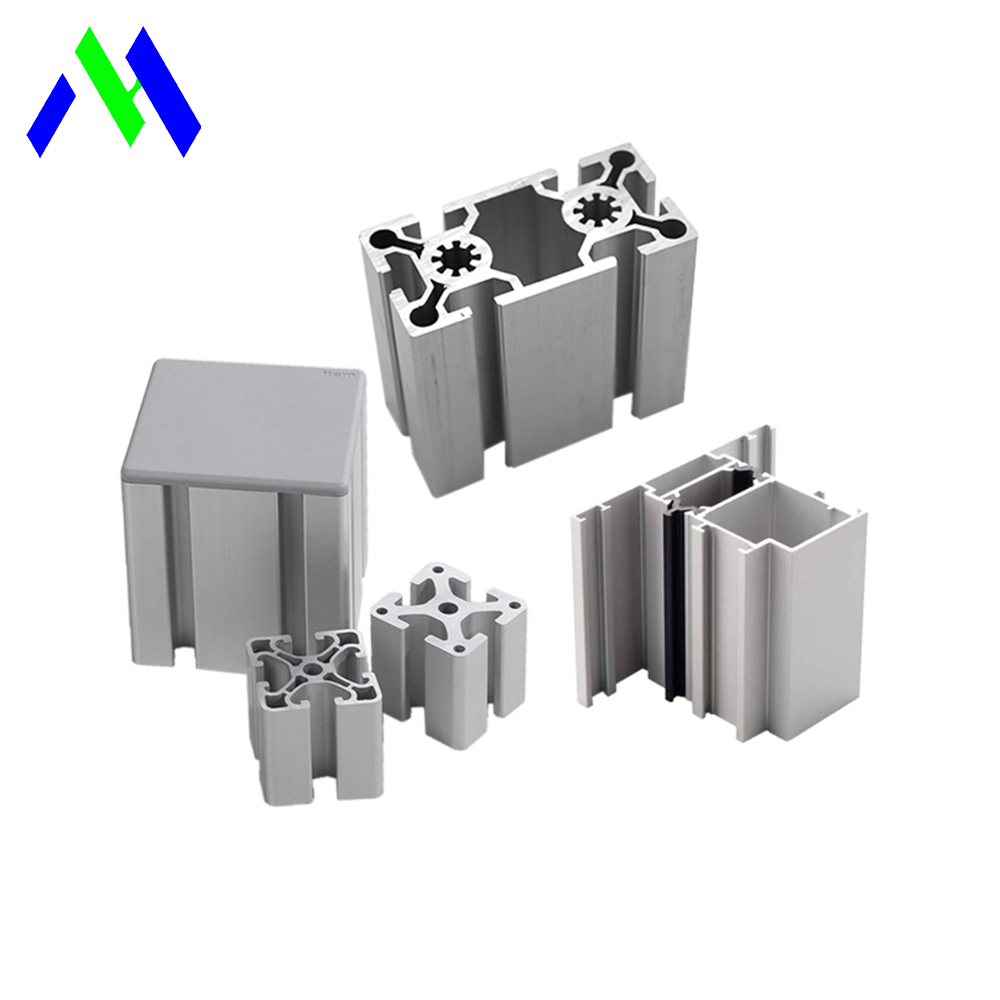
Modular framing systems have fundamentally transformed modern engineering and industrial manufacturing. You no longer need extensive welding, precision grinding, or highly specialized metalworking skills to build a custom machine frame. Today, T-slot and V-slot extrusions function much like a sophisticated structural erector set for adults. They empower builders to move seamlessly from rapid prototyping to robust final assemblies.
At the very core of this modular revolution sits the 2020 aluminum profile. Recognized globally as one of the most versatile and beginner-friendly extrusion sizes available, it serves as the foundational building block for an endless array of mechanical applications. By integrating a custom aluminum extrusion into your workflow, you can bypass complex fabrication bottlenecks entirely. This drastically reduces downtime and accelerates project delivery.
Despite its massive popularity in the construction of 3D printers, CNC routers, and automated workstations, buyers frequently encounter critical uncertainties. Engineers and fabricators alike often struggle to determine if this compact size possesses the necessary rigidity for their specific load requirements. They wonder how it directly compares to heavier industry standards like the 4040 series. Furthermore, understanding the exact hardware ecosystem required to piece it all together remains a common hurdle.
This comprehensive guide addresses those exact concerns from an engineering perspective. We will explore everything from precise material specifications and realistic load-bearing capacities to hands-on assembly best practices. You will gain the empirical data needed to make a highly informed purchasing decision for your upcoming build.
Standardized Dimensions: Measuring exactly 20mm by 20mm, this profile utilizes a universally accepted metric standard. Global material sourcing and cross-brand hardware matching become incredibly straightforward.
Optimal Strength-to-Weight Ratio: Extruded primarily from high-quality 6063-T5 alloy, it delivers excellent structural integrity for lightweight to medium-duty applications. It achieves this without burdening your assembly with unnecessary bulk.
High Customizability: Featuring a continuous internal channel along its entire length, the design allows for rapid assembly and non-destructive disassembly. Component repositioning is virtually infinite.
Project Versatility: It stands as the undisputed industry standard for desktop 3D printer frames, laser engravers, light-duty camera sliders, and modular laboratory workstations.
Cost-Effective Prototyping: Compared to larger structural members, this compact extrusion remains highly budget-friendly. It is the ideal choice for iterative design phases and cost-sensitive production runs.
Before diving into complex load calculations and fastener ecosystems, you must grasp the fundamental physical characteristics defining this specific material. Understanding these core design principles ensures you select the right components right out of the gate.
In the highly pragmatic world of modular extrusions, naming conventions directly correlate to the physical dimensions of the raw material. The term relies on a logical metric scaling system. Specifically, the first number represents 20 millimeters in width, while the subsequent number denotes 20 millimeters in height. Consequently, a 2020 aluminum profile features a perfectly square cross-section measuring exactly 20mm by 20mm.
Building on this logic, the naming system scales effortlessly across the entire industry. For instance, a 2040 profile belongs to the exact same core family but measures 20mm by 40mm. You can visualize this as two individual square profiles fused together. This effectively doubles the structural footprint in one direction to provide enhanced rigidity.
While the outer dimensions remain a constant 20x20mm, the internal geometry of the mounting grooves can vary significantly based on the manufacturer. The two most prominent designs dominating the market are T-Slot and V-Slot profiles. Recognizing the mechanical differences between these two is critical for the success of your dynamic assemblies.
The traditional T-Slot features a squared internal channel with flat inner edges. This geometry is optimized specifically for static structural framing. When you tighten a bolt, the corresponding nut grips the flat internal surface. This provides maximum clamping force for rigid joint connections like those found on heavy workbenches or static machine enclosures.
Conversely, the V-Slot design incorporates chamfered internal edges that typically sit at a 90-degree angle. While it easily accepts standard fastening hardware, this beveled edge is engineered specifically to accommodate polycarbonate or Delrin V-wheels. As a result, the structural frame itself doubles as a highly precise linear motion guide rail. This specific feature is heavily utilized in 3D printer axes and CNC gantry systems.
For serious fabricators, visual appeal is entirely secondary to mechanical performance. The underlying metallurgical properties dictate exactly how the profile will behave when subjected to real-world stress, vibration, and environmental factors in an industrial setting.
The vast majority of reputable profiles in this size category are manufactured using 6063-T5 aluminum alloy. This specific grade dominates the architectural and structural extrusion industry for several empirically proven reasons. Composed primarily of aluminum alloyed with magnesium and silicon, the 6063 blend provides an exceptional balance of high corrosion resistance, superb extrudability, and excellent surface finishing capabilities.
The T5 designation refers to the critical tempering process. After the raw aluminum is shaped at an elevated temperature, it is rapidly cooled and then artificially aged in a specialized oven. Based on standard industrial manufacturing data, this thermal treatment yields a tensile strength of approximately 160 to 186 MPa and a yield strength of around 110 to 145 MPa. A standard high-quality profile will also feature a web thickness of around 1.2mm to 1.5mm, delivering more than enough durability for modular machine framing.
Bare aluminum naturally oxidizes over time. Therefore, high-quality extrusions undergo a rigorous anodizing process. This is not merely a cosmetic paint application. It is an electrochemical process that artificially thickens and toughens the naturally occurring oxide layer on the surface of the metal. Standard industrial anodized films typically range from 8 to 12 microns in thickness.
The most common standard finishes are Clear Anodized, which retains the raw matte silver metallic aesthetic, and Black Anodized. For the black finish, a deep dye is introduced into the porous oxide layer before final sealing. This treatment results in a highly durable, scratch-resistant finish that protects the structural integrity of the metal in humid or mildly corrosive workshop environments.
A frequent debate within engineering forums is whether this compact profile is inherently too weak for serious applications. Answering this requires a nuanced look at torsional rigidity and span deflection. Weighing approximately 0.45 to 0.50 kilograms per meter, this material is exceptionally lightweight. Due to its minimal cross-sectional area, its moment of inertia is relatively low.
In practical terms, if you place a heavy point load in the dead center of a 1-meter unsupported span, the metal will experience visible bowing. However, labeling it as weak is highly inaccurate. Under compression, such as when utilized as vertical uprights, it exhibits remarkable strength. When properly braced with triangulated corner gussets over short spans specifically those under 400mm, it easily supports static loads exceeding 50kg without permanent deformation.
Recent market analyses indicate a surging global demand for modular aluminum framing. This growth is driven largely by the rapid expansion of desktop manufacturing, automated warehouse robotics, and flexible assembly lines. As industries pivot toward agile manufacturing, the ability to rapidly reconfigure machine guards, sensor mounts, and conveyor framing without specialized welding has become absolutely paramount.
Furthermore, there is a distinct industry shift toward sustainable and highly recyclable materials. Aluminum extrusions fit perfectly into this green manufacturing ethos. They can be dismantled and repurposed infinitely with zero material degradation. As automation becomes more accessible to small and medium-sized enterprises, the reliance on standardized lightweight framing systems is projected to experience robust sustained growth over the next decade. Reducing payload inertia in robotic arms and gantry systems heavily relies on these compact profiles.
Making a final purchasing decision often boils down to comparing this baseline profile against other prevailing industry standards. Evaluating various aluminum extrusion profiles ensures that your final build strikes the perfect balance between structural rigidity and cost efficiency.
Profile Type | Dimensions | Weight (kg/m) | Best Application Scenarios | Assembly Speed |
|---|---|---|---|---|
2020 Metric | 20mm x 20mm | ~0.45 - 0.50 | 3D printers, sensor mounts, light enclosures | Extremely Fast |
4040 Metric | 40mm x 40mm | ~1.40 - 1.80 | CNC bases, heavy workbenches, machine chassis | Fast |
Fractional Imperial | 1" x 1" (25.4mm) | ~0.60 - 0.70 | Legacy North American factory retrofits | Moderate |
Welded Steel Tube | 20mm x 20mm | ~1.20 - 1.50 | Permanent heavy-duty industrial load bearing | Very Slow |
The 4040 profile acts as the heavy-duty older sibling in the metric family. Because both the width and height are doubled, the 4040 essentially contains four times the cross-sectional mass of its smaller counterpart. This exponential increase in mass results in a massive leap in structural stiffness.
A 4040 extrusion will resist bending and twisting far better over identical spans. As a general engineering rule of thumb, utilize the 20x20mm size for compact lightweight builds where space and budget are strict constraints. Scale up to the 4040 series when you are constructing a heavy CNC router base, a large-format workbench, or the main chassis of a high-torque mechanical system.
A major source of confusion for newcomers revolves around fractional imperial T-slot extrusions heavily used within North America. For example, a traditional 10 Series fractional profile measures 1 inch by 1 inch. It is vital to understand that the 2020 profile is strictly a metric standard.
This distinction is critical because the connecting hardware is entirely incompatible. A metric M5 T-nut designed for a 6mm slot will not properly seat or lock inside an imperial 1-inch profile. Always verify the measurement ecosystem of your project before ordering bulk hardware to prevent costly assembly delays.
The true value of this material lies in its incredible adaptability. By exploring real-world use cases, fabricators can better visualize how to implement these modular components into their own custom designs.
This specific extrusion size is widely celebrated as the backbone of the modern Maker movement. The vast majority of open-source desktop 3D printers rely heavily on V-slot variations for their primary framing. The precision straightness of the factory-extruded metal ensures that the printer geometry remains perfectly square. This is a non-negotiable requirement for accurate layer deposition. Additionally, the ability to mount stepper motors and limit switches directly to the flat faces makes it an engineer's dream for designing multi-axis gantries.
In the simulation gaming community, rigid modular rigs have largely replaced welded steel tubing. The infinite adjustability of the T-slot channel allows users to perfectly dial in the ergonomics of their steering wheels, pedals, and racing seats down to the millimeter.
While this compact profile is generally considered too flexible for the main wheel deck of a high-end direct-drive simulator, it excels in auxiliary roles. Builders frequently leverage these industrial aluminum extrusion profiles to construct lightweight triple-monitor stands, adjustable keyboard trays, and custom button box mounts.
Moving beyond hobbyist machinery, these profiles are heavily utilized in commercial environments. They serve as the go-to material for fabricating custom cleanroom partitions, modular safety guards around automated robotic arms, and lightweight laboratory testing rigs. Because the anodized finish is visually clean and requires no painting, it is also frequently deployed to build modern retail display shelving.
An aluminum beam is entirely useless without the dedicated ecosystem of fasteners required to connect it. Educating yourself on the correct hardware guarantees a secure and frustration-free assembly process.
The standard channel width for this profile is 6mm. This means all internal hardware must be specifically sized for this dimension. When selecting fasteners, you generally have three primary options.
Slide-in T-nuts must be inserted from the open end of the extrusion before the frame is closed off. While they offer the maximum thread engagement and pull-out strength, they require meticulous pre-planning. Drop-in T-nuts, also known as hammer nuts, can be inserted directly into the face of the slot at any time. When you tighten the bolt, you will feel a distinct click as the nut twists 90 degrees to lock into the aluminum channel. Finally, roll-in T-nuts feature a tiny spring-loaded ball bearing that holds the nut securely in place vertically. This prevents it from sliding down the extrusion during complex gravity-defying assemblies.
Creating a rigid 90-degree intersection requires specific joining plates. Hidden corner connectors slide entirely inside the mating slots, resulting in a flush aesthetically clean outer corner with zero protruding metal. However, for maximum structural rigidity, cast aluminum external L-brackets commonly known as gussets are the superior choice. Bolting directly to the outside faces of the profiles, these brackets provide excellent triangulated resistance against shear forces and heavy vibrations.
Working with extruded aluminum requires slightly different techniques than traditional woodworking or heavy steel fabrication. Adhering to established engineering best practices ensures a structurally sound and visually professional final product.
While you can technically hack through the material with a manual hand saw, achieving the perfectly square ends required for flush rigid joints demands proper tooling. The optimal method involves using a powered compound miter saw equipped with a high-tooth-count carbide-tipped blade specifically designed for non-ferrous metals. A blade with 80 or more teeth works best.
Always secure the profile tightly against the fence with heavy-duty clamps before initiating the cut. Applying a small amount of aluminum cutting fluid or specialized wax to the blade will prevent the soft metal from galling, melting, and sticking to the carbide teeth. This results in a mirror-smooth factory finish.
One of the most elegant and structurally robust ways to join these extrusions is through the use of blind joints. If you examine the cross-section of a standard piece, you will notice a circular hole running directly down the absolute center.
This center core is intentionally extruded to a specific diameter ranging from 4.2mm to 5mm. This sizes it perfectly to accept a threading tap. By manually cutting M5 or M6 internal threads directly into the core of the aluminum, you can drill a small access hole in a mating piece and use a button-head cap screw to pull the two extrusions together tightly. This technique creates an incredibly strong perfectly flush joint without relying on bulky external brackets.
The ultimate success and longevity of your structural build rely heavily on the manufacturing tolerances of your raw materials. When evaluating potential vendors, several critical quality control factors must be scrutinized.
First and foremost, prioritize suppliers that guarantee strict straightness and twist tolerances. While a slight bow might be acceptable for a static workbench, a 0.5mm deviation over a one-meter span can cause linear motion wheels to bind violently on a CNC machine. Next, closely inspect the quality of the anodized finish. Premium suppliers ensure a uniform thick oxide layer, whereas inferior coatings will appear patchy and flake off immediately when a T-nut is tightened.
Partnering with a supplier that offers comprehensive customized aluminum extrusion solutions can be a game-changer. Ordering exact factory-cut lengths directly to your door eliminates the need for messy imprecise manual cutting in your own workshop. This saves you significant time and tooling costs.
The 2020 aluminum profile remains an exceptionally smart choice for modern fabrication. It delivers a highly adaptable and cost-effective framing solution. By standardizing your build around this metric size, you unlock access to a massive global ecosystem of interchangeable hardware and accessories.
While it perfectly suits the vast majority of lightweight to medium-duty structural projects, proper load assessment remains absolutely essential for maintaining structural integrity. Always ensure you pair your extrusions with high-quality metal fasteners and appropriate corner bracing to maximize rigidity.
Whether you are prototyping a new robotic arm or building a custom workstation, taking the time to understand the material capabilities will guarantee a successful build. Ready to upgrade your manufacturing line or start your next automation project? Explore high-precision profiles and hardware ecosystems at MHaoCNC to find the exact specifications your project demands.
Typically, a standard 2020 profile features a 6mm internal slot width. This specific dimension strictly dictates the size of the T-nuts, brackets, and sliding hardware you must use. The vast majority of internal hardware designed for this series utilizes M3, M4, or M5 metric threads to ensure a secure fit.
Yes, you can easily combine them within the same project. Because both sizes share identical metric scaling and utilize the exact same 6mm slot width, you can seamlessly bolt a 20x20mm profile directly to a 40x40mm profile using standard transition brackets, shared T-nuts, and standard metric bolts.
Load capacity is entirely dependent on the length of the unsupported span and the nature of the applied load. A short 300mm span can easily support over 50kg with minimal deflection. However, if you extend that unsupported span to 1000mm, the material will bow visibly under significantly less weight. Always incorporate structural support brackets or vertical uprights for longer horizontal spans.
For standard assembly using a 6mm slot, M4 or M5 metric socket head cap screws or button head screws are the industry standard. The length of the screw will depend entirely on the thickness of the bracket or accessory you are mounting. Generally, an 8mm to 10mm thread length is sufficient for standard flat brackets.
Deflection is calculated using standard beam deflection formulas based on the applied load, the span length, the modulus of elasticity for 6063-T5 aluminum, and the profile's specific moment of inertia. For critical industrial applications, engineers use CAD simulation software to predict sag, but for quick estimates, keeping unsupported horizontal spans under 600mm will prevent noticeable visual deflection under moderate loads.
If your project requires extreme dimensional precision, purchasing factory pre-cut profiles ensures perfectly square machine-milled ends. Conversely, if you are rapidly prototyping and modifying designs on the fly, investing in a proper non-ferrous metal blade and cutting them yourself in the workshop is highly flexible and cost-effective.