You have likely seen "6063-T5" stamped on a material spec sheet. Yet, decoding these thermal designations remains a daily challenge on the factory floor. Choosing the wrong temper does more than just ruin product performance. It inflates manufacturing costs and delays project timelines. Understanding the exact metallurgical state of your materials goes beyond basic compliance. It is the key to optimizing your entire production line.
In this guide, we break down exactly what the T5 designation means in aluminum alloys. We will look at the thermal process, mechanical properties, and real-world applications. This will help you make informed, cost-effective material decisions for your next engineering project.
Before diving into the metallurgical specifics, it is essential to understand the fundamental aspects of the T5 temper. For procurement managers and design engineers, making quick material decisions requires a clear overview of what this specific thermal treatment offers.
Standard Definition: The T5 temper indicates that an aluminum alloy was cooled directly from an elevated temperature shaping process like extrusion and then artificially aged in an industrial oven.
Process Efficiency: Unlike other tempers, T5 aluminum skips the separate solution heat treatment phase. This streamlined thermal workflow significantly reduces manufacturing time and lowers overall production costs.
Dimensional Stability: Skipping the severe water quench prevents warping and distortion. This makes T5 material ideal for thin-walled, asymmetrical, and highly complex cross-sections.
Primary Alloys: The T5 designation is overwhelmingly associated with the 6000 series of aluminum alloys. Specifically, 6063-T5 serves as the global industry standard for architectural framing and structural trim.
Performance Balance: While it does not offer the absolute maximum tensile strength achievable, T5 provides an optimal, highly engineered balance of moderate strength, excellent extrudability, and superior surface finish quality.
To truly grasp the T5 meaning, we must first look at the concept of tempering. In metallurgy, tempering involves specific thermal and mechanical processes applied after initial casting. These steps intentionally alter the physical properties of the metal. The Aluminum Association relies on a standardized alphanumeric system to classify these exact conditions.
The letter "T" stands for "Thermally Treated." This applies to alloys achieving stable tempers with or without supplementary strain hardening. A number following the "T" outlines the specific sequence of thermal treatments the metal has undergone.
The number "5" signifies a precise industrial sequence. The metal is cooled from an elevated temperature shaping process and then artificially aged.
On the factory floor, this means the raw aluminum billet is heated until pliable. It is then pushed through a steel die to create a profile. Right at the press exit, high-velocity air fans or water mists rapidly cool the metal. The material is not reheated in a separate furnace to dissolve alloying elements. Instead, it moves straight to an aging oven. Manufacturers utilize the residual heat from the shaping process to keep alloying elements in a solid solution. This approach achieves significant strength improvements without the added expense and severe distortion risks of a secondary reheating phase. This method is heavily utilized when producing custom aluminum extrusion profiles for precision engineering.
Creating T5 aluminum demands rigorous thermal management. Strict temperature controls and precise timing ensure the alloying elements precipitate correctly. This ultimately dictates the final strength characteristics of the material. The workflow breaks down into three distinct stages.
Stage 1: Elevated Temperature Shaping
The process kicks off with an aluminum billet. We typically use a 6000 series alloy rich in magnesium and silicon. The billet is heated to a pliable state between 400°C and 500°C. At this critical threshold, magnesium and silicon dissolve into the aluminum matrix to form a solid solution. The heated metal is then forced through a die. This forms the core of the aluminum extrusion process where the profile takes its final geometric shape.
Stage 2: Press Quenching
Immediately after exiting the die, the profile requires rapid cooling. We call this press quenching. Depending on the alloy grade and cross-sectional thickness, operators use high-velocity air fans or water troughs. The goal is to drop the temperature fast enough to trap magnesium and silicon atoms within the matrix. This creates a supersaturated solid solution at room temperature.
Stage 3: Artificial Aging
Left alone at room temperature, these trapped elements precipitate too slowly for commercial viability. Therefore, the aluminum transfers to an aging oven. The oven maintains a moderate temperature between 150°C and 200°C for roughly four to ten hours.
During this controlled phase, magnesium and silicon precipitate out to form microscopic magnesium silicide particles. These dense particles act as physical roadblocks within the crystalline lattice. They prevent dislocations from moving easily. This precipitation hardening gives T5 aluminum its enhanced yield and tensile strength.
Engineers specify materials based on reliable mechanical data. While exact values fluctuate based on the base alloy like 6061 versus 6063, analyzing the industry standard 6063-T5 provides a practical baseline. The mechanical properties of T5 are perfectly tailored for applications demanding structural integrity without extreme load-bearing requirements.
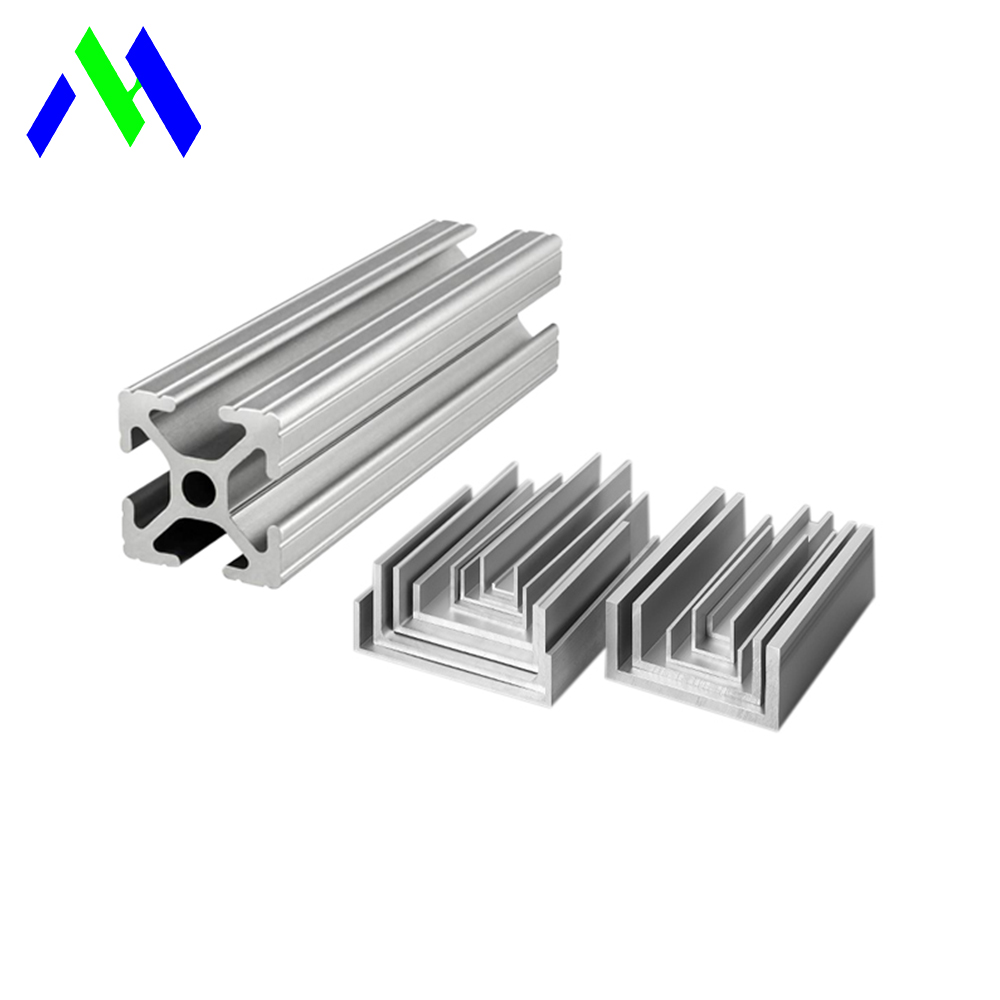
Through artificial aging, the metal strikes an optimal balance of hardness and flexibility. For instance, high-quality Dural 6063-T5 aluminum extrusion folding frame profiles exhibit exceptional dimensional accuracy and surface smoothness right off the press.
Mechanical Property | Typical Value for 6063-T5 | Engineering Relevance |
|---|---|---|
Ultimate Tensile Strength | 186 MPa or 27,000 psi | The maximum stress the aluminum can withstand while being stretched before breaking. T5 provides adequate strength for most architectural and commercial applications. |
Yield Strength | 145 MPa or 21,000 psi | The exact point at which the material begins to deform permanently. This is often the most critical metric for structural engineers designing load-bearing frames. |
Elongation at Break | 8 to 12 percent | A measure of material ductility. T5 aluminum retains enough ductility to absorb moderate impacts and undergo slight bending without shattering immediately. |
Brinell Hardness | 60 HB | Hardness indicates resistance to surface indentation and wear. A rating of 60 HB ensures the material withstands normal factory handling and environmental exposure. |
Furthermore, T5 aluminum offers outstanding formability. It is not hardened to the absolute maximum limit, making it relatively easy to cut, drill, and machine. CNC operators often note that machining 6063-T5 produces clean chips rather than gummy ribbons. This reduces tool wear and lowers the overall cost of the final manufactured assembly.
Sourcing aluminum often comes down to choosing between the T5 and T6 tempers. Both undergo artificial aging and frequently appear in 6000 series alloys. However, slight differences in their manufacturing processes yield distinct mechanical and economic outcomes.
The Process Difference
As established, T5 cools directly from the extrusion press before artificial aging. In contrast, T6 undergoes a much more rigorous thermal cycle. After extrusion, T6 material cools completely. It is then placed into a dedicated solution heat treatment furnace and reheated to approximately 500°C. This fully dissolves the alloying elements. Finally, it is rapidly quenched in a water bath before artificial aging.
Strength and Performance
Because T6 utilizes a dedicated solution heat treatment, the alloying elements distribute more uniformly. Consequently, T6 is significantly stronger. For example, 6063-T6 boasts a typical yield strength of about 214 MPa compared to 145 MPa for 6063-T5. If an application demands maximum load-bearing capacity, T6 is the mandatory choice.
Distortion and Dimensional Tolerances
The severe water quench required for T6 introduces massive internal stresses. For thin-walled extrusions or asymmetrical shapes, this rapid cooling inevitably causes warping. T5 avoids this harsh secondary quench. Therefore, T5 maintains much tighter dimensional tolerances and straightness. This makes it vastly superior for intricate profiles that must fit together seamlessly.
While the T5 temper can theoretically apply to several aluminum series, it is almost exclusively utilized within the 6000 series. The combination of magnesium and silicon makes these alloys highly responsive to artificial aging.
6063 Aluminum
By a wide margin, 6063 is the most common alloy paired with the T5 temper. Often referred to as architectural aluminum, 6063-T5 offers a flawless surface finish that responds exceptionally well to anodizing. It possesses high corrosion resistance and extrudes easily into highly complex shapes. Modern window frames and storefront framing rely heavily on 6063-T5.
6061 Aluminum
Known as a robust structural alloy, 6061 is generally stronger than 6063. While most commonly seen in the T6 temper for maximum strength, 6061-T5 is utilized when a manufacturer needs better extrudability than T6 can offer. It provides higher base strength than 6063 and is frequently specified for automotive parts and general industrial frameworks.
6005 and 6005A Aluminum
These alloys sit comfortably between 6063 and 6061 in terms of strength and extrudability. 6005-T5 is specified for structural applications where 6063 is not quite strong enough, but the superior surface finish and tight tolerances of the T5 process are still desired. Common applications include commercial ladders and specialized industrial tubing.
Global manufacturing is rapidly shifting toward energy-efficient materials. As industries push for sustainable manufacturing and lower carbon footprints, the T5 temper is gaining significant traction over T6. This is especially true in sectors where maximum tensile strength is not the primary constraint.
The T6 process requires a secondary furnace, consuming massive amounts of electricity and natural gas. T5 simply utilizes residual heat from the extrusion press. This drastically cuts down embodied energy. In rapidly expanding markets like electric vehicle battery enclosures, solar panel framing, and green building facades, engineers intentionally specify T5. This strategic choice helps meet strict environmental goals while maintaining essential structural integrity. The aluminum extrusion market is increasingly prioritizing these low-carbon, high-efficiency thermal treatments.
The unique blend of moderate strength, low production cost, and superior surface finish makes T5 the go-to material for countless commercial applications. When designing custom aluminum profiles, engineers typically default to T5 unless structural calculations explicitly demand T6.
Architectural and Construction Materials
The construction sector remains the largest consumer of T5 aluminum. Window frames, curtain walls, and building facades rely heavily on 6063-T5. The metal withstands wind loads and supports heavy glass without acting as the primary building skeleton. The T5 process ensures a smooth surface ready for decorative anodizing, avoiding the die lines often exacerbated by T6 quenching.
Thermal Management
Electronic components generate heat requiring rapid dissipation. T5 is the global standard for extruded heat sinks in LED fixtures and industrial electronics. The complex fin designs needed for cooling are highly susceptible to warping. The gentler cooling of T5 allows manufacturers to extrude intricate geometries with tight tolerances.
Modular Framing and Automation Enclosures
Modern industrial automation relies on modular aluminum framing. These profiles must remain perfectly straight so fasteners slide seamlessly through the channels. T5 provides the necessary rigidity and dimensional stability for rapid assembly on the factory floor.
After extrusion and aging, T5 aluminum frequently undergoes further fabrication. Understanding material behavior during machining helps optimize the workflow.
Cutting and Drilling
T5 exhibits excellent machinability. Standard carbide-tipped saws cut through it without excessive tool wear. The material produces a crisp sound on the shop floor, avoiding the sluggish drag of softer, unaged aluminum. Drilling operations remain straightforward due to the moderate hardness, preventing tool clogging.
Bending and Forming
Forming requires careful calculation. Artificially aged T5 is less ductile than annealed tempers. It retains enough elasticity for moderate bending, but engineers must calculate specific bend radii to prevent surface cracking. If severe bending is required, a different temper might be selected before final aging.
Surface Finishing and Anodizing
A major advantage of T5 is its response to post-processing. The metallurgical structure allows for highly uniform anodic coatings. Anodizing enhances natural corrosion resistance and introduces architectural colors. Powder coating also adheres exceptionally well to chemically cleaned T5 surfaces.
Guaranteeing aluminum meets the strict T5 designation requires rigorous quality control. Manufacturers must adhere to international metallurgical standards like ASTM B221.
Hardness testing serves as the frontline verification method. Quality inspectors frequently use hand-held Webster Hardness Testers for quick checks. The tool measures surface resistance to indentation. Readings falling below the specified threshold indicate incomplete artificial aging or improper oven calibration.
Definitive certification requires destructive tensile testing. Samples cut from extruded profiles are pulled until failure in a universal testing machine. The equipment records the exact yield strength, ultimate tensile strength, and elongation. These documented results appear in a Material Test Report. This ensures the supplied metal meets all safety and engineering requirements.
Procurement managers must communicate requirements clearly to extrusion manufacturers. Simply requesting aluminum on a purchase order invites incorrect and potentially unsafe materials.
Clearly State the Alloy and Temper Together
Writing just 6063 on a drawing is insufficient because mechanical properties change drastically based on the temper. The specification must explicitly state the combination, such as Aluminum Alloy 6063-T5 in accordance with ASTM B221. This legally binds the manufacturer to deliver material meeting those exact yield and tensile requirements.
Define Surface Finish Requirements
Since T5 is often chosen for aesthetics, the post-extrusion finish must be clear. Noting Anodizing Quality on the print instructs the extruder to prioritize die maintenance. This prevents scratches and graphite marks from ruining the final anodized layer.
Evaluate Cost Versus Performance
T5 is fundamentally more cost-effective than T6 due to the elimination of the secondary heating phase. If a project does not require maximum tensile strength, specifying T5 prevents over-engineering. It reduces procurement costs and significantly shortens production lead times.
It depends entirely on the load requirements. T5 is highly suitable for window frames, light structural framing, and interior partitions. However, it may not safely support heavy load-bearing architectural spans like roof trusses without proper engineering calculations. T6 is usually preferred for extreme loads.
Bending is possible but only to a moderate degree. Artificial aging gives the metal a specific hardness that reduces ductility compared to raw aluminum. It handles gentle curves well, but sharp radii may cause the outer surface to fracture.
The T5 aging process does not negatively impact natural corrosion resistance. Alloys like 6063-T5 retain excellent resistance to environmental oxidation, moisture, and weathering. This makes them the standard for exterior architectural applications.
T5 is noticeably less expensive to produce than T6. Utilizing press quenching rather than a separate solution heat treatment furnace saves massive amounts of electricity and material handling time. Manufacturers pass these savings directly to the buyer.
T5 aluminum is highly weldable using standard TIG or MIG processes. However, the intense heat generated during welding locally alters the temper. The heat-affected zone will lose a portion of its artificially aged strength. Engineers must account for this strength reduction in their structural designs.
T5 provides an excellent foundation for anodizing. Because it avoids the harsh water quenching of T6, the surface is generally smoother and free of severe die lines. This results in a highly uniform, aesthetically pleasing anodic coating ideal for architectural finishes.
Specifying T5 generally results in shorter production lead times. Skipping the secondary solution heat treatment furnace removes a major bottleneck in the manufacturing workflow. This allows factories to move material directly from the extrusion press to the aging oven and then to final packaging.
Choosing the right aluminum temper dictates the success of your manufacturing run. If your project demands precise dimensional tolerances, flawless surface finishes, and cost-effective production, T5 aluminum is the optimal choice. At MHAOCNC, we specialize in high-precision aluminum extrusion manufacturing tailored to your exact specifications. Whether you need standard structural framing or custom Dural 6063-T5 folding frame profiles, our engineering team is ready to optimize your design. Visit our product catalog to find the perfect material grade and finish for your specific application, and contact us today for a detailed technical consultation.