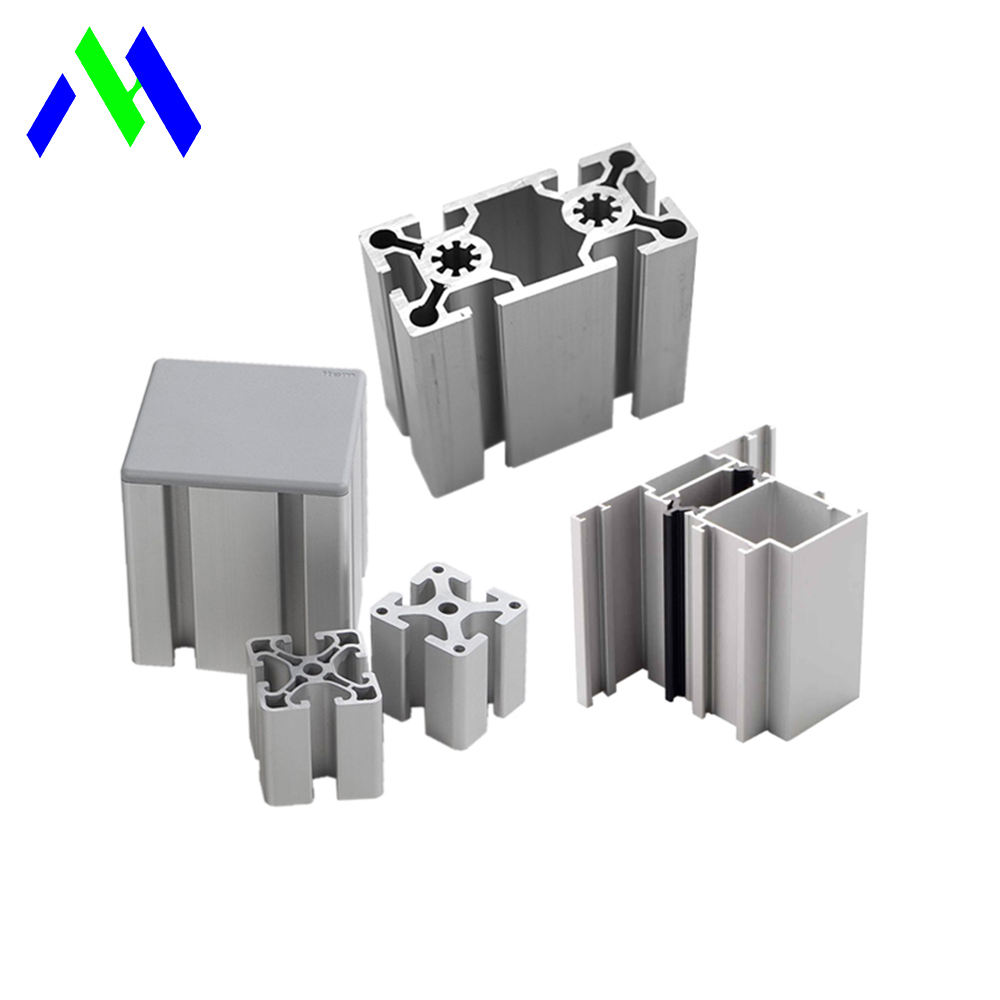
Aluminum has established itself as a foundational material in modern manufacturing, construction, and custom engineering. Its unique combination of low weight, structural integrity, and natural corrosion resistance makes it highly versatile across countless applications. At the core of this versatility are aluminum profiles. These are precisely shaped sections of metal created through the industrial extrusion process. Engineers meticulously design these components to meet specific structural, mechanical, or aesthetic requirements.
Selecting the appropriate geometric shape and alloy grade is a critical engineering decision. I have seen projects suffer catastrophic structural inefficiencies, premature material failure, or significantly wasted budgets simply because the wrong extrusion was specified. This comprehensive guide will break down the different structural shapes available on the market. We will objectively compare critical material grades and provide an empirical framework. This will help you select the exact right profile for your subsequent manufacturing or architectural project.
Shape Dictates Function: Aluminum profiles generally fall into three primary structural categories. These include solid, hollow, and semi-hollow, alongside highly adaptable modular systems like T-slots.
Alloy Selection is Critical: The 6000 series serves as the industry standard for general extrusion. However, specialized environments frequently necessitate alternatives. You might need copper-heavy alloys for aerospace or magnesium-rich blends for marine exposure.
Surface Finishes Extend Lifespan: Secondary treatments such as anodizing and powder coating are not merely aesthetic. They drastically improve environmental resistance and surface hardness.
Customization is Accessible: Standard off-the-shelf geometries sometimes fail to meet specific load-bearing or spatial requirements. Custom manufacturing services can develop bespoke cross-sections tailored to precise structural needs.
An extruded aluminum profile is a continuous length of metal formed into a specific cross-sectional shape. This is achieved through the extrusion process. Picture a sophisticated manufacturing method where a heated, cylindrical aluminum billet is forced under immense hydraulic pressure through a precisely machined custom steel die. The sheer force required to push solid, yet malleable, metal through a shaped opening is staggering. The material emerges with the exact profile of the die, much like toothpaste being squeezed from a tube.
This mechanical process is highly preferred in industrial manufacturing. It allows for the creation of continuous, complex cross-sections. These shapes would be structurally impossible or economically unviable to produce through traditional CNC machining or welding. Extrusion maintains the structural integrity of the metal. At the same time, it permits intricate internal webs, mounting channels, and variable wall thicknesses within a single, unified piece.
In the industrial supply chain, profiles are divided into standard and custom categories. Standard profiles consist of mass-produced, off-the-shelf geometric shapes. You will commonly see basic L-angles, square tubes, solid rectangular bars, and U-channels. These are readily available and perfectly suited for general construction and basic framing.
Conversely, custom profiles require the engineering and fabrication of a proprietary steel die. Manufacturers design these highly specific cross-sections to integrate seamlessly into proprietary products. By designing a custom shape, engineers can incorporate screw bosses and interlocking joints directly into the metal. This drastically reduces the need for secondary assembly, minimizes overall weight, and optimizes material usage for specific load-bearing requirements.
The geometry of an aluminum profile directly influences its moment of inertia, weight-to-strength ratio, and practical application on the factory floor. We broadly categorize profiles into four main structural types.
Solid profiles are defined as continuous cross-sections completely lacking enclosed voids or hollow cavities. Common examples include heavy flat bars, solid circular rods, hexagonal bars, and standard structural angles. Because they consist of a dense mass of metal, these profiles offer substantial heavy structural support. Machinists frequently utilize them as raw material stock for subsequent heavy CNC machining processes where absolute material integrity is non-negotiable.
Hollow profiles feature one or more fully enclosed voids running the entire length of the extrusion. Square tubes, rectangular pipes, and circular hollow sections fall into this category. The hollow design provides an exceptional strength-to-weight ratio. By distributing the material away from the central axis, these profiles resist bending and torsional forces highly effectively while minimizing overall mass. They are the standard choice for lightweight structural framing, fluid transport piping, and sleek architectural window frames.
Bridging the gap between solid and hollow, semi-hollow profiles contain partially enclosed voids. A classic example is a deep C-channel or a complex architectural trim where the opening of the void is significantly narrower than the internal cavity itself. The extrusion of semi-hollow shapes is technically demanding. The steel die must support a central tongue during manufacturing. These specialized shapes are frequently deployed when a component needs to house internal wiring, track systems, or sliding mechanical linkages while remaining accessible from one side.
Modular framing profiles, commonly known as T-slots or V-slots, represent a highly functional sub-category of hollow or semi-hollow extrusions. They feature continuous longitudinal grooves specifically designed to capture standardized fasteners, structural brackets, and T-nuts. This ingenious design allows engineers to construct complex industrial workstations, robotic enclosures, and automated assembly lines entirely without thermal welding. The modular nature of these profiles permits rapid prototyping, effortless structural modification, and infinite adjustability on the fly.
Recent market analyses indicate a significant shift in how modern engineers source raw materials. Global industries are pushing relentlessly for lighter, more energy-efficient designs. We see this particularly within the electric vehicle sector and commercial aerospace. Consequently, the demand for specialized, high-strength extrusions is rapidly outpacing traditional standard framing.
Manufacturers are increasingly moving away from generic, one-size-fits-all solutions. Instead, they are opting for highly tailored alloy combinations. Battery enclosures for electric vehicles, for instance, demand profiles with specific thermal dissipation metrics. Meanwhile, structural drone components require enhanced fatigue resistance. This shift means that simply asking for aluminum is no longer sufficient; specifying the exact metallurgical composition is mandatory to meet increasingly stringent sustainability and performance standards.
The Aluminum 6000 series is universally recognized as the gold standard for extrusion manufacturing. Alloyed primarily with magnesium and silicon, this series strikes an optimal balance. It offers excellent extrudability, structural strength, weldability, and natural corrosion resistance. It truly is the workhorse of the industry.
Within this broad family, the highly versatile Aluminum 6063 variant is particularly prominent. Often referred to as architectural aluminum, it demonstrates excellent extrudability. This allows for the creation of highly intricate, thin-walled shapes. Furthermore, it accepts surface finishes exceptionally well, resulting in a premium aesthetic appearance. Consequently, it is the dominant choice for visible architectural applications, including modern wardrobe sliding tracks, commercial door enclosures, and thermal heat sinks.
Utilizing magnesium as its primary alloying element, the 5000 series yields non-heat-treatable metals. These are renowned for their superior resistance to environmental corrosion, particularly in harsh saltwater conditions. They are less commonly extruded into complex geometric shapes due to a higher flow resistance during the manufacturing process. However, they remain highly relevant for heavy-duty, specialized profiles.
For extreme environments, marine-grade Aluminum 5083 is heavily utilized. This specific alloy retains remarkable structural strength even after welding and demonstrates outstanding resistance to seawater degradation. It is a critical, uncompromising material relied upon for the construction of marine hulls, offshore drilling platforms, and high-stress cryogenic pressure vessels.
When structural demands vastly exceed the physical capabilities of standard commercial series, engineers turn to the 2000 series. By utilizing copper as its primary alloying element, this series produces materials that exhibit exceptional tensile strength. In many cases, it rivals certain grades of industrial steel.
The aerospace standard Aluminum 2024 is a premier high-strength alloy. It is specified for applications where a superior strength-to-weight ratio and ultimate fatigue resistance are paramount. Profiles extruded from this material are strictly deployed in scenarios where structural failure is not an option. Think aerospace internal wing structures, aircraft fuselages, precision clock parts, and high-stress mechanical components. It is crucial to note that the inclusion of copper significantly reduces its natural corrosion resistance. This typically necessitates protective cladding or specialized chemical coatings when exposed to the elements.
To facilitate objective material selection, the following table outlines the comparative specifications of the primary alloys discussed. These parameters represent typical values encountered in heavy-duty industrial applications.
Alloy Grade | Primary Alloying Element | Yield Strength Min (MPa) | Hardness (Brinell) | Primary Best Application |
|---|---|---|---|---|
2024-T4 | Copper | 325 MPa | 120 HB | Aerospace structures, high-stress mechanical parts |
5052-H32 | Magnesium | 193 MPa | 60 HB | Marine environments, chemical processing equipment |
5083-H111 | Magnesium & Manganese | 228 MPa | 75 HB | Shipbuilding, extreme pressure vessels |
6063-T6 | Magnesium & Silicon | 214 MPa | 73 HB | Architectural framing, heat sinks, general extrusion |
As demonstrated in the data above, the selection process requires carefully balancing mechanical yield strength against environmental resilience. The 2024 alloy offers superior tensile strength suitable for critical aerospace loads. Yet, its poor natural corrosion resistance makes it completely unsuitable for outdoor architectural use. Conversely, the 6063 alloy provides slightly lower absolute strength but excels in surface finish and weather resistance. For marine applications requiring both durability and saltwater resistance, the 5000 series provides the necessary empirical performance.
Raw aluminum naturally forms a microscopic, protective oxide layer when exposed to oxygen. However, rigorous industrial applications typically require enhanced surface treatments. These secondary processes improve longevity, alter aesthetics, and significantly boost surface hardness.
A mill finish refers to the raw, untreated state of the aluminum exactly as it exits the extrusion die. It exhibits a naturally metallic, slightly oxidized silver appearance and may show faint, longitudinal die lines from the manufacturing process. Engineers typically specify mill finish profiles for concealed structural components. They are also used for parts that will undergo further heavy CNC machining where exterior surface aesthetics are entirely irrelevant.
Anodizing is a highly effective electrochemical process that artificially thickens the metal's natural oxide layer. By submerging the profile in an acid electrolyte bath and passing a precise electric current through it, the surface is converted into a durable, corrosion-resistant anodic finish. Because this process integrates fully with the underlying aluminum substrate, it cannot chip, flake, or peel. Imagine designing a sliding track for a heavy glass door. Applying a hard-anodized finish ensures the friction will not degrade the metal, vastly improving scratch resistance.
Powder coating involves applying a dry, electrostatically charged polymeric powder to the surface of the profile. This is then permanently cured in a high-temperature oven. The heat causes the powder to melt and form a smooth, continuous plastic-like shell over the metal. This robust finish provides superior protection against harsh environmental exposure, rapid UV degradation, and chemical corrosion. Simultaneously, it offers an essentially limitless palette of vibrant colors for consumer-facing products.
Selecting the correct profile is not a guessing game. It requires a systematic, step-by-step evaluation of your project's unique engineering parameters. Let us look at the practical steps.
Step 1: Assess Dynamic and Static Loads
First, determine the exact mechanical stress the profile will endure. Does the application involve standard static loads, such as a retail display casing or a light assembly workstation? If so, a standard 6063 structural profile is empirically sufficient. However, if the profile will be subjected to high dynamic loads, heavy vibrations, or extreme tension, you must evaluate the yield strength requirements carefully. This might necessitate a shift to a thicker-walled hollow profile or a high-strength aerospace-grade alloy.
Step 2: Evaluate Environmental Exposure
Identify the specific operational environment. Profiles installed in climate-controlled indoor environments face minimal environmental stress. In contrast, if the profile will be exposed to coastal sea air, constant moisture, or direct contact with harsh chemicals, specifying Aluminum 5052 becomes a strict engineering necessity. Utilizing heavy anodized surface finishes is also required to prevent rapid galvanic corrosion.
Step 3: Factor in Post-Extrusion Machining
Consider the fabrication steps required on the assembly line. If the profile requires extensive CNC milling, drilling, or precise thread tapping, alloys with excellent chip-breaking properties must be chosen. Furthermore, if the final assembly requires structural thermal welding, the 6000 and 5000 series offer excellent weldability. The 2000 series is notoriously difficult to weld without inducing micro-cracking, often forcing engineers to rely on mechanical fastening methods instead.
Off-the-shelf shapes are highly cost-effective for basic, everyday fabrication. Unfortunately, they often force design engineers to compromise on overall weight, assembly time, or structural integrity. When a complex product requires an exact fit, integrated thermal dissipation fins, or hidden fastener channels, standard shapes simply fall short. Designing a bespoke cross-section allows for the intelligent consolidation of multiple separate parts into a single extrusion. This drastically reduces manual assembly labor and optimizes the final product's weight-to-strength ratio.
Transitioning smoothly from a digital CAD drawing to a physical, high-tolerance extrusion requires collaborating with an experienced manufacturing facility. For projects demanding strict quality control and advanced metallurgical knowledge, partnering with a provider capable of handling complex alloys ensures that structural specifications are met with absolute precision.
A reliable manufacturing partner will offer comprehensive, end-to-end solutions. This includes initial die design, raw material selection, post-extrusion CNC machining, and final surface finishing. Whether your project requires high-volume production runs or specialized custom extrusions for rapid prototyping, selecting a supplier with proven capabilities in maintaining tight dimensional tolerances is critical to the seamless success of your engineering pipeline.
Choosing the right aluminum profile is the foundational step that ensures the ultimate structural success of your project. Whether you select a solid bar for heavy machining, a hollow tube for lightweight framing, or a modular T-slot for rapid automation assembly, the geometry must align perfectly with the application. Furthermore, alloy selection dictates long-term durability in specific environments. While standard commercial alloys cover the vast majority of general requirements, niche applications demand specialized metallurgical knowledge and precision manufacturing. By carefully evaluating load requirements, environmental exposure, and post-extrusion processing, engineering teams can source the perfect profile to bring their designs to life. Ready to specify the exact extrusion for your next build? Visit Mhao CNC to explore our complete capabilities and find the exact profile parameters your project demands.
The most common is the 6000 series, specifically the 6063 alloy. It offers a highly cost-effective balance of extrudability, structural strength, and excellent surface finish capabilities for both industrial and architectural uses.
Choose 6061 when structural strength and high load-bearing capacity are your primary concerns, as it has a higher yield strength. Choose 6063 when you need complex, thin-walled extrusions with a flawless surface finish, making it ideal for architectural trim and visible framing.
While the 5000 series is primarily known for flat sheet metal applications, it can absolutely be extruded into simple profiles. Because it has a higher flow resistance, it is much harder to extrude than the 6000 series. It is usually reserved for highly corrosive marine or chemical environments where standard alloys would quickly fail.
The theoretical maximum length is determined by the size of the billet and the extrusion press capacity. However, practical limits are dictated by transportation and heat treatment facilities. Most standard industrial extrusions are supplied in lengths of 6 meters or 12 meters to accommodate standard shipping containers.
Architectural profiles prioritize flawless surface finishes, precise dimensional tolerances, and aesthetic details. Structural profiles prioritize raw tensile strength, thicker wall dimensions, and heavy load-bearing capacity over visual appeal.
The 2024 alloy is specifically chosen when high fatigue resistance and extreme strength-to-weight ratios are strictly required. You will find it deployed in critical aerospace components and high-stress mechanical parts, rather than used for standard factory structural framing.
T-slot profiles are inherently modular. They connect using specialized mechanical fasteners, structural corner brackets, and drop-in T-nuts. This mechanical fastening method completely eliminates the need for thermal welding, preserves the metal's temper, and allows for incredibly easy disassembly or modification.
The initial upfront cost of cutting a custom steel extrusion die is actually relatively low compared to other manufacturing tooling, such as plastic injection molds. For medium-to-high volume production runs, utilizing custom profiles actually saves significant money by consolidating parts and reducing downstream assembly and CNC machining time.