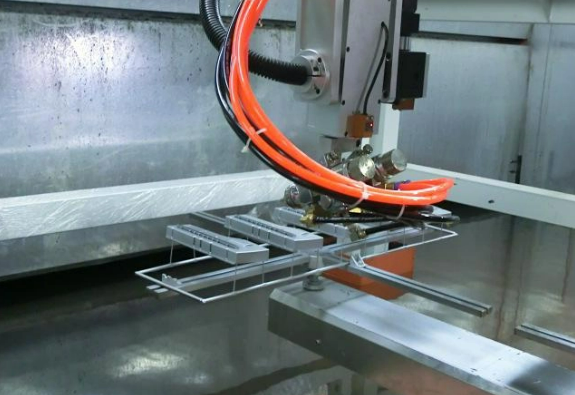
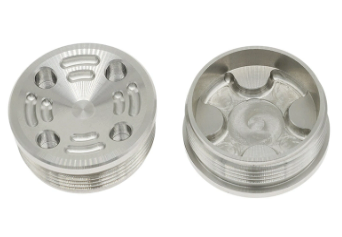
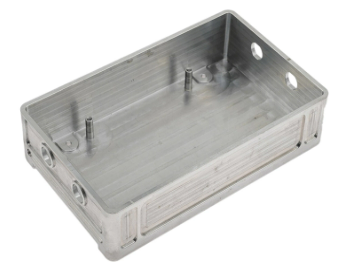
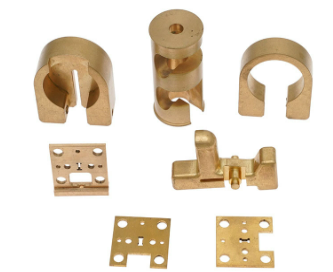
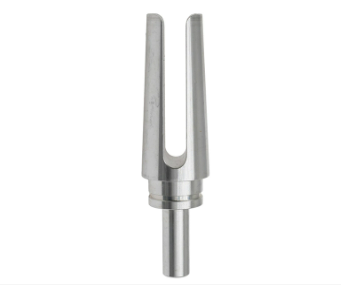
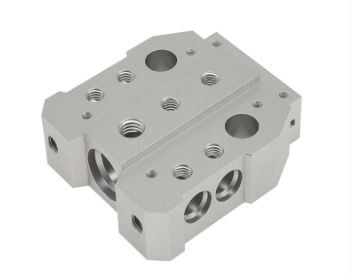
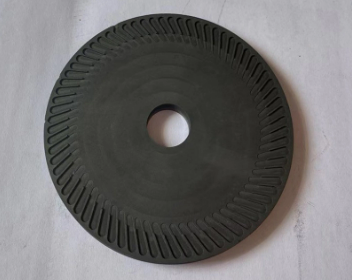
Wire EDM (Wire Electrical Discharge Machining) is a highly specialized manufacturing process used to produce complex and extremely accurate metal components. In modern precision manufacturing, wire EDM has become one of the most reliable solutions for parts that are difficult, risky, or impossible to machine by conventional cutting methods.
With the rapid growth of high-precision industries such as molds, aerospace, medical devices and electronics, wire EDM machining is increasingly selected for components that require:
very tight dimensional tolerances
complex internal profiles
sharp corners and narrow slots
stable and repeatable precision results
Today, precision wire EDM machining plays a vital role in both prototype development and high-value production.
What does wire EDM mean?
Wire EDM refers to a machining process that uses a continuously moving metal wire as an electrode to remove material through controlled electrical discharges.
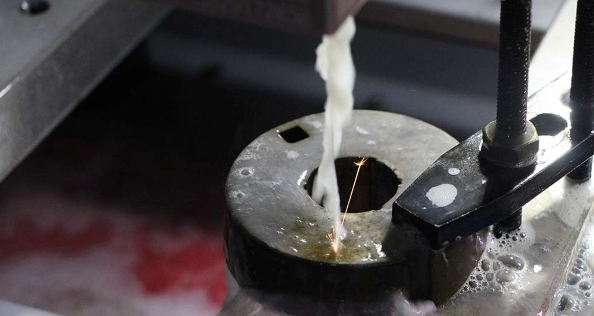
Instead of cutting the material mechanically, tiny electrical sparks occur between the wire and the workpiece. These sparks gradually erode the material along a programmed path, forming the required geometry.
Because the wire never physically touches the part, wire EDM machining eliminates cutting forces and tool pressure, which makes it particularly suitable for delicate and high-precision components.
Brief overview of wire EDM machining
In a typical wire EDM machining process, the workpiece is fixed on a precision table and submerged in a dielectric fluid. A thin wire travels between upper and lower guides and follows a CNC-controlled path to cut the contour.
The process is especially suitable for:
This makes wire EDM one of the core technologies in precision manufacturing.
Why wire EDM is important in modern precision manufacturing
Modern product design places higher demands on accuracy, miniaturization and functional complexity. Many components are made from hardened or difficult-to-machine materials and require extremely stable geometry.
Wire EDM machining provides:
stable accuracy for long cutting cycles
excellent consistency for repeated production
high reliability for complex shapes
As a result, precision wire EDM machining has become an indispensable solution for high-value and high-risk parts.

What is Wire EDM Machining?
Wire EDM machining is a non-traditional machining process that removes conductive material by controlled electrical discharge erosion.
Instead of using a rotating tool, cutting edge or grinding wheel, the process relies entirely on electrical energy to melt and vaporize microscopic portions of the workpiece.
This approach allows manufacturers to create geometries that are extremely difficult to achieve using conventional machining.
Definition of wire EDM
Wire EDM is defined as a precision machining method in which a continuously moving wire electrode generates electrical discharges to remove conductive material along a programmed contour.
Full name of WEDM
The full technical name of wire EDM is Wire Electrical Discharge Machining, commonly abbreviated as WEDM.
Difference between wire EDM and traditional cutting processes
Compared with milling, turning or drilling, wire EDM machining shows several fundamental differences:
no physical contact between tool and workpiece
no cutting force or tool pressure
no tool wear affecting cutting geometry
excellent performance on hardened materials
Traditional machining depends on mechanical cutting, while wire EDM relies on thermal erosion created by electrical sparks.
How Does Wire EDM Work?
Wire EDM works by repeatedly generating electrical discharges between a thin wire and a conductive workpiece in a dielectric fluid.
A very small gap—usually only a few micrometers—is maintained between the wire and the material. When the electrical conditions are correct, a spark is generated and material is removed locally.
This process is repeated thousands of times per second, allowing the machine to gradually form the final contour.
Basic working principle of wire EDM
The basic principle of wire EDM machining is controlled electrical erosion.
the wire electrode and the workpiece are connected to opposite electrical poles
a pulsed voltage is applied
discharges occur only when the gap reaches the correct distance
The machine continuously controls this gap to ensure stable machining.
Electrical discharge and material removal mechanism
Each discharge produces an extremely high temperature in a very small area.
the material melts or vaporizes instantly
the molten material is flushed away by the dielectric fluid
a tiny crater is formed on the surface
Millions of such craters create the final cut profile.
Role of the wire electrode
The wire acts as the cutting tool in wire EDM machining.
Common wire materials include:
brass wire
coated brass wire
molybdenum wire
The wire is continuously fed during cutting to ensure stable electrical behavior and consistent cutting quality.
Role of dielectric fluid
The dielectric fluid plays several critical roles:
insulating the gap before discharge
cooling the wire and workpiece
flushing away debris
stabilizing the discharge process
Clean and stable fluid conditions are essential for precision wire EDM machining.
CNC control in wire EDM machining
Modern wire EDM machines are fully CNC controlled.
The CNC system manages:
This enables highly accurate contour tracking and excellent repeatability.
Main Components of a Wire EDM Machine
A wire EDM machine is composed of several integrated systems that ensure both precision and stability during machining.
Wire feeding and tension system
This system continuously supplies wire and keeps constant tension.
Its main functions include:
Power supply system
The power supply generates and controls the discharge pulses.
It directly affects:
cutting speed
surface quality
dimensional accuracy
CNC motion control system
The CNC system controls the movement of the machine axes and wire guides.
It ensures:
accurate contour following
smooth interpolation of curves
stable long-term operation
Worktable and positioning system
The worktable supports the workpiece and provides precise positioning.
High-precision guideways and drive systems help maintain accuracy throughout the cutting process.
Dielectric circulation and filtration system
The filtration and circulation system keeps the dielectric fluid clean.
Its key functions include:
removing eroded particles
stabilizing discharge behavior
supporting consistent surface quality

Types of Wire EDM Machining
Slow wire EDM (high-precision wire EDM)
Slow wire EDM focuses on achieving the highest possible accuracy and surface quality.
Typical characteristics include:
use of deionized water as dielectric
continuous consumption of wire
multi-pass finishing strategies
extremely stable machining conditions
It is widely used in high-end mold and precision component manufacturing.
Fast wire EDM
Fast wire EDM is designed mainly for productivity and cost efficiency.
Its typical features include:
Key differences between slow wire EDM and fast wire EDM
The main differences can be summarized as:
slow wire EDM emphasizes accuracy and surface finish
fast wire EDM emphasizes speed and cost efficiency
slow wire EDM is preferred for precision wire EDM machining projects
Which type of wire EDM machining is suitable for different production needs
In practical production:
What Materials Can Be Machined by Wire EDM?
Wire EDM machining is mainly designed for electrically conductive materials. As long as the material can conduct electricity and withstand localized thermal effects, it can generally be processed by wire EDM.
In practical manufacturing, wire EDM machining is commonly applied to the following material groups.
Conductive material requirements
To be suitable for wire EDM machining, a material must meet several basic conditions:
it must be electrically conductive
it must be able to tolerate localized thermal shock
it should not chemically react adversely with the dielectric fluid
Non-conductive materials such as plastics, ceramics or glass cannot be cut directly by wire EDM.
Common wire EDM machining materials
The most commonly used materials include:
Stainless steel – widely used for molds, tooling and mechanical components
Aluminum alloys – used for lightweight precision parts and fixtures
Brass and copper – commonly applied in electrical and connector components
Titanium alloys – used for aerospace and medical components
Hardened tool steel – especially suitable for molds and dies after heat treatment
Cemented carbide (hard alloy) – for wear-resistant and high-strength parts
Graphite – mainly used for electrode and special tooling components
These materials are frequently selected in precision wire EDM machining projects where dimensional stability and fine features are required.
Material limitations of wire EDM machining
Although wire EDM machining is very versatile, it still has clear material limitations:
it cannot process non-conductive materials
very thick parts may significantly increase cutting time
some highly reactive materials require careful parameter control


What Shapes and Features Can Wire EDM Produce?
One of the most important advantages of wire EDM machining is its ability to generate complex geometries that are extremely difficult for conventional machining methods.
Complex 2D contours
Wire EDM can accurately follow complex planar contours, including irregular profiles and free-form curves. This makes it ideal for mold inserts, punches and special mechanical parts.
Narrow slots and thin walls
Because the wire diameter is very small, wire EDM machining can easily produce:
extremely narrow slots
thin ribs
fine separating features
without introducing cutting forces that could deform the part.
Sharp internal corners
Traditional rotating tools always create a corner radius. Wire EDM machining, however, can generate very sharp internal corners, which are critical for many mold and precision assemblies.
Micro features and fine structures
With appropriate wire size and stable cutting parameters, precision wire EDM machining can form micro-scale features such as:
High-aspect-ratio profiles
Wire EDM is especially suitable for tall and narrow features where tool accessibility is limited in conventional machining.
Advantages of Wire EDM Machining
Wire EDM machining offers a unique combination of precision, stability and flexibility.
No cutting force and no mechanical stress
Because there is no physical contact between the wire and the workpiece:
no cutting force is generated
thin and delicate parts remain stable
deformation risk is greatly reduced
Excellent dimensional accuracy
Precision wire EDM machining is well known for its stable and predictable accuracy, even on hardened materials and long cutting paths.
High surface quality
By using multiple finishing passes and optimized discharge parameters, wire EDM can achieve very fine surface finishes suitable for high-end mold and functional parts.
Capability for extremely hard materials
Wire EDM machining can easily cut materials that are extremely difficult for conventional tools, such as hardened tool steel and cemented carbide.
High repeatability for precision wire EDM machining
Once a cutting program is validated, the same results can be reproduced reliably, making wire EDM suitable for:
Ideal for small-batch and custom manufacturing
Wire EDM machining is particularly well suited for:
prototypes
low-volume orders
customized components
where flexibility and precision are more important than pure cutting speed.
Precision Wire EDM Machining Capabilities
Precision wire EDM machining is mainly distinguished by its ability to deliver extremely tight tolerances and consistent surface quality.
Typical accuracy and tolerance range
In stable machining conditions, precision wire EDM machining can commonly achieve:
very tight dimensional tolerances
excellent positional accuracy
stable geometric consistency
This makes it suitable for high-end molds and functional precision components.
Surface roughness achievable by wire EDM
By using multi-pass cutting strategies, wire EDM machining can gradually improve surface finish from rough cutting to fine finishing.
Multi-pass cutting and finishing strategies
A typical precision wire EDM machining process includes:
rough cut for shape generation
several trim cuts for dimensional refinement
final finishing passes for surface quality
Stability and consistency in precision wire EDM machining
The fully CNC-controlled process and stable discharge control enable wire EDM machining to maintain:
long-term dimensional stability
repeatable surface quality
reliable production performance
Wire EDM Machining vs Other Machining Technologies
In real manufacturing projects, wire EDM machining is often compared with other cutting and shaping technologies.
Wire EDM vs CNC milling
CNC milling is faster for many general-purpose parts, but it is limited by tool accessibility and tool diameter. Wire EDM machining, on the other hand, excels at:
internal contours
sharp corners
hardened materials
Wire EDM vs laser cutting
Laser cutting is very efficient for thin sheet materials. However, laser cutting may introduce heat distortion and cannot match the geometric accuracy of precision wire EDM machining on thick or hardened parts.
Wire EDM vs waterjet cutting
Waterjet cutting is suitable for a wide range of materials, including non-conductive materials. However, its accuracy and surface quality are generally lower than those achievable by wire EDM machining for precision components.
When wire EDM machining is the better solution
Wire EDM machining is usually the better choice when:
extremely tight tolerances are required
internal profiles are complex
the material is hardened or very difficult to machine
sharp internal corners are critical
Typical Applications of Wire EDM
Wire EDM machining is widely applied in industries where high dimensional accuracy, complex geometry and stable quality are critical. Thanks to its non-contact cutting principle and excellent controllability, wire EDM has become a standard solution for many high-precision manufacturing fields.
Wire EDM in mold and die manufacturing
Mold and die manufacturing is one of the most important application areas of wire EDM machining.
Wire EDM is commonly used to produce:
Because hardened tool steel can be cut directly after heat treatment, wire EDM machining greatly shortens mold production cycles and improves dimensional consistency.
Wire EDM in aerospace components
In the aerospace industry, wire EDM machining is widely used for high-strength and high-precision components.
Typical applications include:
turbine and engine component features
high-precision slots and profiles
complex structural elements
Precision wire EDM machining provides the stability required for tight tolerances and demanding quality standards.
Wire EDM in medical device manufacturing
Medical devices often contain extremely small and complex components that require excellent surface quality and dimensional control.
Wire EDM machining is commonly used for:
The non-contact nature of the process helps reduce deformation risk and ensures reliable geometric accuracy.
Wire EDM in electronics and semiconductor industry
In electronics and semiconductor manufacturing, wire EDM machining is widely applied for fine-feature and high-precision metal components.
Typical parts include:
The ability to cut narrow slots and sharp internal corners makes wire EDM highly suitable for precision electronic parts.
Wire EDM in automotive parts
Automotive manufacturing requires both precision and consistency.
Wire EDM machining is often used for:
engine-related components
transmission system parts
braking system components
It supports stable mass production of precision metal components.
Wire EDM in precision mechanical components
Many precision mechanical assemblies rely on wire EDM machining to produce:
positioning components
guide elements
fine adjustment parts
The excellent repeatability of precision wire EDM machining ensures consistent assembly performance.
Wire EDM in jewelry and fine metal products
Wire EDM can also be applied in the jewelry and decorative metal industry, especially for:


Surface Treatment After Wire EDM Machining
After wire EDM machining, surface treatment is often applied to improve functional performance, corrosion resistance and appearance.
Why post-processing is required after wire EDM
Although wire EDM produces high-quality surfaces, certain applications still require additional surface treatment to:
improve wear resistance
enhance corrosion resistance
prepare surfaces for assembly or coating
remove the thin recast layer if necessary
Common surface treatment options
Common post-processing methods include:
polishing and sanding
anodizing for aluminum parts
electroplating for improved surface performance
passivation for stainless steel parts
How surface treatment improves part performance
Proper surface treatment helps extend service life, improve assembly reliability and enhance overall product appearance, especially in high-end precision wire EDM machining applications.


Quality Control in Wire EDM Machining
Quality control is a critical part of any wire EDM machining project, especially when tight tolerances and complex geometry are involved.
Dimensional inspection methods
Common inspection methods include:
coordinate measuring machine (CMM) inspection
optical measurement systems
precision gauges and micrometers
These methods ensure that critical dimensions meet design requirements.
First article inspection in wire EDM projects
Before batch production, a first article inspection is normally carried out to verify:
dimensional accuracy
geometric features
surface quality
This step helps prevent potential issues in mass production.
In-process inspection
During machining, periodic inspections are performed to monitor:
Final inspection before delivery
Before shipment, finished parts undergo comprehensive inspection to ensure full compliance with drawings and technical specifications.
Quality standards for precision wire EDM machining
Precision wire EDM machining projects typically follow strict internal quality standards and certified quality management systems to guarantee stable and repeatable results.
Typical Lead Time and Production Flow for Wire EDM Services
A standardized production workflow helps ensure quality, efficiency and reliable delivery.
From drawing review to programming
The process normally starts with drawing review and manufacturability evaluation. Engineers then prepare machining strategies and CNC programs for wire EDM machining.
Trial cutting and sample verification
A trial cut or first sample is produced and inspected to verify all critical features before starting batch production.
Batch production process
Once the sample is approved, batch production is carried out with controlled machining parameters and continuous quality monitoring.
Final inspection and shipment
After final inspection, parts are cleaned, packaged and prepared for delivery.
How to Choose a Reliable Wire EDM Machining Supplier
Selecting the right supplier is essential for successful wire EDM machining projects.
Machine capability and technical level
A qualified supplier should be equipped with advanced wire EDM machines capable of stable and precise operation.
Experience in precision wire EDM machining
Experience with complex and tight-tolerance projects is a strong indicator of a supplier’s technical competence.
Quality management system
A reliable supplier should operate under a certified quality management system and documented inspection procedures.
Engineering support and communication
Strong engineering support helps customers optimize design and avoid potential manufacturability issues.
Ability for customized and small-batch orders
For many projects, flexibility and fast response are critical. A good supplier should be able to support prototypes and small-volume production.
Based on the wire EDM technologies, machining principles and application scenarios discussed above, Dongguan Minghao Precision Molding Technology Co., Ltd. provides the same professional wire EDM machining service for real production projects.
We focus on high-accuracy cutting of complex profiles, narrow slots and hardened materials, and support customers from drawing review to stable batch delivery. Whether for mold components or functional precision parts, our wire EDM process is optimized to ensure consistent accuracy, reliable quality and fast response for customized manufacturing.