
Have you ever wondered how complex parts are made with precision and speed? CNC milling is the answer.This advanced manufacturing process is crucial in industries like aerospace, automotive, and medical fields. It plays a key role in creating everything from prototypes to high-volume production parts.In this post, we’ll explore what CNC milling is, how it works, and why it’s so important in modern manufacturing.
CNC milling is a precise machining process used to remove material from a workpiece. “CNC” stands for Computer Numerical Control, which refers to the use of a computer to control the movement of the milling machine. This allows for highly accurate and repeatable cuts.
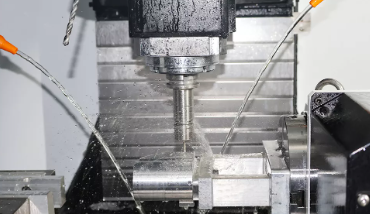
CNC milling uses rotating cutting tools to remove material from a stationary workpiece. It’s commonly used to create parts with complex shapes, precise dimensions, and smooth finishes.
CNC refers to the automated control of machine tools via computers. The system converts a 3D design into precise commands, which guide the machine’s movements. This method eliminates human error, providing faster and more accurate results.
Milling involves a rotating tool that moves along various axes to cut into the workpiece. It’s ideal for shaping parts that require intricate details or varying depths. During this process, the cutting tool rotates at high speeds while the workpiece is held firmly in place.
CNC milling works with a wide range of materials. Common ones include:
Material Type | Examples |
Metals | Aluminum, steel, titanium, brass |
Plastics | Nylon, acrylic, PEEK, ABS |
Composites | Carbon fiber, fiberglass |
Wood | Custom furniture, models |
1.Designing the Part: The process starts with a CAD (Computer-Aided Design) model of the part to be produced.
2.Converting to G-Code: The CAD design is converted into G-code, a set of instructions the CNC machine follows.
3.Setting up the Machine: The workpiece is clamped onto the machine table. The appropriate cutting tool is selected and installed.
4.Material Removal: The machine starts rotating the cutting tool and positions it over the workpiece. The tool removes material to shape the part.
5.Precision Cutting: The machine follows the exact path specified by the G-code, ensuring precision cuts every time.
Cutting Tools: These include end mills, drills, and face mills, which are chosen based on the material and required cut.
Workpiece: The material being cut, which can vary based on the project’s requirements.
Machine Control System: The heart of the CNC machine, the control system interprets the G-code and moves the machine accordingly.
A CNC milling machine consists of several key components, each playing a crucial role in the machining process. These parts ensure precision, stability, and accuracy in every operation.
The frame provides the foundation for the entire machine. It supports all the components, ensuring stability and rigidity during operation. A strong frame prevents vibrations, which can lead to inaccuracies.
Importance of Stability and Rigidity: A rigid frame helps maintain accuracy, even when the machine is working at high speeds. Without this stability, cutting tools can wobble, resulting in poor-quality cuts.
Materials Used for Frame Construction: CNC milling machine frames are usually made from heavy-duty materials like cast iron or steel. These materials provide the strength and weight needed to reduce vibrations and ensure stability.
The spindle is the heart of the CNC milling machine. It holds and rotates the cutting tools, allowing them to shape the workpiece.
Function of the Spindle in Material Cutting: The spindle rotates at high speeds and is crucial in controlling the cutting tool’s movement. It directly affects the quality and precision of cuts.
Types of Cutting Tools Commonly Used in CNC Milling:
End Mills: Used for cutting a wide range of materials; they have cutting edges on both the end and the sides.
Face Mills: Large cutters that are used to cut flat surfaces and faces of the workpiece.
Drills: Used to create holes in the workpiece.
Reamers and Taps: These are used for finishing and threading operations.
The CNC control panel is the interface between the operator and the machine. It allows the user to input commands and adjust machine settings.
Explanation of the CNC Controller’s Role: The CNC controller translates G-code into precise actions, controlling the movement of the machine along its axes. It ensures that the machine follows the correct cutting path.
How the Control Panel Interfaces with the Machine and Operator: The operator uses the control panel to set up the machine, monitor operations, and make adjustments. It provides a real-time view of the machine’s status, making it easy to ensure that everything is functioning properly.
CNC milling machines can move in multiple directions, with the most common being the X, Y, and Z axes. These axes allow the machine to reach different positions on the workpiece.
Explanation of X, Y, and Z Axes:
The X-axis moves the machine left and right.
The Y-axis moves the machine forward and backward.
The Z-axis controls vertical movement.
Additional Rotational Axes (C, A, B): These rotational axes allow the machine to make angled cuts, increasing its flexibility. The C-axis rotates the workpiece, while the A and B axes rotate the spindle, providing more precise cutting angles.
How These Axes Contribute to Precision: These movements enable the CNC machine to cut parts from multiple angles, which is essential for creating complex geometries.
Workholding devices are used to secure the workpiece during milling. These devices ensure that the workpiece stays in place while the cutting tools perform their tasks.
Types of Workholding Devices:
Vises: Clamps the workpiece tightly to the machine table.
Fixtures: Custom-made devices that hold the workpiece in place for specific operations.
Clamps: Simple tools used to hold the workpiece securely.
Importance of Securing the Workpiece: Proper workholding ensures that the part doesn’t move or shift during machining, which could affect accuracy and cause defects.
CNC milling machines come in various types, each designed to suit different needs. Let’s take a look at the most common types of milling machines used in manufacturing.
Vertical milling machines are one of the most commonly used machines. They feature a vertically positioned spindle that moves up and down.
Characteristics and Applications of Vertical Mills:
Ideal for small to medium-sized parts.
Good for drilling, boring, and cutting operations.
Versatile for creating parts with complex shapes and fine details.
Comparison with Horizontal Mills: Vertical mills are more common in smaller operations, whereas horizontal mills are better suited for larger, bulk production. Vertical mills are often more affordable and can handle a variety of tasks, but horizontal mills excel in cutting heavier materials.
Horizontal milling machines use a horizontally oriented spindle to cut the workpiece. These machines are typically faster and more efficient for large-scale operations.
Features of Horizontal Mills and Their Advantages:
Efficient for cutting large, heavy parts.
The horizontal spindle allows for greater chip removal, making it suitable for high-volume production.
More stable, reducing vibrations and allowing for precise cuts.
Use Cases for Horizontal Mills in Large-Scale Production:
Commonly used in automotive, aerospace, and other industries that require mass production of parts.
They are ideal for creating parts with multiple faces or holes, as the workpiece can be easily rotated during machining.
Multi-axis CNC machines offer increased flexibility by allowing movement along additional rotational axes. These machines are essential for producing complex, intricate parts.
Explanation of 4-Axis, 5-Axis, and Even More Advanced Machines:
A 4-axis machine adds rotation around the workpiece’s X-axis, allowing for more precise and complex cuts.
A 5-axis machine provides rotation along two additional axes, enabling the machine to cut at multiple angles without repositioning the workpiece.
Some advanced machines offer 6 or more axes, making them ideal for intricate and detailed designs.
Advantages of Multi-Axis Mills for Creating Complex Parts:
These mills can machine parts in a single setup, reducing time and improving accuracy.
They allow for more detailed cuts and can create parts that would be impossible with simpler machines.
CNC machining centers are specialized CNC milling machines designed for higher efficiency and flexibility. They integrate several functions into one system.
What Makes a CNC Machining Center Different from a Traditional Milling Machine?:
CNC machining centers typically include additional features like automatic tool changers and built-in tool storage.
They can automatically switch between different tools during the machining process, improving efficiency and reducing downtime.
Features Like Automatic Tool Changers and Pallet Changers:
Automatic Tool Changers allow for quick switching between tools without the need for manual intervention.
Pallet Changers enable the machine to automatically swap workpieces, which is particularly useful for high-volume production.
CNC milling is used in a wide variety of industries, thanks to its precision, speed, and ability to create complex parts. Let’s take a closer look at some of the most common industries and products made using this process.
CNC milling plays a vital role in several high-precision industries:
Aerospace: Parts like engine components, turbine blades, and brackets are made using CNC milling for their high accuracy and reliability.
Automotive: CNC milling is used to produce engine parts, transmission components, and custom modifications. It ensures tight tolerances, which is crucial for vehicle performance.
Medical: Surgical instruments, implants, and prosthetics require the precision CNC milling offers. This ensures their functionality, durability, and safety.
Electronics: Components like enclosures, connectors, and circuit boards are manufactured through CNC milling for their accuracy and fine details.
Industrial Machinery: CNC milling is often used to create machine parts, tools, and fixtures for various types of machinery.
Precision: CNC milling ensures tight tolerances and smooth finishes, making it ideal for industries like aerospace and medical devices.
Customization: Custom parts can be created for specific applications, allowing businesses to meet unique needs and demands.
Speed: CNC milling offers faster turnaround times for high-volume production, especially with automated features like pallet changers.
CNC milling helps produce a wide range of products:
Medical Devices: Implants, surgical tools, and orthodontic devices are made with high precision, ensuring patient safety and functionality.
Automotive Parts: Engine blocks, gearbox components, and brake systems are fabricated using CNC milling to meet the highest standards of quality and performance.
Aerospace Components: CNC milling is used to create lightweight, durable parts for aircraft and spacecraft, including wings, fuselage components, and landing gear.
Consumer Electronics: Smartphone housings, laptop frames, and other electronics parts benefit from the fine details achievable with CNC milling.
CNC milling is also widely used in prototype development. Manufacturers can quickly turn a digital design into a physical part, which is vital for testing and validation. The ability to create precise prototypes means businesses can reduce costs and improve product design before moving to full-scale production.
Q: What is the difference between CNC milling and 3D printing?
A: CNC milling removes material from a solid workpiece to create a part, while 3D printing builds up material layer by layer. CNC milling is ideal for precise, durable parts, while 3D printing is often used for rapid prototyping and complex geometries.
Q: How precise is CNC milling?
A: CNC milling offers high precision, with tolerances as tight as 0.025 mm. The process ensures smooth surfaces and accurate cuts, making it ideal for industries requiring exact specifications.
Q: Can CNC milling be used for large-scale manufacturing?
A: Yes, CNC milling is highly efficient for large-scale manufacturing, especially with automated features like pallet changers. It ensures high-speed production and repeatability for mass production.
Q: What types of materials can be machined using CNC milling?
A: CNC milling works with a variety of materials, including metals (aluminum, steel, titanium), plastics (ABS, PEEK), composites, and even wood and ceramics, making it versatile for different industries.
Q: What are some common problems faced during CNC milling?
A: Common problems include tool wear, machine vibration, and incorrect workholding. These issues can lead to inaccurate cuts, poor surface finishes, or material wastage if not properly managed.
CNC milling is a precise and efficient manufacturing process that plays a key role in various industries. It offers flexibility, speed, and accuracy in producing high-quality parts.By leveraging its capabilities, manufacturers can create complex designs and achieve tight tolerances, ensuring high-quality products and better performance in the market.