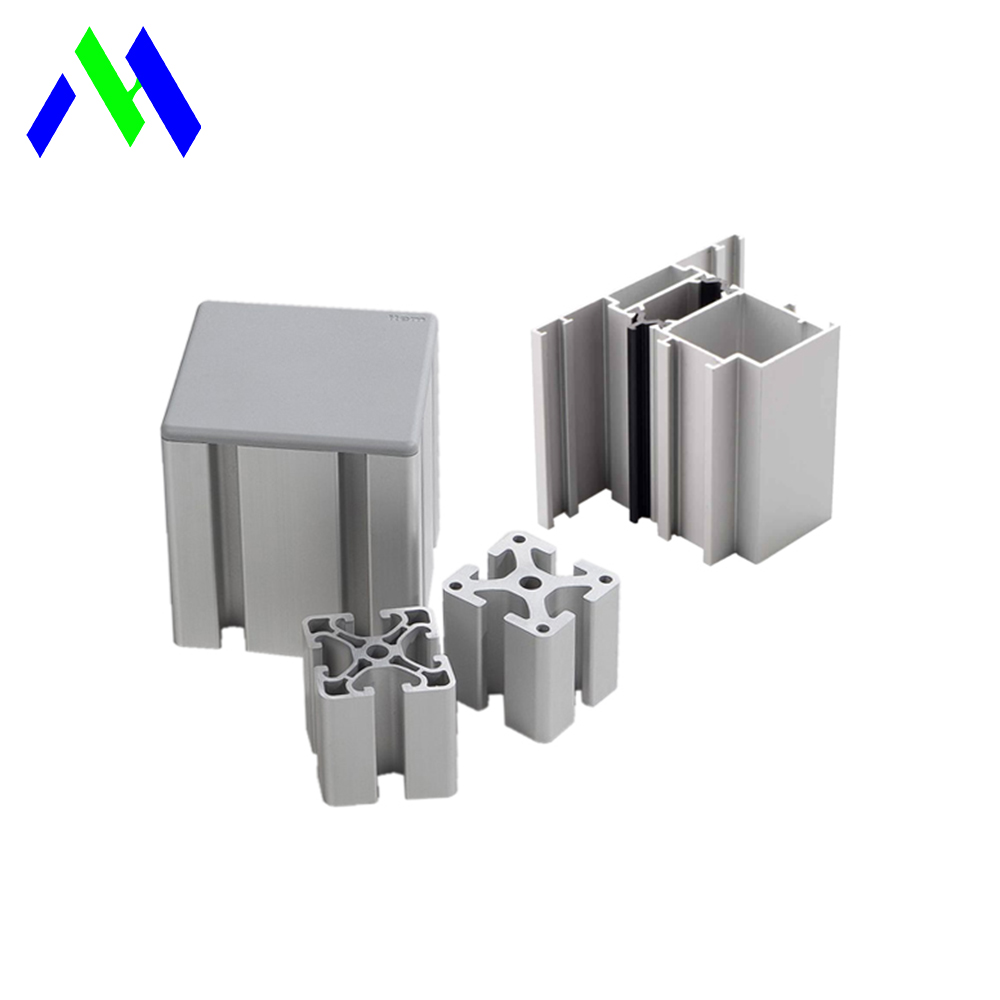
Manufacturing scalability relies heavily on smart material processing. By forcing heated billets through a shaped steel die, factories create continuous cross-sections known as aluminum extrusion profiles. These versatile components form the backbone of modern structural design.
However, OEMs and mechanical engineers frequently overcomplicate their assemblies. They often stitch together multiple machined or welded steel parts unnecessarily. A single extruded shape could effortlessly achieve the exact same structural outcome. This common oversight drives up labor hours and introduces unwanted failure points into the final product. Complex sub-assemblies demand rigorous quality control checks and intensive manual labor.
This guide moves far beyond basic material definitions. We provide a definitive framework to help you evaluate, specify, and confidently source these extrusions. You will learn how to transition complex metal structures into optimized, unified designs ready for commercial production.
Assembly Reduction: Custom extrusions allow for the functional integration of hinges, screw bosses, and mounting tracks into a single part, reducing downstream labor.
Tooling Economics: Extrusion dies are highly cost-effective and faster to produce compared to die-casting or injection molding tooling.
Material Superiority: Aluminum offers an exceptional strength-to-weight ratio, native corrosion resistance, and high thermal conductivity, making it ideal for EV, industrial, and aerospace applications.
Quality Considerations: Evaluating an extrusion partner requires understanding their ability to control metallurgical defects (like coarse-grained rings) and surface tolerances during plastic deformation.
Engineers consistently face pressure to reduce part counts while maintaining structural integrity. Shifting to extruded materials solves this core engineering challenge directly.
You must evaluate the initial capital expenditure of any new manufacturing process. Traditional die-casting requires immense upfront investment. Casting molds often cost tens of thousands of dollars. They also take months to machine and validate. If a prototype fails, modifying the mold drains your budget.
Conversely, steel extrusion dies offer remarkable tooling economics. A standard die costs a fraction of a casting mold, often ranging from just a few hundred to a few thousand dollars. Tooling shops cut these dies rapidly. You receive first-article samples in mere weeks. This accelerated timeline drastically improves your return on investment during rapid prototyping cycles. It allows you to iterate designs aggressively without facing prohibitive financial penalties.
Extruding complex cross-sections changes how you approach mechanical design. Instead of welding flanges onto tubes, you integrate features directly into the profile shape. Consider the following functional integration opportunities:
Built-in heat sinks: Integrate cooling fins directly onto the exterior casing of a motorized component.
T-slots and bolt channels: Eliminate the need for secondary drilling by extruding continuous fastener tracks.
Interlocking hinges: Design male and female mating joints directly into separate profiles for snap-fit assembly.
Wire routing conduits: Create hollow internal cavities strictly dedicated to protecting electrical harnesses.
Designing a single cross-section encompassing these features eliminates mechanical fastening entirely. It removes secondary welding, dropping manual labor dependencies significantly.
Modern supply chains demand sustainable, agile material choices. Aluminum delivers infinite recyclability. Melting down scrap aluminum requires only five percent of the energy needed to produce virgin metal. The material never degrades during this process. This aligns perfectly with corporate ESG (Environmental, Social, and Governance) targets.
Furthermore, standardizing your designs around extrusions improves supply chain agility. You can leverage nearshored extrusion suppliers easily. Sourcing materials closer to your final assembly plants mitigates volatile tariff risks. It drastically shortens lead times, shielding your production line from global shipping disruptions.
Distinct industries leverage extruded aluminum to solve highly specific engineering bottlenecks. The material adapts to varying thermal, structural, and electrical demands flawlessly.
Electric vehicle manufacturers battle weight constantly. Heavy battery packs reduce overall driving range. To offset this immense battery weight, automakers construct subframes and crash management systems from extruded aluminum. These components absorb impact energy efficiently during collisions.
Furthermore, EV battery enclosures rely heavily on extruded designs. These complex enclosures require integrated thermal management. Engineers extrude hollow profiles containing micro-channels. Liquid coolant flows through these channels directly beneath the battery cells, dissipating heat effectively.
Factory floors require modular, adaptable environments. Engineers universally specify the industrial aluminum profile for automated conveyor systems and robotic guarding. Welded steel frames restrict factory layouts because they cannot change easily.
Modular cleanroom structures utilize locking T-slot frames. You simply cut the profiles to length and bolt them together. If a production line expands, you unbolt the existing frame and reconfigure it immediately. This inherent flexibility keeps automation timelines running smoothly.
Copper historically dominated electrical conduction applications. Today, copper prices fluctuate wildly. Aluminum offers a vastly superior cost-to-conductivity ratio. Electrical engineers substitute copper busbars with aluminum variants to reduce raw material expenses.
Similarly, precision electronics utilize extrusions for LED housings. High-power LEDs generate intense localized heat. An extruded aluminum housing acts simultaneously as a structural rigid frame and a highly efficient thermal radiator.
Extreme load-bearing environments require uncompromising material strength. Aerospace engineers specify a heavy-duty aluminum extruded profile for aircraft structural framing. These components endure immense cyclical stress during flight.
Medical device manufacturers demand stringent spatial tolerances. MRI machine tracks and surgical lighting booms utilize heavy-duty extrusions. These precision applications ensure massive equipment glides smoothly without structural deflection over time.
Specifying the correct extrusion requires balancing geometric complexity against metallurgical properties. A mismatched alloy will compromise your structural integrity.
Buyers generally choose between off-the-shelf and bespoke solutions. We can compare these approaches using a simple structural chart.
Specification Feature | Standard Structural Shapes | Custom Aluminum Profiles |
|---|---|---|
Shape Variety | Basic geometry (angles, tubes, beams, channels). | Complex, proprietary integration (multi-void, fins, tracks). |
Tooling Cost | Zero. Vendors stock standard dies universally. | Low to moderate. Requires dedicated die-cutting. |
Assembly Impact | Requires secondary drilling, welding, or brackets. | Reduces assembly time through functional integration. |
Best Use Case | Basic framing, structural supports, non-visible framing. | OEM products, automated tracks, thermal management parts. |
While standard structural shapes serve basic framing needs, modern product design relies entirely on custom aluminum profiles engineered for proprietary product integration.
Understanding die requirements helps you anticipate manufacturing challenges. Profile complexity falls into three distinct categories:
Solid Profiles: These shapes contain no enclosed voids. Manufacturers use a flat steel die. The press forces the billet straight through the opening. Solid profiles present the lowest manufacturing difficulty and the longest die lifespan.
Hollow Profiles: These cross-sections feature one or more fully enclosed voids. They require a specialized porthole die. The die splits the aluminum billet into multiple streams. These streams flow around a central mandrel before fusing back together under extreme pressure.
Semi-Hollow Profiles: These shapes feature deep, narrow channels or grooves that do not fully enclose a void. They create a "tongue" in the die. If the tongue ratio (depth vs. width) becomes too aggressive, the high-pressure aluminum flow can easily snap the steel die.
You must match your alloy series to your specific end-use environment. Engineers rely on the following primary alloy designations.
Alloy Series | Primary Alloying Elements | Key Characteristics | Ideal Industry Applications |
|---|---|---|---|
1000-Series | Pure Aluminum (99%+) | Maximum electrical and thermal conductivity. Extremely soft. Non-structural. | Electrical busbars, chemical equipment, light reflectors. |
6000-Series (6061/6063) | Magnesium and Silicon | The industry standard. Excellent structural integrity, superior surface finish, and highly weldable. | Architectural framing, automation tracks, automotive parts. |
7000-Series | Zinc | Aerospace-grade tensile strength. Very difficult to extrude and form. | Extreme load-bearing environments, aircraft framing, sporting goods. |
Extruding metal involves violent plastic deformation. Recognizing the realities of this process helps you set realistic tolerance expectations and hold vendors accountable.
The chosen manufacturing method dictates the final microstructure of your product. During traditional direct extrusion, a ram pushes the aluminum billet directly against the stationary container walls. This creates massive friction. The outer layers of the billet heat up significantly, altering the metal grain structure.
Indirect extrusion reverses this dynamic. The container remains sealed. A hollow ram pushes the die itself into the stationary aluminum billet. Because the billet does not slide against the container walls, friction drops dramatically. This method requires specialized machinery but results in more uniform microstructures. It produces tighter dimensional tolerances across the entire length of the profile.
You must evaluate an extrusion partner based on their transparency regarding standard metallurgical defects. Waste is inherent to the process. Head and tail deformation occurs at the beginning and end of every push. You should anticipate up to 10% scrap waste generated from removing these deformed sections.
Furthermore, improper thermal management causes coarse-grained rings. If the press speed runs too fast, excessive frictional heat alters the crystalline structure near the surface. After the final heat treatment, this surface layer loses critical tensile strength. Expert vendors monitor press exit temperatures continuously to prevent coarse-grained ring formation.
You must acknowledge that standard extrusion always leaves visible die lines on the metal surface. As aluminum shears against the steel bearing, microscopic scoring occurs. For structural framing, these aesthetic die lines pose no issue.
However, automated assemblies require precise mating accuracy. If you mount a linear guideway onto an extruded surface, standard die lines will cause microscopic misalignment. In these instances, secondary operations become strictly necessary. CNC face milling shaves a tiny layer off the profile, ensuring a perfectly flat, highly accurate mating surface for precision robotics.
Choosing an extrusion vendor involves more than evaluating unit prices. You must assess their mechanical capabilities and workflow efficiency carefully.
You must match your profile size to the supplier's heavy machinery. Engineers measure profile size using the Circumscribing Circle Size (CCS). The CCS is the smallest circle you can draw completely enclosing your profile's cross-section.
A massive 12-inch CCS profile requires immense press capacity. Your vendor needs a press capable of generating over 100,000 PSI to push that volume of metal evenly. If you attempt to extrude a massive profile on an undersized press, the metal flow will stagnate, ruining the structural integrity.
Multi-vendor logistics inevitably cause supply chain delays. We strongly recommend shortlisting vendors who handle critical secondary operations internally. Look for partners offering in-house cold drawing. This process pulls the extruded profile through a secondary sizing die at room temperature. Cold drawing improves grain alignment drastically and increases final material hardness.
Additionally, seek vendors offering in-house anodizing and final CNC cutting. Moving raw extrusions to a separate anodizing facility, then to a machine shop, inflates your lead times. One-stop sourcing ensures strict quality control remains under a single roof.
Understanding standard onboarding workflows prevents project delays. A reliable vendor follows a predictable die-trial process:
CAD Submission and DFM Review: You submit your profile design. The vendor conducts a Design for Manufacturability review to adjust aggressive tongue ratios or uneven wall thicknesses.
Die-Cutting and Nitriding: The vendor cuts the steel die and applies a nitride coating to harden the bearing surfaces against abrasive wear.
First-Article Inspection (FAI): The press pushes a short run of your profile. You receive FAI samples to verify dimensional tolerances and surface finishes.
Mass Production Ramp-Up: Once you sign off on the FAI, the vendor proceeds to fulfill your Minimum Order Quantity (MOQ).
Shifting to extruded aluminum represents a strategic supply chain decision, not merely a minor design choice. It fundamentally alters how you approach labor, assembly speed, and part consolidation. By integrating complex features directly into a unified cross-section, you eliminate unnecessary welding and mechanical fastening.
We prompt you to audit your current multi-part assemblies immediately. Look for clusters of welded steel brackets or heavily machined enclosures. These components present prime targets for extrusion consolidation.
Take proactive steps today. Submit your CAD files or request a comprehensive manufacturability review with an experienced engineering team. Evaluating custom die costs alongside long-term production savings will quickly validate your transition to high-performance extruded profiles.
A: Custom extrusion dies are surprisingly affordable compared to traditional casting molds. Depending on geometric complexity, standard solid dies range from $500 to $1,500. More complex hollow profiles requiring porthole dies typically cost between $2,000 and $4,000. This low barrier to entry makes custom extrusions highly cost-effective for rapid prototyping.
A: Minimum wall thickness depends heavily on the alloy grade and overall profile size. For a standard 6063 alloy, engineers generally cite a minimum thickness of 0.040 inches (approx. 1mm). Pushing tolerances tighter than this increases friction, slowing production speeds and drastically increasing die wear.
A: Yes, standard aluminum profiles are highly weldable. The 6000-series alloys, particularly 6061, accept TIG and MIG welding exceptionally well. However, you must account for a localized loss of temper and strength within the heat-affected zone surrounding the weld bead.
A: Surface streaking results from extreme friction dynamics between the heated aluminum billet and the steel die bearing. Micro-scoring on the die transfers directly onto the metal surface as visible lines. Applying post-extrusion finishes like anodizing or powder coating easily resolves these purely aesthetic issues.