
In today's automotive landscape, every component—no matter how small—plays a critical role in vehicle performance, safety, and reliability. From the engine block to suspension brackets, the demand for parts that meet ever-tighter tolerances has never been higher. Automakers push for lighter, stronger, and more complex geometries to boost fuel efficiency, reduce emissions, and support advanced features such as autonomous driving and electric propulsion. Any deviation in part dimensions can lead to increased vibration, premature wear, poor assembly fit, or even catastrophic failure. As a result, precision machining technologies like CNC milling have become indispensable in automotive component manufacturing, delivering the micron-level accuracy required for today's most demanding applications.
Automotive manufacturers rely on CNC milling to produce a wide variety of critical components. Below are some of the most common parts that benefit from this technology:
Engine Cylinder Heads and Blocks
Cylinder heads contain intricate passageways for coolant and oil, as well as precision mating surfaces for seals and valves. CNC milling creates the flat, parallel surfaces required for proper sealing, while also machining complex intake and exhaust ports.
Transmission Housings and Gears
Transmission cases feature mounting bosses, bearing seats, and intricate pockets for gear trains. CNC milling delivers the consistent dimensions needed to ensure smooth gear engagement and long-term durability.
Suspension Brackets and Control Arms
These parts must withstand high loads and dynamic forces. CNC milling not only shapes the basic geometry but also drills precision holes for bushings and fasteners, maintaining strict positional tolerances.
Brake Caliper Housings
Calipers require precise bores for pistons and fluid channels. CNC milling ensures the bore diameters and surface finishes meet performance and safety standards.
Steering Knuckles and Hubs
Steering components demand concentricity and tight tolerances for bearings and tie-rod connections. CNC milling delivers the roundness and positional accuracy essential for reliable steering feedback.
By leveraging CNC milling, companies like Dong Guan Ming Hao Precision Molding Technology Co., Ltd. can satisfy the automotive industry’s rigorous quality requirements while maintaining high throughput.
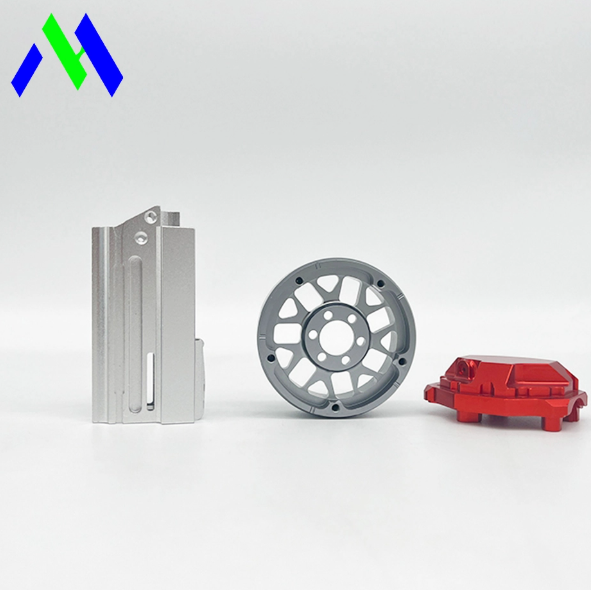
Automotive parts frequently require dimensional tolerances in the range of ±5 to ±50 microns (0.005–0.05 mm). For reference, a human hair is roughly 70–100 microns thick. Achieving such tight tolerances demands machine tools with high rigidity, precision ball screws, linear guides, and advanced control systems.
Repeatability refers to the machine's ability to reproduce the same part dimensions consistently, part after part. Automotive production often spans thousands or millions of units across multiple shifts. Even a slight drift in tool position, spindle runout, or thermal expansion can cause parts to go out of spec. Key factors in repeatability include:
Thermal Compensation: Modern CNC machines incorporate temperature sensors and compensation algorithms to offset thermal growth in the spindle, bed, and guideways.
Regular Calibration: Scheduled calibration of encoders, linear scales, and probing systems ensures the machine's control feedback remains accurate over time.
Tool Management: High-precision tool holders and adaptive tool length measurement systems reduce variation caused by tool changes.
Process Control: In-process probing allows the machine to measure critical features mid-cycle and adjust cutting parameters on the fly, further minimizing variability.
Through these measures, CNC milling centers can achieve both high precision and unwavering repeatability, which are non-negotiable in automotive component production.
Automotive parts are made from a wide range of materials, each presenting unique machining challenges:
Usage: Engine blocks, cylinder heads, transmission housings, structural brackets.
Benefits: Light weight, good thermal conductivity, excellent strength-to-weight ratio.
Machining Considerations: Aluminum requires high spindle speeds and optimized chip evacuation to prevent built-up edge. Coolant flow and tool coatings (e.g., TiAlN) help extend tool life.
Usage: Suspension components, drivetrain gears, steering knuckles.
Benefits: Superior strength, fatigue resistance, wear resistance.
Machining Considerations: Steel demands lower cutting speeds, robust tooling (e.g., carbide end mills), and controlled heat generation to avoid work hardening. Deep-hole drilling or grooving operations often require specialized attachments.
Usage: Exhaust manifolds, fasteners, high-corrosion environments.
Benefits: Corrosion resistance, aesthetic finish.
Machining Considerations: Stainless steels tend to work harden rapidly and demand powerful spindles, rigid machines, and aggressive coolant strategies to wash away chips and dissipate heat.
Usage: High-performance or racing applications, aerospace-adjacent components.
Benefits: High strength-to-weight, temperature resistance.
Machining Considerations: Exotic metals generate high cutting forces and heat; toolpaths must be optimized to reduce cycle time while protecting tool life.
Each material's requirements inform the selection of cutting tools, spindle speeds, feeds, and machine configurations. Dong Guan Ming Hao's CNC centers are equipped with multi-axis capabilities, diverse tooling libraries, and flexible fixturing systems to handle this material spectrum.
Ming Hao employs a combination of 3-axis, 5-axis, and gantry-style CNC milling centers to balance flexibility with throughput. Process engineers develop detailed machining simulations (CAM programming) that account for part geometry, material properties, and fixture setup. By simulating toolpaths before actual machining, potential collisions and suboptimal cutting strategies are identified and eliminated.
Incoming Material Inspection: All raw billets and forgings undergo chemical and dimensional verification before release to production.
In-Process Probing: CNC probing stations measure critical features—such as hole diameters and surface locations—during machining. If deviations exceed warning limits, the system alerts operators or automatically compensates tool offsets.
Final Inspection with CMM: Coordinate Measuring Machines inspect complex geometries against CAD models. Parameters such as flatness, parallelism, concentricity, and positional accuracy are recorded and reported.
Statistical Process Control (SPC): Ming Hao tracks key dimension data in real time, generating control charts to detect trends and address root causes proactively.
Beyond technology, Ming Hao invests in ongoing training for machinists, programmers, and quality engineers. Cross-functional teams conduct regular Kaizen events to refine setups, standardize best practices, and implement lean manufacturing principles that reduce waste and boost efficiency. This people-plus-process approach ensures that each automotive part meets specification—every time.
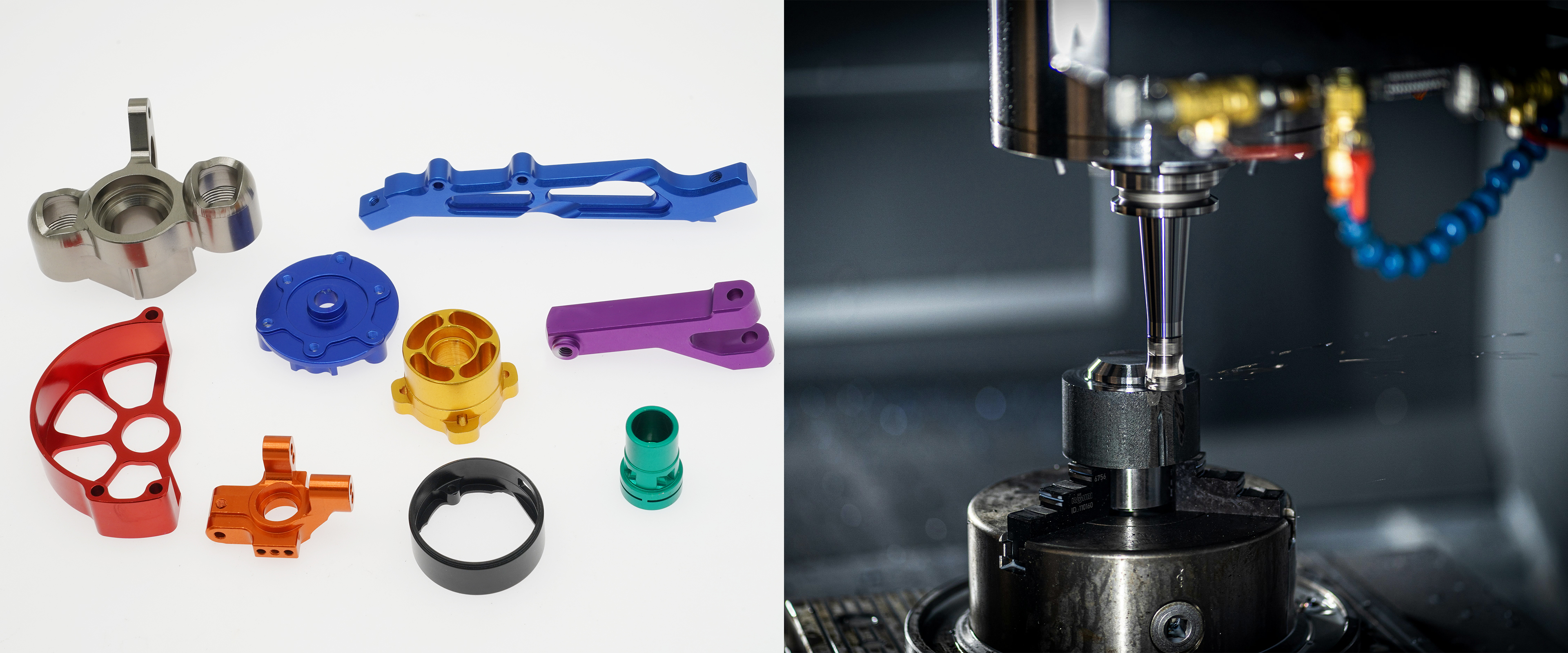
To illustrate Ming Hao's capabilities, consider a recent project producing transmission housings for a major automotive OEM:
Volume: 50,000 units per year.
Material: High-strength aluminum alloy.
Geometry Complexity: Multiple large pockets, bearing bores, and mounting face planes.
Tolerance: ±10 microns on critical mounting faces; ±25 microns on bore diameters.
Solution:
Fixture Design: Modular, palletized fixtures enabled simultaneous loading/unloading, reducing non-cutting time.
5-Axis Machining: Tilted-spindle operations accessed deep pockets without secondary setups.
In-Process Tool Monitoring: Sensors tracked tool wear, prompting automatic tool changes before diameter drift.
CMM Automation: Rainproof enclosures allowed 24/7 CMM inspection of sample parts without manual intervention.
Results: Cycle time per part decreased by 18%; first-pass yield exceeded 99.5%, helping the OEM meet just-in-time delivery targets and maintain production uptime.
From engine blocks to electric vehicle motor housings, CNC milling stands at the heart of automotive component manufacturing. Its ability to deliver micron-level precision, handle diverse materials, and integrate seamlessly with automation systems makes it indispensable to today's OEMs. Dong Guan Ming Hao Precision Molding Technology Co., Ltd. leverages state-of-the-art CNC centers, rigorous quality controls, and a culture of continuous improvement to ensure every part meets the stringent demands of the automotive industry. Whether you need high-volume production, rapid prototyping, or processing exotic alloys, CNC milling offers the precision, repeatability, and flexibility required to keep vehicles safe, efficient, and at the forefront of innovation.