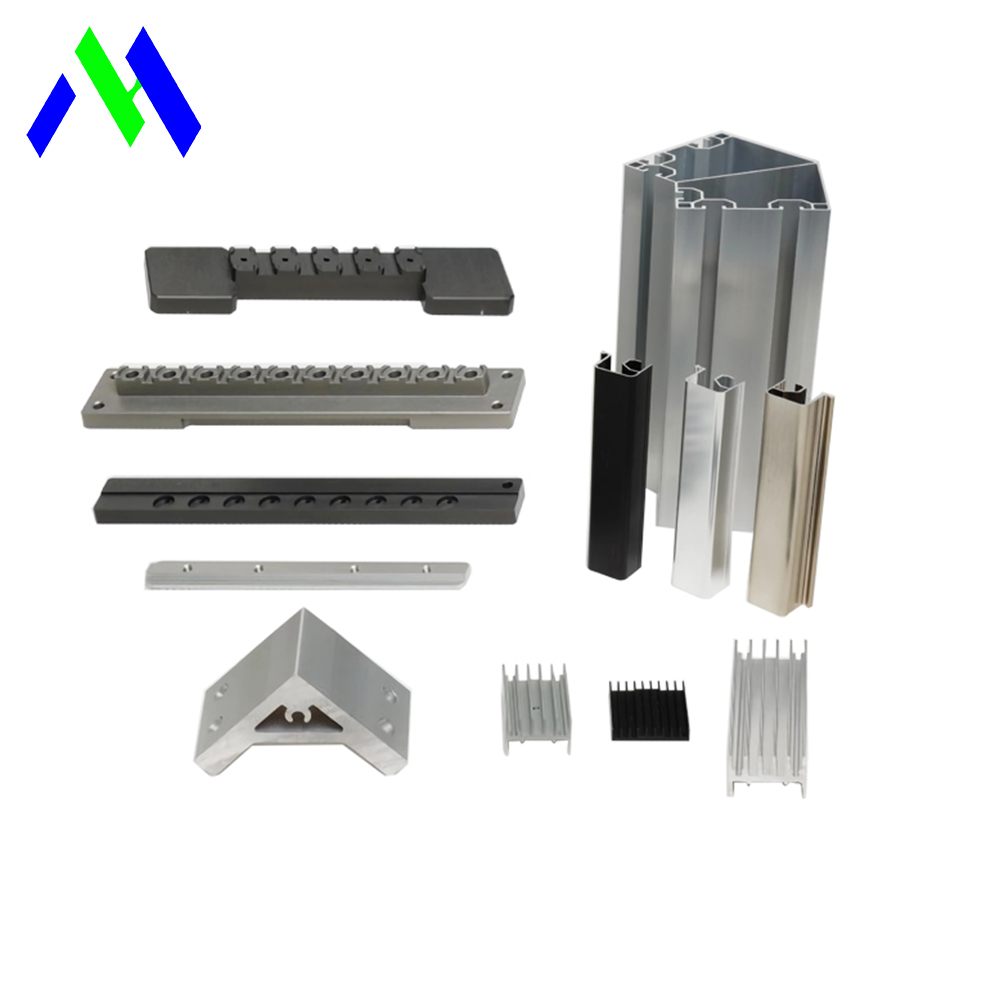
Procuring custom aluminum extrusions involves high-stakes engineering tradeoffs. A single poorly specified profile can trigger structural failure under dynamic loads, excessive secondary machining costs, or premature environmental degradation. Moving your project from prototype to full-scale production requires a major shift in focus. You must transition away from theoretical material advantages and strictly evaluate practical manufacturing constraints. Engineers and buyers face complex challenges regarding die design limitations, tolerance drift, fastener pull-out strength, and long-term supplier reliability. We designed this comprehensive guide to help you navigate these distinct hurdles. Our objective is to provide technical buyers, structural engineers, and procurement teams with an evidence-based framework. You will learn how to specify, evaluate, and source these architectural elements efficiently. By the end of this guide, you will know exactly how to optimize your designs without over-engineering your components or overpaying your manufacturing partners.
Profile failure rarely occurs in the aluminum beam itself; the primary structural bottleneck is fastener pull-out strength at connection points.
Integrating secondary features (e.g., screw bosses, pilot grooves) directly into the die design significantly reduces assembly time and per-unit machining costs.
Balancing yield strength with extrudability is critical; while 7000-series offers aerospace-grade strength, a **6063 T5 aluminum extrusion** provides the optimal baseline for structural integrity, surface finish, and cost-efficiency.
Tooling costs (NRE) and Minimum Order Quantities (MOQs) vary widely; mitigating risk requires leveraging 3D printed prototypes before cutting steel dies.
You must start by establishing the fundamental engineering baseline. Assess the application context deeply. Does the assembly involve static, dead-weight support? Or do you need to manage dynamic, vibrational loads? Linear actuators, CNC gantries, and robotic bases endure continuous stress cycles. These dynamic applications require a fundamentally different design approach than static display racks.
Engineers consistently make a critical oversight when sizing aluminum frame profiles. They calculate the required profile dimensions strictly by its maximum bending moment. They ignore the connection points completely. We know from practical failure analysis: the aluminum beam rarely breaks. The fastener connection represents the actual structural bottleneck. The specific wall thickness at T-slot channels or mounting points determines pull-out resistance.
You should differentiate between structural duty levels based on fastener stress rather than outer dimensions. Consider this classification chart when designing your assemblies:
Duty Level | Typical Wall Thickness | Primary Load Type | Best Application Scenario |
|---|---|---|---|
Light Duty | 1.5mm - 2.0mm | Static Support | Display cases, lightweight enclosures |
Standard Duty | 2.0mm - 3.5mm | Moderate Dynamic | Machine guards, manual workstations |
Heavy Duty | 4.0mm+ | High Shear & Dynamic | Robotic bases, heavy automated machinery |
You must also define acceptable deflection tolerances over unsupported spans. Deflection rules dictate how much the profile can bend under load before affecting performance. Define these limits clearly to avoid excessive material usage where it is not structurally mandated. Calculating exact span constraints ensures optimal material distribution across your entire build.
Selecting an aluminum alloy demands a strict compromise between extrudability and mechanical strength. Adding higher concentrations of alloying elements increases raw mechanical strength. However, these elements decrease extrusion speed. They also increase die wear dramatically. You will pay more for tooling maintenance and endure longer production times when selecting ultra-high-strength alloys.
The 6000 series remains the undisputed industrial standard. It expertly balances yield strength, corrosion resistance, and manufacturing ease.
We consider a 6063 T5 aluminum extrusion the optimal baseline choice for modern industrial projects. This specific alloy accommodates intricate shapes effortlessly. It holds tight dimensional tolerances during the cooling process. It also delivers a consistently high-quality surface finish. Manufacturers commonly use it in modular framing, electronics enclosures, and intricate heat sinks. The "T5" designation means it cools rapidly from an elevated temperature shaping process. Factories then artificially age it to lock in its final strength.
You should view 6061-T6 as the heavy structural alternative. Choose it only when high yield strength is absolutely non-negotiable. It supports heavier loads than 6063. However, you must accept a slightly rougher surface finish. It also has noticeably reduced extrudability compared to 6063. Complex cross-sections often fail or warp when pushed in 6061.
Highlight the 5000 Series (such as 5052 or 5083) for extreme marine environments. These specific alloys perform exceptionally well in highly corrosive situations. They resist saltwater degradation naturally. In these applications, chemical resistance trumps raw structural strength entirely.
Custom dies give you a massive competitive advantage. They can eliminate expensive post-extrusion CNC machining entirely. You achieve this by building functionality right into the cross-section. Do not leave features for the assembly floor. Design them into the raw metal.
We recommend integrating these specific secondary features directly into your die design:
Drill-alignment grooves: Place tiny V-grooves along flat surfaces. They prevent drill bits from wandering during manual assembly.
Screw bosses: Embed circular channels designed to receive self-tapping screws. This eliminates separate bracket requirements.
Interlocking snap-fits: Create interlocking lips connecting two separate profiles securely. This drastically reduces external fastener counts.
Hinge tracks: Form specialized hollows matching standard hinge pins for seamless door attachments.
You must actively manage profile size limitations. Extrusion presses operate under strict tonnage constraints. They face hard breakthrough pressure limits. The press cannot push massive solid billets through a tiny die opening. If your design is too large, the factory will reject it.
Propose splitting oversized or highly asymmetrical profiles into multi-piece modular designs. You can join these separated pieces using clever interlocking joints. Dovetails work exceptionally well here. Thermal breaks also provide an excellent joining mechanism while adding insulation value.
Finally, focus on surface geometry optimization. Adding subtle aesthetic grooves across wide flat surfaces hides handling scratches perfectly. You should also specify slight radiuses (fillets) on all sharp exterior corners. Radiused corners improve material flow through the steel die. This simple adjustment significantly extends die longevity and reduces your overall tooling expenses.
Many buyers hold a highly skeptical view of aluminum corrosion. People often ask why aluminum does not rust. Rust specifically refers to flaking iron oxide. Aluminum contains no iron, so it never rusts. It is, however, highly susceptible to galvanic corrosion. Extreme pH environments will also attack the bare metal vigorously.
Aluminum relies on a natural, self-limiting aluminum oxide (Al₂O₃) layer. This invisible barrier forms instantly upon oxygen exposure. It protects the underlying core metal from further decay. Sometimes this natural layer needs substantial reinforcement.
You should specify powder coated aluminum profiles for high-impact industrial environments. Powder coating delivers exceptional chemical resistance. It provides necessary UV stability for intense outdoor exposure. You also gain exact color matching capabilities for corporate branding. Most importantly, powder coating achieves all this without sacrificing underlying structural integrity. The electrostatic application process ensures even coverage across complex profile geometries.
Anodizing offers a completely different set of protective benefits. You can select either clear or color anodizing. We highly recommend anodizing for applications requiring extremely tight dimensional tolerances. Thick paint layers would interfere with precision assembly slots. Anodizing penetrates the metal surface electrochemically. It does not add measurable thickness to the profile. It also provides drastically enhanced surface hardness where abrasion resistance is critical.
Sourcing a reliable custom aluminum extrusion demands intense operational vetting. You must look far beyond basic ISO 9001 certifications. Demand real transparency from your manufacturing partners.
Require suppliers to demonstrate real-time quality control capabilities. They should gladly provide in-process CMM (Coordinate Measuring Machine) data upon request. Ask for raw billet alloy spectrometer verification records. They must also show continuous temperature and speed monitoring logs collected during the actual extrusion run. If the metal exits the die too hot, the mechanical properties will degrade.
Navigating scale and volume requires upfront financial planning. You need to understand standard industry Minimum Order Quantities (MOQs). Most commercial extrusion factories set minimum order thresholds between 500 lbs and 1,000 lbs per run. Discuss these volume thresholds early in your negotiation phase.
Define your estimated annual usage quantities clearly.
Negotiate staggered delivery schedules if storage is limited.
Ask about tooling cost (NRE) rebate programs. Manufacturers traditionally refund initial tooling costs once you hit specific long-term production volumes.
You must also actively de-risk the tooling process. Advocate for utilizing 3D printed physical prototypes. Print your exact profile segment in rigid plastic first. Use this physical model to verify assembly fit. Check T-nut alignment and snap-fit tolerances manually. Do this critical step before you commit to cutting custom steel dies. Modifying a plastic CAD file costs nothing. Modifying hardened steel dies costs thousands of dollars and weeks of lost time.
Sourcing custom extrusions requires executing a precise engineering balance. You must carefully weigh alloy properties against die geometry constraints and connection methodologies. Every design choice impacts your manufacturing efficiency directly. High-strength alloys might improve load limits but will increase die wear. Integrated screw bosses eliminate secondary machining but complicate the initial die design.
Take these actionable next steps to ensure project success. Finalize your 3D CAD layouts carefully before seeking factory quotes. Define your static and dynamic load requirements mathematically to select the correct structural duty level. Engage a manufacturer's engineering team early in the DFM phase. Let them review your cross-sections for extrudability. Finally, lock in your dimensional tolerances and tooling costs using 3D printed prototypes.
A: Rust specifically refers to flaking iron oxide. Aluminum lacks iron, so it cannot physically rust. Instead, aluminum undergoes corrosion. It naturally develops a dense, self-limiting oxide barrier (Al₂O₃) that protects the core metal perfectly. However, galvanic corrosion can still threaten aluminum if it contacts dissimilar metals (like carbon steel). Extreme pH or highly saline environments will also strip this protective oxide layer away over time.
A: Yes. Integrating Design for Manufacturing (DFM) features directly into your extrusion die significantly lowers costs. By adding built-in screw bosses, snap-fits, and alignment grooves, you drastically reduce your overall part counts. This approach eliminates the need for manual drilling, external brackets, or heavy welding. You cut down factory labor time immensely during final assembly.
A: Standard industry lead times typically range from 4 to 8 weeks. Cutting the initial custom steel die usually takes 2 to 3 weeks. First-article inspection and physical prototyping add another 1 to 2 weeks. Once you approve the physical samples, final mass production runs and surface finishing take an additional 2 to 3 weeks.
A: You must clarify the tradeoff between raw strength and extrudability. While 6061 offers a higher ultimate yield strength for heavy structural loads, 6063 provides vastly superior extrudability. This allows manufacturers to push complex shapes with much tighter dimensional tolerances. Furthermore, 6063 delivers a significantly smoother surface finish, making it highly compatible with anodizing and aesthetic treatments.