
In the world of product development, speed and precision are two of the most essential factors. Whether you're designing a cutting-edge aerospace component, a sophisticated automotive part, or a revolutionary medical device, the ability to quickly transform an idea into a functional prototype is crucial. In today's competitive market, companies need to meet demanding timelines, lower costs, and reduce errors. The answer lies in 5 axis CNC milling—a technology that accelerates the prototyping process while ensuring high precision, even for the most complex geometries.
Prototyping is often the first stage in bringing a product concept to life. During this phase, designers and engineers work to validate their ideas by creating physical representations of their designs. However, prototyping isn't just about building something that "looks" right—it's about creating a fully functional, high-quality part that can withstand real-world conditions. This requires a delicate balance of rapid iteration and high precision.
Rapid Iteration
Prototyping is inherently an iterative process. Designs evolve based on testing, feedback, and refinements. If the initial prototype doesn't meet the desired specifications, the design is modified, and another prototype is created. This loop continues until the design is perfected. The faster this process can be completed, the quicker the product can enter production.
Traditional methods, such as manual machining or injection molding, often struggle to keep up with the pace of modern prototyping. These techniques may require new molds, tools, or fixtures for each iteration, which can be costly and time-consuming. In contrast, 5 axis CNC milling is highly versatile and can handle multiple revisions without requiring significant changes to the machinery setup.
High Precision
High precision is equally important. Even the smallest deviation in dimensions can result in a flawed prototype that doesn’t function as intended. Parts with tight tolerances, such as those in aerospace, automotive, and medical devices, require careful attention to detail. Traditional machining methods often struggle with maintaining tight tolerances across multiple iterations, especially when dealing with complex geometries.
The 5 axis CNC milling machine ensures that every prototype is produced with consistent precision, maintaining tight tolerances from the first prototype to the final version. This precision is especially critical when prototypes are used for functional testing, where even minor imperfections can result in inaccurate test results or, worse, failure in the field.
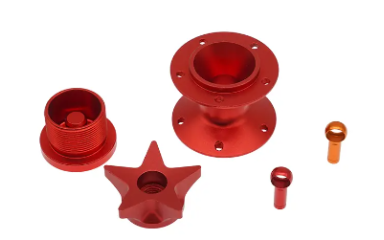
One of the biggest challenges in prototype development is manufacturing complex curves and freeform shapes that are often required in modern designs. These parts might include aerodynamically shaped components, intricate channels, or organic curves that traditional 3-axis machining cannot easily accommodate.
5 axis CNC milling stands out in this regard. Unlike 3-axis milling, which only operates on the X, Y, and Z axes, 5 axis milling adds two additional rotational axes—typically the A and B axes—allowing the tool to approach the part from virtually any angle. This capability makes it ideal for complex geometries that would otherwise be difficult or impossible to achieve with traditional methods.
Multi-Angle Cutting
The ability to cut from multiple angles means that the machine can reach areas that would normally be inaccessible using conventional CNC machines. This eliminates the need for multiple setups and adjustments, saving both time and costs in the prototyping phase.
Smooth and Continuous Cuts
With 5 axis CNC milling, the machine can maintain a continuous cutting motion across the part, ensuring smoother finishes and more accurate details. This is particularly beneficial when working with parts that require highly detailed and fine features, such as turbine blades, medical implants, or intricate aerospace components.
Fewer Tool Changes and Setups
Because the 5 axis machine can achieve different angles of approach without repositioning the part, there is less need for manual tool changes or recalibration. This not only speeds up the process but also ensures consistency and reduces the risk of errors between steps.
Once a prototype is created, it needs to be thoroughly tested to ensure that it functions as intended. The faster a prototype can be tested and validated, the quicker the design can move to production. 5 axis CNC milling accelerates the validation process in several ways:
Quick Turnaround Times
With its high flexibility and ability to handle complex geometries, 5 axis CNC milling allows for faster prototype production compared to traditional methods. This means that companies can test and validate their designs more quickly, reducing the overall development time.
Fewer Design Changes
Because 5 axis CNC milling is capable of producing prototypes with high precision, the likelihood of having to go back and make significant design changes is reduced. The ability to produce accurate prototypes on the first attempt means fewer revisions and less time spent reworking designs, which ultimately lowers costs.
Reducing Rework Risks in Mass Production
One of the biggest risks in mass production is the potential for design flaws that are only discovered during the manufacturing process. These issues can lead to costly delays and rework. By using 5 axis CNC milling during the prototyping phase, companies can identify and correct design flaws early, minimizing the risk of rework in production and ensuring that the final product is ready for market faster.
Traditional prototyping often requires different machines for different processes. For instance, a part may need to be machined on one machine, then transferred to a separate machine for additional processes like drilling, milling, or grinding. Each transfer introduces the possibility of misalignment, which can lead to inaccuracies in the final part.
5 axis CNC milling simplifies this by integrating multiple processes into a single machine setup:
Multiple Operations in One Setup
With 5 axis CNC milling, a single machine can handle multiple operations, including turning, drilling, milling, and even tapping. This means that the part stays in the same fixture throughout the process, eliminating the need for re-clamping or repositioning, which can introduce errors.
Reduced Handling and Setup Time
By combining several operations into one, 5 axis CNC milling significantly reduces handling time and minimizes the setup required between operations. This leads to faster production times and lower overall costs.
Increased Accuracy
Since all processes are performed on the same machine with minimal reorientation of the part, the accuracy of each feature is significantly improved. This is particularly important when manufacturing intricate parts with tight tolerances, where every step must be as precise as the last.
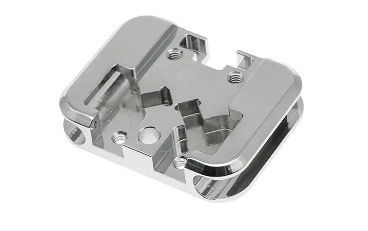
At Dong Guan Ming Hao Precision Molding Technology Co., Ltd., we understand the importance of rapid prototyping in today’s fast-paced industries. Our state-of-the-art 5 axis CNC milling machines, combined with our experienced engineering team, ensure that our clients receive high-quality prototypes with fast turnaround times. Here’s how we support our customers:
Advanced 5 Axis CNC Milling Machines
Our machines feature high-precision capabilities, capable of handling complex geometries and producing prototypes to the highest standards of accuracy. We utilize the latest technology to ensure that every part meets our clients' specifications.
Expert Engineering Support
Our team of experienced engineers works closely with clients throughout the prototyping process, offering insights and suggestions to improve the design and manufacturability of parts. This collaboration ensures that the final prototype not only meets functional requirements but is also optimized for production.
Flexible and Fast Prototyping Services
Whether you need a single prototype or a small batch for testing, Ming Hao offers flexible and rapid prototyping services that meet the tight deadlines of modern product development.
The combination of design innovation and efficient machining is the backbone of successful prototyping and production. 5 axis CNC milling enables designers to explore new possibilities, pushing the boundaries of what's possible with traditional manufacturing methods. Meanwhile, the efficiency and speed of CNC technology ensure that these designs can be turned into real-world products in record time.
At Ming Hao, we believe in fostering innovation by providing the tools and expertise needed to bring bold ideas to life. By harnessing the power of 5 axis CNC milling, we help our clients stay ahead of the competition, delivering cutting-edge prototypes that lead to game-changing products.
By embracing 5 axis CNC milling, Dong Guan Ming Hao Precision Molding Technology Co., Ltd. empowers innovators to turn bold concepts into fully functional prototypes with unrivaled speed and accuracy. Whether you're developing aerospace components, automotive parts, or cutting edge medical devices, our advanced machining capabilities and expert engineering support ensure every detail is faithfully realized. Ready to accelerate your next project? Visit our website at www.mhaocnc.com to explore our full range of services, request a quote, or download case studies. For personalized guidance, our technical team is just an email or phone call away—reach out to cathy@mhaocnc.com or call (+86) 13714415662. Let Ming Hao be your trusted partner in prototype development and production, transforming your ideas from concept to reality faster than ever before.