
Injection molding — often referred to as injection moulding — has become one of the most indispensable manufacturing processes of the modern industrial era. From everyday household products to critical components in aerospace and medical devices, injection molding plays a central role in shaping the modern world. But what exactly makes this process so versatile, and why do so many industries rely on it to manufacture high‑precision parts at scale? This article explores the fundamentals, benefits, and broad applications of injection molding across diverse sectors.
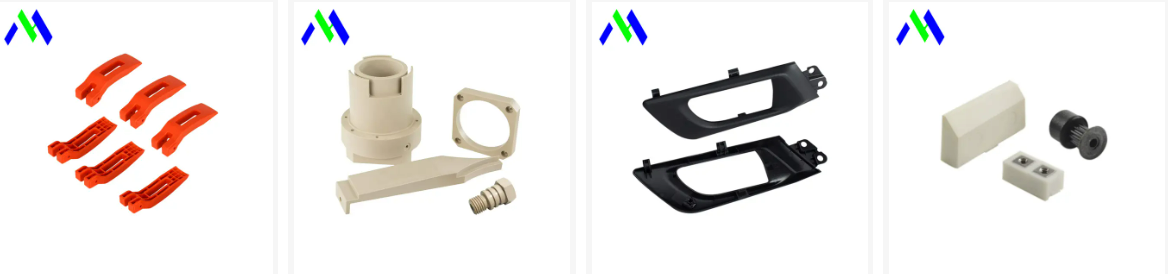
Injection molding is a manufacturing process in which molten material — most commonly plastic — is injected into a precisely machined mold, where it cools and solidifies into the desired shape. This process is used to manufacture components ranging from tiny connectors to complex industrial housings with exceptional repeatability and quality.
The basic working principle involves heating granular resin until it becomes molten, and then forcing it under high pressure into a mold cavity. On cooling, the material takes on the precise geometry of the mold and is ejected, ready for use or finishing.
Injection molding is fundamentally an industrial cycle process that highlights speed, precision, and scalability. It is especially valuable when creating large volumes of parts with complex geometries and tight tolerance requirements.
The process of injection molding can be broken down into several core stages:
Mold Design & Engineering
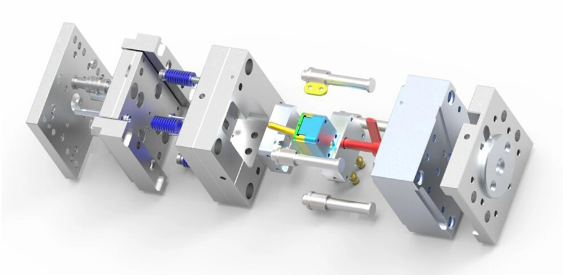
Engineers design the mold using CAD software. Mold design balances dimensional requirements, cooling channels, gating systems, and mold strength.
▶ Complex molds may contain multiple cavities to produce several parts per cycle.
Material Preparation
Plastic pellets — or other materials such as elastomers — are fed into a hopper where they are heated to a molten state.
Injection Phase
A screw or plunger injects molten material into the mold cavity under high pressure.
Cooling & Solidification
The mold retains its form as the material cools, solidifies, and takes shape.
Ejection
Once solidified, ejector pins or systems push the finished part out of the mold.
The entire cycle — from injection to ejection — may take seconds to minutes depending on part complexity and size. The high speed of repeatable cycles is one reason injection molding excels at high‑volume production.
A major strength of the injection molding process lies in its compatibility with a wide range of materials — from commodity plastics to engineering polymers and advanced thermoplastics.
| Material | Key Properties | Typical Uses |
|---|---|---|
| ABS | Impact resistant, good strength | Electronic housings, consumer products |
| PP (Polypropylene) | Lightweight, chemical resistant | Packaging, automotive clips |
| PC (Polycarbonate) | High impact & heat resistance | Safety devices, lenses |
| PA (Nylon) | High strength & wear resistance | Gears, mechanical parts |
| PMMA (Acrylic) | Optical clarity | Lenses, clear components |
| PE (Polyethylene) | Flexible, moisture resistant | Containers, caps |
Injection molding can also handle thermoset resins, elastomers, and composites for specialized applications, making this manufacturing method extremely adaptable.
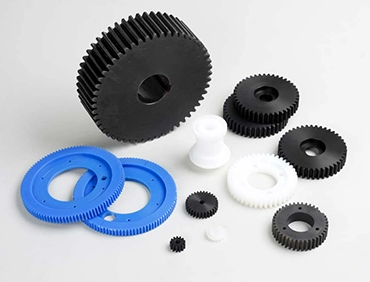
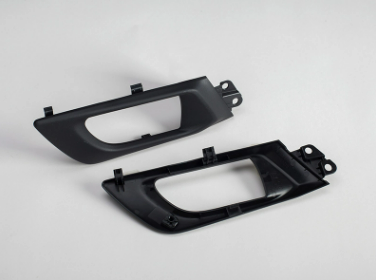
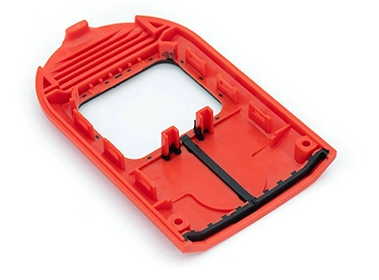
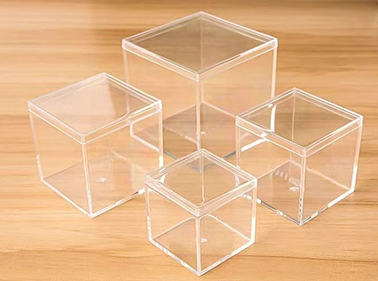
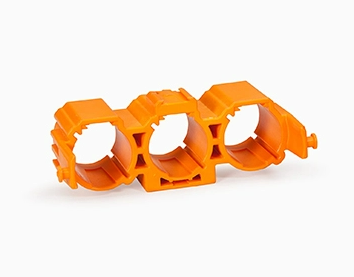
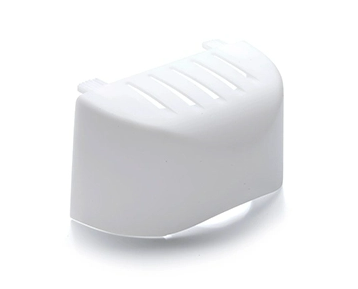
Injection molding is widely adopted for several reasons — many of which make it superior to other manufacturing techniques for high‑volume production.
Once molds are completed and machines are set up, production cycles become extremely rapid. Cycle times can be as short as a few seconds, making it ideal for producing thousands of parts in a relatively short time.
This efficiency is often multiplied through the use of multi‑cavity molds, where several identical parts are produced in each cycle.
While initial mold design and tooling investment can be high, the per‑unit cost of parts drops sharply as production volume increases. For large volume runs — often in the tens of thousands or more — this cost advantage is pronounced.
Injection molding supports an extensive range of materials, allowing manufacturers to fine‑tune properties such as strength, flexibility, thermal resistance, and aesthetics.
The process ensures that each part maintains tight dimensional tolerances and surface qualities across long production runs. This capability is crucial for industries like automotive and medical device manufacturing that depend on high‑precision parts.
Compared to other methods such as machining or casting, injection molding generates relatively little waste. Excess sprues or runners can often be reground and reused.
Injection molding can create intricate features — including thin walls, undercuts, and multi‑component parts — that would be challenging or cost‑prohibitive with other production methods such as CNC machining.
Despite its versatility, injection molding is not without challenges:
High Initial Tooling Cost: The upfront cost for mold design and manufacturing can be expensive, especially for complex parts.
Design Constraints: The mold and part must be designed with careful attention to wall thickness, draft angles, and cooling paths to avoid defects or production issues.
Not Ideal for Small Batch Runs: Given the initial setup investment, injection molding becomes most cost‑efficient when producing larger quantities of parts.
These considerations often influence project planning and product design early in the development cycle.
Injection molding’s adaptability means it is used across a wide range of industries. Below is a summary of key application areas — each of which we will explore in detail in Part II of this article.
Automotive & Transportation — dashboards, clips, interior components
Medical & Healthcare — surgical tools, device housings
Consumer Electronics — connectors, enclosures
Packaging & Consumer Goods — caps, containers, utensils
Aerospace & Industrial Machinery — lightweight structural components
Home Appliances & Everyday Products — knobs, panels, fixtures

The automotive industry is one of the earliest and largest users of injection molded parts. In modern vehicles, plastics replace traditional metal parts not only to reduce weight and cost, but also to improve corrosion resistance and cosmetic appearance.
Injection molding is used to manufacture:
Exterior body parts: bumpers, grilles
Interior components: dashboard panels, seat belt housings
Functional fittings: hose connectors, clips, fasteners
Lighting housings and trim pieces
These components benefit from excellent surface finishes, consistent production quality, and reduced mass — all critical for vehicle performance and fuel efficiency.
Beyond passenger cars, plastic injection molded parts are also found in rail vehicles, buses, and even aerospace cabin interiors due to their strength‑to‑weight advantages. In many cases, injection molding enables manufacturing of highly complex, lightweight components that would be difficult to produce with other techniques.
The healthcare sector demands extremely high precision and safety in its components, which is why injection molding is ideal for many medical devices.
Injection molding is widely used to produce:
Disposable medical tools: test swabs, syringe bodies
Device components: housings for diagnostic instruments
Surgical kits and parts requiring sterile, consistent quality
High reproducibility and the ability to use biocompatible plastics make injection molding essential in this field, especially when parts must meet stringent regulatory requirements.
Electronics manufacturers rely heavily on injection molding for both internal and external components, thanks to the process’s design flexibility and high dimensional accuracy.
Examples include:
Casings for smartphones, tablets, and laptops
Small structural parts such as battery holders, connectors
Insulating housings and mounts
Injection molding delivers consistent production quality and excellent surface details, which are particularly important for consumer electronics in terms of aesthetics and functionality.
Injection molding extends far beyond industrial and medical applications — it also touches everyday life in millions of ways.
Injection molded parts are commonly found in:
Kitchen utensils (spatulas, measuring cups)
Household storage containers
Toys and recreational products
Furniture components
This widespread use underscores how versatile the process is for producing both complex shapes and simple, durable consumer items.
Injection molding contributes significantly to the packaging sector — especially where rigid, lightweight containers and components are required.
Typical products include:
Bottle caps and closures
Food storage containers
Disposable containers and trays
In food‑related applications, appropriate materials can be used to ensure safe contact with consumables, while injection molded packaging offers hygiene, strength, and production efficiency.
Plastic injection molding is also widely used in industrial machinery and equipment, where durability and chemical resistance are often essential.
The process is used to produce:
Structural housings and machine guards
Seals, bushings, and gaskets
Tool components and ergonomic handles
Plastics used in these applications are often engineered materials chosen for their mechanical strength and resistance in demanding operating environments.
While metal fabrication remains important in aerospace, plastic injection molded parts have become increasingly prominent, especially when weight reduction and precision are critical.
Typical injection molded parts include:
Interior cabin components
Bezels and housings
Lightweight structural elements and fixtures
Injection molding delivers high repeatability and the ability to maintain tight tolerances, which are critical in aerospace applications where safety and weight reduction are paramount.
Construction may not be the first industry that comes to mind when thinking about injection molding, but plastics are essential in many support roles.
Examples include:
Window and door hardware
Pipe fittings and electrical conduits
Fasteners and housings for construction tools
In many cases, injection molded parts provide durability and installation ease, contributing to building performance and long‑term reliability.
Below is a high‑level comparison of how injection molding is applied in different industries, highlighting typical products and primary benefits in each sector:
| Industry | Typical Injection Molded Products | Primary Benefits |
|---|---|---|
| Automotive | Bumpers, trims, connectors | Weight reduction, high volume, precision |
| Medical | Syringes, device housings | Sterility, repeatability, biocompatibility |
| Electronics | Casings, connectors | Design complexity, surface finish |
| Consumer Goods | Toys, utensils | Low cost, mass production |
| Packaging | Caps, containers | Hygiene, customization |
| Industrial Equipment | Seals, housings | Durability, chemical resistance |
| Aerospace | Interior parts | Precision, lightweight |
| Construction | Fittings, hardware | Longevity, ease of installation |
Injection molding has always evolved with manufacturing technologies. The core advantages of high‑volume repeatable precision are now being strengthened through digitalization, automation, sustainable materials, and smart manufacturing innovations. Below are the major trends that will define injection molding through 2026 and beyond:
Smart factories are leveraging IoT, real‑time data analytics, and predictive control systems to optimize injection molding production. Sensors connected to machines enable live monitoring of temperature, pressure, and cycle times — with AI‑driven control that minimizes waste, detects abnormalities early, and reduces machine downtime. This is part of a broader Industry 4.0 transformation where production lines become networked and adaptive to changing conditions.
Key aspects include:
Predictive maintenance to prevent breakdowns
Real‑time quality monitoring
Automated parameter adjustment based on machine learning
These digital technologies help manufacturers boost efficiency by significant margins while maintaining consistent quality levels across production runs.
Modern automation extends beyond simple robotics — injection molding lines now often run with minimal human intervention, or even “lights‑out” manufacturing setups where machines operate autonomously during night shifts. Robots handle part removal, inspection, packaging, and feeding operations, reducing labor costs and improving consistency.
Automation also supports:
Improved safety (handling hazardous materials)
Faster throughput and higher utilization
Lower human error rates
Material development continues to be a cornerstone of injection molding innovation. The industry is increasingly adopting bio‑based, recycled, and eco‑friendly plastics to reduce environmental impact in line with global sustainability goals.
Emerging material trends include:
Biodegradable compounds
Recycled polymers
High‑performance engineering plastics for demanding industrial use
These innovations help manufacturers strike a balance between performance and environmental responsibility, supporting circular economy principles.
As electronics and medical devices become smaller and more sophisticated, demand for extremely tiny, highly accurate plastic parts grows. Micro‑injection molding enables production at sub‑millimeter scales, supporting cutting‑edge medical implants, microfluidic components, and miniature connectors.
This trend pushes the limits of precision manufacturing, requiring specialized equipment and ultra‑high tolerance control.
The use of digital twin technology and simulation tools allows mold designers to test and optimize designs virtually before physical tooling is created. This reduces development time and material waste while improving design confidence.
Digital twin models replicate physical machines and molds in software — enabling engineers to simulate performance under different conditions, refine mold geometry, and predict fill behavior.
While the injection molding industry promises continued growth and innovation, it also faces evolving challenges that must be navigated strategically.
Traditional injection molding excels in high‑volume production, but the rise of on‑demand and customized manufacturing creates opportunities for hybrid approaches — such as combining 3D printing for prototyping or low‑volume orders with traditional injection molding for full‑scale manufacturing.
The integration of additive and traditional methods enhances design flexibility and shortens time‑to‑market.
Manufacturers face increasing regulatory pressure to reduce environmental impact. From emissions reduction to sustainable sourcing of raw materials — companies must innovate not only technologically, but also environmentally.
Key sustainability challenges include:
Recycling mold scrap and runners
Minimizing energy consumption
Using eco‑certified materials
As production becomes more automated and digitized, so does the need for high‑level technical talent. Engineers must now be proficient in simulation tools, data analytics, automation systems, and digital process control tools.
This shift in skills requirement will define workforce development in the manufacturing sector.
Industry analysts project continued growth for the global injection molding market over the next decade. According to multiple forecasts, the overall industry size is expected to grow significantly through 2030 with increasing demand across automotive, medical, electronics, and packaging sectors.
Here’s a simplified projection based on current market insights:
| Year | Market Value (USD Billion) | Growth Drivers |
|---|---|---|
| 2025 | ~347 | Rising digitalization, sustainability focus |
| 2028 | ~380 | Demand in automotive & healthcare |
| 2030 | ~420 | Expansion of smart manufacturing globally |
The increasing integration of smart systems, sustainable materials, and advanced manufacturing tools ensures injection molding remains relevant and competitive worldwide.
Across the history of manufacturing, few technologies have matched the longevity, adaptability, and economic impact of injection molding. Its combination of precision, scalability, material versatility, and cost‑effectiveness makes it indispensable in industries ranging from automotive to medical devices and daily consumer goods.
In the face of evolving industrial demands, injection molding is not static — it is transforming:
Smart manufacturing and automation are boosting productivity.
Sustainability practices are reducing environmental impact.
Digital twins and simulation tools are reducing development time.
Hybrid manufacturing (combining additive technologies) is expanding design possibilities.