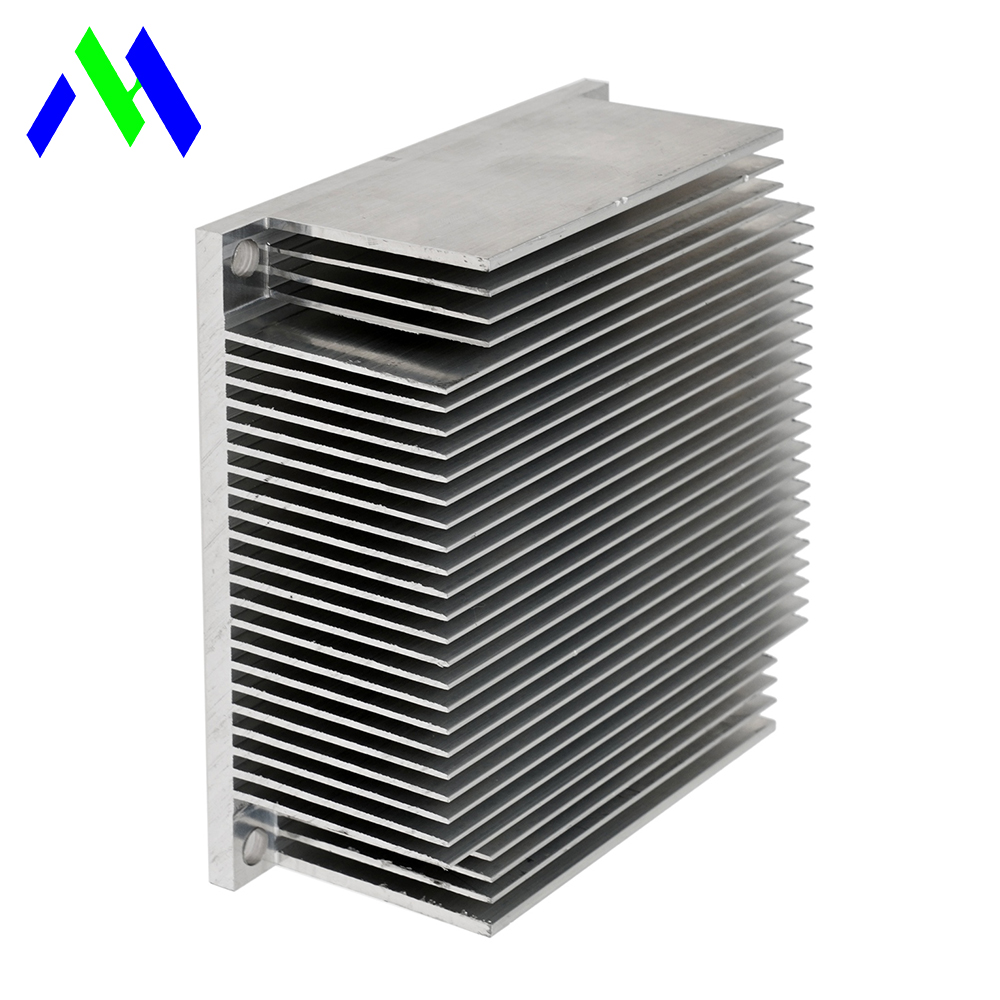
In modern hardware, thermal bottlenecks directly threaten component lifespan. They also jeopardize system reliability across demanding commercial applications. When processors and power modules overheat, their performance throttles. This forces engineers to address heat dissipation early in the development cycle rather than treating it as an afterthought.
Effective thermal management requires moving beyond off-the-shelf guesswork. You need engineered, application-specific solutions. Relying on basic dimensional approximations often leads to oversized cooling modules or unexpected thermal failures in the field.
This guide unpacks the engineering realities of designing an aluminum heat sink. We balance complex thermodynamics against practical manufacturing limitations. You will learn how to achieve commercial viability for high-volume production. We focus strictly on measurable physical principles, verifiable manufacturing limits, and pragmatic steps you can take to optimize your cooling systems.
Material Efficiency: Aluminum offers a superior cost-to-weight ratio compared to copper, providing ~200-235 W/m·K thermal conductivity at 50% of the weight.
Geometry over Gimmicks: Optimal fin spacing (10-15mm for natural convection vs. 3-8mm for forced air) drastically outperforms overly complex, un-manufacturable CAD designs.
Process Dictates Performance: The choice between an extruded aluminum heat sink, skived fins, or bonded assemblies defines both your maximum heat dissipation and unit economics.
Environmental Realities: Real-world variables like altitude derating, surface emissivity, and particulate fouling must be factored into commercial thermal models.
Every successful thermal project begins by confronting physical limits. You cannot maximize every variable simultaneously. Engineers rely on the Four-Pillar Framework to navigate these constraints. A reliable custom heat sink represents a careful compromise between Performance, Size, Weight, and Cost. Pushing for maximum thermal performance usually increases size and weight. Conversely, aggressively shrinking the form factor often drives up manufacturing complexity and unit cost. We must prioritize these four pillars based on the specific end-use application.
Buyers frequently struggle with the aluminum versus copper dilemma. Copper conducts heat exceptionally well, boasting a thermal conductivity of around 400 W/m·K. However, 6000-series aluminum remains the undisputed industry standard. Aluminum weighs approximately half as much as copper. It extrudes easily into complex geometries and commands a significantly lower raw material cost. For most commercial applications, aluminum provides a far superior performance-to-weight ratio.
To optimize performance, you must understand the heat transfer chain. A heat sink acts only as strong as its weakest thermal link. This process occurs in three distinct stages:
Conduction: The base material absorbs heat directly from the electronic component.
Distribution: The thermal energy spreads laterally and vertically through the solid base block.
Convection and Radiation: The fins dissipate the accumulated heat into the surrounding ambient air.
If you fail to distribute the heat evenly across the base, your high-performance fins will starve for thermal energy, rendering them useless.
Selecting the correct aluminum alloy dictates both the cooling potential and the structural integrity of your component. We primarily rely on two major 6000-series options. Each serves a very specific engineering purpose.
AL6063-T5 stands as the default standard for dedicated cooling applications. It offers superior thermal conductivity, typically ranging between 201 and 218 W/m·K. More importantly, AL6063 exhibits excellent extrudability. The softer nature of this alloy before heat treatment allows manufacturers to push metal through highly intricate dies. You can achieve thinner, more tightly packed fin profiles without tearing the metal. When maximum heat dissipation in a compact volume is your primary goal, AL6063-T5 is the optimal choice.
AL6061-T6 offers a different set of advantages. It provides higher mechanical strength and superior machinability. However, you sacrifice thermal performance. Its thermal conductivity drops to roughly 167 W/m·K. We recommend AL6061-T6 only when the heat sink must double as a load-bearing structural component. You often see this in heavy industrial equipment or automotive housings where chassis rigidity matters just as much as temperature control.
Alloy Grade | Thermal Conductivity (W/m·K) | Primary Advantage | Ideal Application |
|---|---|---|---|
AL6063-T5 | 201 - 218 | Excellent extrudability, high thermal efficiency | High-density fin profiles, standard electronics cooling |
AL6061-T6 | ~167 | High yield strength, superior structural rigidity | Automotive housings, load-bearing enclosures |
Your chosen manufacturing method imposes hard limits on fin geometry. It dictates the physical bounds of how efficiently you can cool a component. Understanding these processes ensures you do not design a part you cannot actually build.
The extruded aluminum heat sink remains the most cost-effective method for volume production. Manufacturers push a heated aluminum billet through a custom steel die to create long, continuous finned profiles. While highly economical, extrusion carries strict constraints. It typically imposes a maximum aspect ratio limit of 15:1 (fin height relative to the gap between fins). Extrusion excels in standard convection environments but struggles when you need extreme fin density.
Skiving offers a powerful alternative for compact spaces. In this process, a specialized cutting tool shaves thin fin slices directly from a solid aluminum or copper block. Because the fins remain integral to the base, you achieve zero joint thermal resistance. Skiving easily bypasses extrusion aspect ratio limits, allowing for ultra-high fin density. We use skived designs when facing severe space constraints and massive localized heat loads.
Bonded designs break traditional manufacturing barriers. We manufacture the base plate and the fins separately. We then bond them together using thermally conductive epoxy or high-temperature brazing. This approach completely shatters extrusion limits. It also enables hybrid models. For instance, you can use a high-conductivity copper base plate to quickly spread heat away from a CPU, paired with lightweight aluminum fins to handle air dissipation.
CNC machining relies on computer-controlled mills to carve out material from a solid block. It offers immense flexibility. It is optimal for complex, non-standard geometries or localized cutouts. We frequently use CNC machining for low-volume prototyping. It allows engineers to physically test thermal models before investing thousands of dollars in custom extrusion tooling.
Finishing a CAD drawing does not guarantee thermal success. Physical airflow dynamics will ruthlessly expose poorly optimized geometry. You must align your fin structure with the actual air movement in the operating environment.
Air acts as a viscous fluid. As air flows over a hot aluminum fin, friction causes a layer of slow-moving air to stick to the surface. We call this the thermal boundary layer. For natural convection (passive cooling), you require 10-15mm of fin spacing. If you place fins too close together, opposing boundary layers will overlap. This overlap completely chokes the airflow, trapping heat inside the sink.
For forced air environments utilizing fans, you can utilize tighter 3-8mm spacing. Fans overcome the boundary layer friction via static pressure. However, your fin thickness must remain robust enough (≥2mm) to withstand high-velocity turbulence without causing an excessive pressure drop.
Bare, machined aluminum looks pristine but performs poorly in passive setups. Bare aluminum has a thermal emissivity (ε) of just ~0.05. This means it barely radiates heat. Applying a black anodized finish changes the surface chemistry. The black anodization factor increases emissivity to an impressive 0.88-0.95. This simple electrochemical surface treatment significantly boosts radiation heat transfer. It remains a mandatory step for high-end passive cooling solutions.
The industry currently faces a trend of hyper-complex, 3D-printed lattice structures. Novice designers assume porous, sponge-like designs maximize surface area. In reality, continuous, unbroken thermal paths usually outperform complex porous structures. A solid, straight fin provides a low-resistance highway for heat to travel from the base to the tip. Complex lattices trap stagnant air, create immense flow resistance, and ultimately degrade overall thermal performance.
Laboratory models often fail in the field. Environmental variables introduce friction that pure thermodynamic equations ignore. Designing for telecom thermal management requires defensive engineering against harsh external realities.
Air density drops significantly at elevation. Thinner air holds less mass, which severely impacts convection cooling capability. An aluminum extrusion performing perfectly at sea level (carrying a 1.0 performance factor) loses roughly 20% of its cooling efficiency at 10,000 feet (dropping to a 0.8 factor). Telecom equipment mounted on mountain ranges or deployed in high-altitude data centers must be derated accordingly. You must increase the surface area to compensate for the thin air.
Outdoor environments attack exposed electronics. In remote telecom cabinets, dust, pollen, and debris act as thick thermal insulators. Overly dense fin arrays will quickly clog in these environments. Once clogged, convection stops entirely. Mitigation requires optimizing your fin pitches to allow debris to blow through. Applying smooth surface finishes also prevents particulates from catching and building up over time.
Even perfectly machined surfaces possess microscopic peaks and valleys. When you mount a component to a heat sink, a microscopic air gap forms between them. Because air functions as a thermal insulator, this gap ruins heat transfer. You must utilize a Thermal Interface Material (TIM), such as thermal paste or pads, to fill these voids. To maximize TIM effectiveness, you must enforce strict base flatness specifications during manufacturing, typically demanding a flatness tolerance of 0.001 inches per inch.
Brilliant designs require capable execution. The gap between a digital simulation and a physical, mass-produced part is vast. Choosing the right manufacturing partner mitigates supply chain risks and ensures reliable performance across thousands of units.
Prioritize vendors that own their entire production stack. Manufacturers operating their own extrusion presses and automated anodizing lines offer superior reliability. By keeping these processes under one roof, they drastically reduce supply chain friction. You avoid the quality assurance variables introduced when a primary shop subcontracts extrusion to one vendor and surface treatment to another.
Avoid basic build-to-print job shops if you are tackling complex thermal challenges. Look for manufacturers capable of conducting CFD (Computational Fluid Dynamics) thermal simulations. A mature engineering partner will validate your prototype digitally before cutting any metal. They identify stagnant airflow zones and suggest fin pitch adjustments to save you costly tooling revisions.
Do not accept visual inspections as proof of quality. Ensure your manufacturing partner maintains verifiable testing protocols. They must offer precision surface flatness testing to guarantee TIM compatibility. They should provide thermal resistance validation reports for their sample batches. Finally, strict alloy purity checks ensure they actually utilized AL6063-T5 rather than substituting a cheaper, thermally inferior scrap blend.
Improving thermal management isn't about discovering a magic material. It requires strict discipline in aligning your exact thermal load with the appropriate alloy, geometry, and manufacturing method. Success stems from recognizing the trade-offs between performance, weight, and manufacturability.
Evaluate your environment first; altitude and dust dictate fin spacing more than raw CAD capability.
Select AL6063-T5 for maximum thermal transfer and utilize black anodization for passive cooling gains.
Match your design to the process—use extrusion for cost-effective volume and skiving for extreme density.
Encourage your procurement and engineering teams to engage manufacturing partners early in the design phase. Collaborating before finalizing the CAD models ensures your heat sinks remain optimized for both thermal efficiency and cost-effective production. Proactive adjustments save valuable time and prevent late-stage project failures.
A: AL6063 provides a 20%+ gain in thermal conductivity compared to AL6061. It also offers far better extrudability. This allows manufacturers to push the metal through intricate dies to create the thin, densely packed fins required for high-efficiency cooling.
A: Yes. Black anodizing drastically increases the surface emissivity of the aluminum from roughly 0.05 to over 0.88. This significantly boosts radiation heat transfer, which is especially critical for systems relying on natural, passive convection.
A: The practical manufacturing limit for standard extrusion is typically a 15:1 aspect ratio (fin height relative to the gap between fins). If your thermal model requires tighter gaps or taller fins, you must utilize skived or bonded fin processes.
A: Higher altitudes feature thinner air with lower density. Because there is less air mass to absorb and carry away heat, convective heat transfer efficiency drops significantly. Engineers must apply a derating factor to ensure reliable operation in high-altitude deployments.