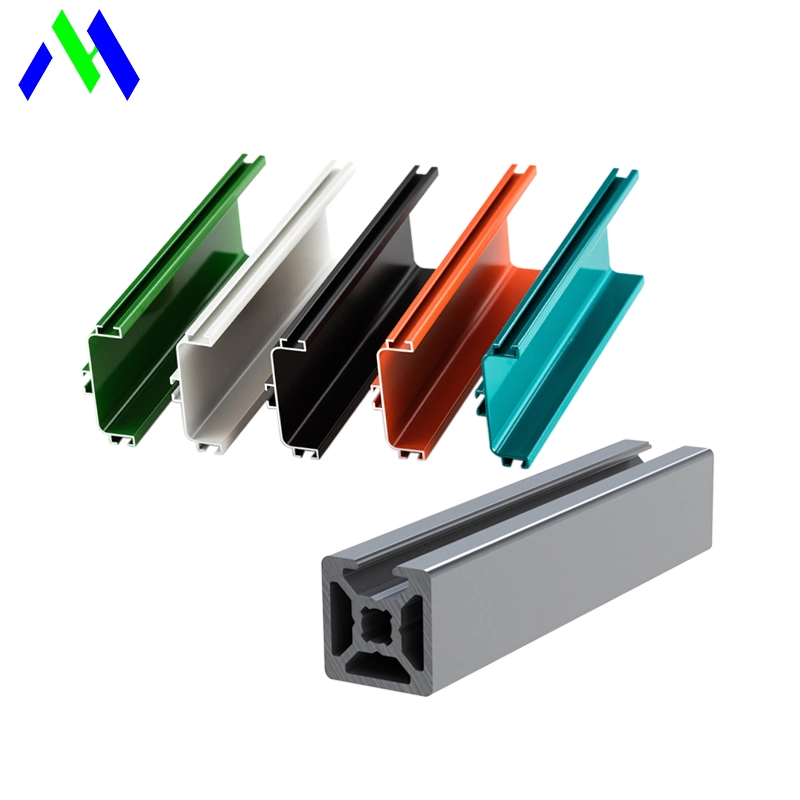
Hardware engineers and product managers face a constant, high-stakes challenge. You must protect sensitive printed circuit boards (PCBs) from damage. At the same time, you have to manage intense thermal loads, harsh environmental hazards, and strict manufacturing constraints. Specifying aluminum extrusion profiles for these enclosures involves much more than simply drawing physical dimensions. It requires carefully balancing specific alloy properties, planning for secondary machining, and choosing the right surface finishes. You must align all these factors to meet rigid compliance mandates, such as IP or NEMA ratings, while maintaining high aesthetic standards. This article provides a clear, technical evaluation framework. We will guide you through designing, finishing, and sourcing extruded enclosures efficiently. You will learn how to optimize your structural designs without over-engineering the product or inflating tooling budgets.
Alloy Selection Matters: 6063-T5 is the industry standard for complex extrusion shapes, but 6061 offers higher yield strength for ruggedized applications.
Integration Reduces Assembly: Designing built-in PCB guide rails and a custom aluminum heat sink directly into the extrusion profile lowers secondary machining costs.
Finish Dictates Function: Anodizing improves surface hardness and thermal emissivity, while chromate conversion is necessary for maintaining electrical conductivity for EMI shielding.
Tolerances Impact Sealing: High IP ratings (IP67+) require specific gasket grooves and secondary CNC machining to ensure a watertight seal.
Modern electronic devices generate significant heat. Fanless systems rely entirely on passive heat dissipation. Aluminum possesses exceptionally high thermal conductivity. It rapidly pulls heat away from critical processors and internal components. You must carefully evaluate fin density and total surface area. More cooling fins generally mean better heat dissipation. However, cramming too many fins together blocks natural air convection. It also complicates the extrusion die process.
Best Practice: Keep your fin height-to-gap ratio balanced. Allow enough space for air to flow freely between the fins. This maximizes the convective cooling effect.
Electronic noise can disrupt device performance. Inherent material properties alone fail to block all interference. Aluminum naturally blocks radiation, but your physical design dictates true success. Joint sealing plays a critical role in Faraday cage effectiveness. Seams and gaps leak electromagnetic energy easily. You must engineer overlapping joints. You also need conductive paths across all mating surfaces to block incoming and outgoing noise.
Avoid long, unshielded slots in the enclosure body.
Ensure end-plates have direct metal-to-metal contact with the main body.
Use conductive gaskets if gaps exceed acceptable tolerance thresholds.
Environmental threats dictate your baseline physical design requirements. An IP54 rating protects against light dust and minor water splashes. This rating allows for simpler joints and standard end-plates. Devices targeting IP67 or IP68 face total submersion. They demand watertight integrity. These strict ratings dramatically increase the complexity of your enclosure design. You will need tighter tolerances and dedicated sealing mechanisms.
Common Mistake: Do not rely on basic adhesives for IP67 enclosures. High-pressure water will eventually breach weak seals. Always engineer physical compression points for gaskets.
Alloy selection shapes your entire manufacturing process. Different tempers and alloys behave differently under stress.
The 6063-T5 alloy serves as the industry baseline. It offers superior extrudability. It produces a remarkably smooth surface finish. You will find it ideal for forming complex internal geometries. It pushes through the die with less resistance.
The 6061-T6 alloy provides higher tensile strength. It suits heavy-duty industrial or military-spec enclosures perfectly. However, it resists forming into fine, delicate details. It requires higher extrusion pressures.
Comparison of Aluminum Extrusion Alloys | ||
Feature | 6063 Aluminum | 6061 Aluminum |
|---|---|---|
Extrudability | Excellent | Moderate |
Surface Finish | Very Smooth | Average / Matte |
Yield Strength | Lower (~21,000 psi) | Higher (~40,000 psi) |
Best Application | Complex internal geometries | Ruggedized external housings |
You should eliminate downstream assembly steps whenever possible. Recommend incorporating internal PCB slots directly into the die design. Add internal screw bosses and mounting flanges early in the CAD phase. This strategic integration saves massive amounts of assembly time.
Designing an integrated custom aluminum heat sink into the profile offers incredible efficiency. You avoid purchasing and attaching separate thermal components later. The seamless transition from enclosure wall to heat sink fin improves thermal transfer dramatically.
You must balance weight reduction with structural stability. Warn your team against specifying unnecessarily thin walls. Thin sections cool faster than thick sections during the extrusion process. This uneven cooling causes severe warping. It compromises the structural integrity of the final part.
Understand standard tolerance realities. Raw extrusions move slightly during cooling and stretching. Provide clear specifications per standard EN 755-9 or ASTM B221. Do not demand precision tolerances unless functionally required.
Extrusions deliver long, continuous profiles. However, practical electronic devices need custom cutouts for I/O ports, displays, and switches. You cannot extrude these perpendicular features. They require precision milling.
You must utilize a multi-axis CNC aluminum profile machining process. Multi-axis CNC ensures exact positional tolerances. It references strict datum points. This guarantees all mating components align perfectly during final assembly.
Raw extruded surfaces often lack true, microscopic flatness. High-pressure seals demand perfectly flat mating planes. You must use CNC-machined grooves for O-rings and silicone gaskets. These machined channels capture the gasket precisely. They prevent the rubber from blowing out under pressure. You need this level of control to achieve reliable IP67 and IP68 ratings consistently.
You must seal the ends of an extruded aluminum frame effectively. The method you choose impacts durability.
Tapped Screw Bosses: These provide strong, reusable threads. They suit enclosures requiring frequent maintenance.
Self-Tapping Screws: These offer fast assembly for lower-tier consumer products. They strip easily if removed often.
Press-Fit End Caps: These provide a clean aesthetic. They work well for sealed, non-serviceable units.
An anodized aluminum enclosure serves as the undisputed industry standard. Anodizing provides excellent corrosion resistance. It improves surface hardness significantly. It also creates a non-conductive exterior barrier.
Type II anodizing offers standard commercial protection. It handles everyday handling and mild environments. Type III hardcoat penetrates deeper. It suits extreme industrial wear. Interestingly, anodizing naturally increases thermal emissivity. A black anodized surface rejects heat marginally better than bare metal.
Anodizing creates an electrical insulator. This creates a problem for EMI shielding. Chromate conversion coating solves this issue. It protects against corrosion while maintaining electrical conductivity. You must use Chem Film on internal mating surfaces. It ensures continuous EMI/RFI grounding across the entire assembly.
Position powder coating as the preferred option for heavy outdoor UV exposure. It prevents fading. It also allows strict corporate color matching. However, warn your team about its insulating properties. A thick layer of paint reduces heat dissipation outward. It also thoroughly blocks EMI grounding unless you meticulously mask the joint areas prior to spraying.
Advise your engineering team against over-specifying finishes. Standard clear or black anodizing meets the environmental baseline for most projects. Over-specifying Type III hardcoat wastes resources. It extends lead times and complicates dimension tolerances. Match the finish strictly to the operational environment.
Many projects start with standard, off-the-shelf enclosures.
Pros: You face zero upfront tooling costs. Parts offer immediate availability. Standard eCommerce filtering allows quick selection by size or flange type.
Cons: You must compromise on PCB dimensions to fit the box. Standard boxes offer limited thermal optimization. You still have to perform manual modifications for your specific I/O ports.
Transitioning to custom profiles unlocks significant design freedom.
Pros: You achieve an exact dimensional fit. You get integrated thermal and mounting features. The per-unit cost drops significantly at scale.
Cons: You face upfront die tooling costs. Manufacturers enforce minimum order quantities (MOQs). You must account for 3-6 week lead times before receiving first-article samples.
Use a simple volume threshold rule of thumb. Custom tooling generally achieves positive return on investment when production exceeds 500 to 1,000 units annually. You should also choose custom tooling immediately if your precise thermal or IP requirements cannot be met by standard parts. If the cost of manually machining standard boxes exceeds the custom die cost, switch to custom.
A successful electronics enclosure aligns three major pillars. It balances the core alloy choice, the integrated profile design, and the final surface finish. You must map these elements against the product's environmental risks and thermal realities. Skipping any of these evaluations leads to part failure or budget overruns.
Before moving forward, finalize your internal PCB layout. Run your baseline thermal calculations. Determine your exact heat dissipation needs before locking in a physical extrusion profile. You cannot easily add cooling fins after the die is cut.
Consult with an experienced extrusion manufacturing partner early in your design phase. Submit a STEP or CAD file for a comprehensive design for manufacturability (DFM) review. This proactive step ensures your enclosure remains robust, compliant, and highly efficient.
A: Typically 1.0mm to 1.5mm for standard alloys like 6063, though it depends heavily on the overall profile width and complexity.
A: Standard Type II anodizing adds minimal thickness (usually 5-25 microns), which rarely affects standard tolerances, but Type III hardcoat can add up to 50+ microns, requiring pre-machining allowance for tight-tolerance mating parts.
A: Raw aluminum naturally blocks EMI, but if the exterior is anodized (which is non-conductive), the internal mating surfaces and end-caps must be masked or treated with a conductive chem-film to ensure continuous grounding across the assembly.
A: Yes. MHAO can review aluminum extrusion projects that require cutting, drilling, tapping, CNC machining, anodizing, powder coating, or other finishing options, depending on the drawing and application needs.
A: The most helpful details include the profile cross-section drawing, alloy grade, wall thickness, finished length, surface treatment, tolerance requirements, quantity, assembly requirements, and whether secondary CNC machining is needed.